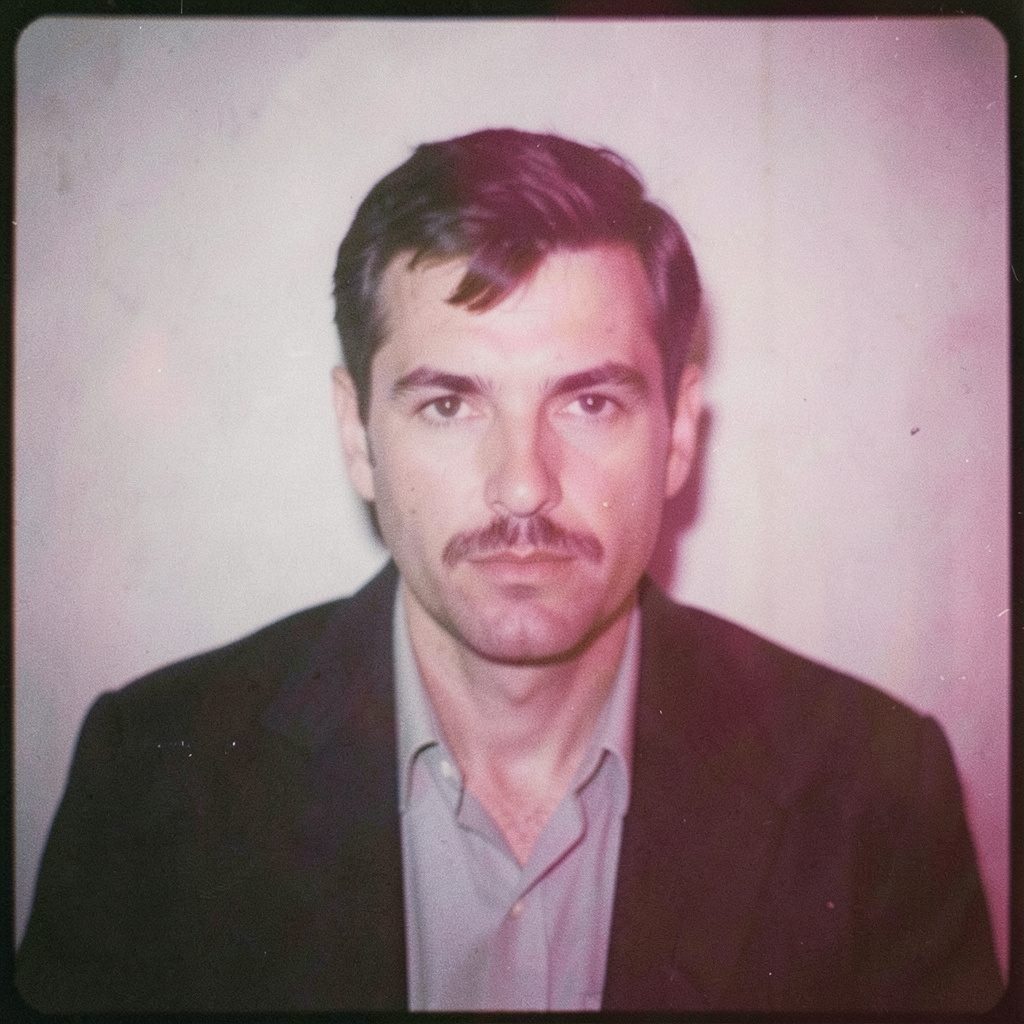
"Photography is not about the thing photographed. It is about how that thing looks photographed."
Reflections on identity and memory in photography
Photography, for me, has always served as a means of holding onto what slips away. Each frame is a deliberate pause, a moment rescued from the flow of time and held up for examination. The themes of identity and memory thread through nearly every series I create, whether the subject is a corporate executive seeking an authentic presence for their brand or a model expressing the quiet theatre of fashion. In my practice in Wrocław, and in projects that reach across continents, these themes provide a unifying language. They allow me to move fluidly between the staged clarity of commercial commissions and the layered ambiguity of fine art.
I work with medium-format cameras, black-and-white film, and traditional darkroom techniques alongside digital tools, because the materials themselves carry memory. The grain of a silver gelatin print, the slight unpredictability of a hand-developed negative, the warm palette of a scanned slide all shape how a viewer reads an image. When I travel to photograph clients or exhibit work abroad, I find that audiences in places as different as Sydney or my hometown respond to these qualities with similar emotional curiosity. The following reflections trace how identity and memory appear in my portrait, fashion, and conceptual series, and how that conversation continues with new collaborators.
Wrocław beginnings and a universal vocabulary
My studio sits in a quiet courtyard in Wrocław's Old Town, in a building that has been repurposed many times across the past century. The walls still carry faint traces of older uses, and that layered history informs how I think about subjects. Every person who sits for a portrait arrives with their own accumulated past, and the camera becomes a tool for revealing what might otherwise stay hidden. I trained in classical analogue techniques at the Wrocław Academy of Fine Arts, where the discipline of long exposures and careful metering taught me to slow down and observe. That training continues to shape how I approach identity, treating each face as a landscape shaped by experience.
The Polish sensibility that informs my work tends toward introspection and a certain stillness. There is an appetite here for images that ask questions rather than provide easy answers, which has shaped the conceptual series I continue to develop. At the same time, I am aware that identity is never a single, fixed thing. A businessman might want to project confidence while quietly carrying the weight of a personal story; a fashion subject might hold an attitude that contradicts the clothing's marketing intent. My task is to find the tension between these layers and present it honestly. This approach travels well across cultures because it speaks to something recognisable in all of us.
Identity in the portrait studio
A portrait commission often begins with a conversation in my studio, sometimes over coffee, sometimes over a glass of something stronger. I ask about the subject's work, their hobbies, the way they want to be remembered. The answers guide everything that follows, from the choice of backdrop to the lighting setup. For business portraits, I lean toward medium-format digital capture for its resolution and flexibility, but I often finish the image with film-inspired tonal curves that lend warmth and a sense of intimacy. The goal is a photograph that captures both professional competence and a recognisable human presence.
Fashion work offers a different kind of portraiture. When I shoot editorial campaigns, identity becomes a kind of costume that the model can wear or discard. Some of my most satisfying fashion images come from the moment when the planned look falls away and the subject's real character emerges, perhaps in a slight asymmetry of expression or a shift in posture. Australian talent and creative teams bring a refreshing directness to this process. There is an ease in the way collaborators in Sydney and Melbourne approach a shoot, a willingness to experiment and a relaxed professionalism that I appreciate. Whether I am photographing for an independent publication or a global brand with an Australian campaign, the underlying negotiation between surface and self remains the same.
Memory and the materiality of film
Memory is the central preoccupation of much of my conceptual work. I have long been drawn to the way film records light in a continuous, physical way, much as the brain records experience. Each frame on a roll of 120 film contains data that cannot be replicated exactly, and the resulting print carries that uniqueness. In my darkroom, I work with fibre-base papers and archival processing to ensure the prints will last for generations. This concern with permanence is, in part, a response to the way digital images now evaporate from view in an endless scroll. A hand-printed photograph sits on a wall and asserts its presence over years.
Several of my ongoing series explore autobiographical themes: childhood objects, family kitchens, fragments of letters. These projects use black-and-white film because the monochrome palette strips away the distraction of colour and lets the geometry of memory emerge. The prints are often intentionally imperfect, with a slight blur here, a slightly under-exposed frame there, to mirror how recollection actually works. Viewers frequently tell me these images remind them of their own grandparents' albums, which is the highest compliment I can receive. The connection between personal memory and shared cultural memory is something I return to again and again, regardless of the country in which the work is shown.
Conversations across cultures, from Europe to Australia
Photographing in Australia has opened new avenues for thinking about identity. The vast distances, the coastal light, and the country's particular relationship to landscape offer a striking counterpoint to the denser, more enclosed spaces of Central Europe. I have spent time shooting along the New South Wales coast, where the quality of light recalls something I have only otherwise encountered in the Baltic. The light over Bondi in the late afternoon has a particular clarity that I find irresistible for portrait work. Inland, the red earth around Broken Hill and the silver-grey eucalypts of the Victorian high country produce a colour palette entirely unlike anything in Poland, and they push me to reconsider how I use colour in commercial briefs.
Australian audiences have responded warmly to my conceptual series. At a recent exhibition at a gallery in Paddington, one of Sydney's older creative neighbourhoods with its terraced galleries and quiet streets, I had extended exchanges with visitors about the European roots of my approach and the way those roots translate into images that nonetheless feel familiar. Conversations at openings in Fitzroy, too, with its blend of converted warehouses and small independent spaces, tend to circle around the same themes of belonging and displacement. The Australian art world is small enough that word travels quickly, yet diverse enough that a Polish photographer working in analogue can find a genuine home here. I have been greeted with the kind of straightforward warmth Australians often reserve for visitors they decide to accept as their own.
I have also noticed that Australian clients approach commercial commissions with a directness that suits my working style. There is less formality in initial briefs, more willingness to discuss the emotional intention behind a campaign. Whether I am photographing a startup founder in a co-working space in Surry Hills or a fashion collection against the granite textures of the south coast, the brief is usually framed in human terms first and commercial terms second. This way of working feels closer to the fine art sensibility I bring from Poland, and it produces results that satisfy both creative and strategic goals. Australian advertising, with its preference for honesty over polish, tends to reward the kind of unforced character study I favour.
Future directions and continuing questions
The questions that drive my work continue to evolve. I am currently developing a long-term project that explores the identity of craft, photographing artisans across several countries including Australia. Shoemakers, ceramicists, weavers, and people whose identities are inseparable from their tools and materials. The first sessions have included a violin maker in Melbourne whose workshop sits behind a quiet lane, much like my own studio in Wrocław. There is something universal about the way a craftsperson's hands and posture reveal a life's devotion, and I want to record that across cultures.
Alongside this project, I continue to take on commercial commissions, because the discipline of meeting a brief keeps the conceptual work honest. A fashion campaign demands a different kind of clarity than a personal series, and both push me forward. My hope is that the body of work I am building, whether displayed at a regional gallery in Australia or held in a private collection in Europe, contributes something to the larger conversation about who we are and how we remember. Identity and memory are not abstract themes for me; they are the substance of every frame I choose to make.
Practical notes for collectors and collaborators
- Choose a quiet space with consistent natural light for the initial conversation and any test shots.
- Plan wardrobe and styling to reflect the subject's true character rather than a borrowed persona.
- A polished business portrait and an unposed character study can comfortably live in the same session, when the brief allows.
- Ask in advance about the differences between digital, medium-format film, and 35mm options, along with the costs and timelines each involves.
- Discuss print selections in person whenever possible, particularly for limited-edition series printed on fibre paper.
Selected Series
A cross-section of commissioned and personal projects spanning fine art, commercial, and conceptual work.
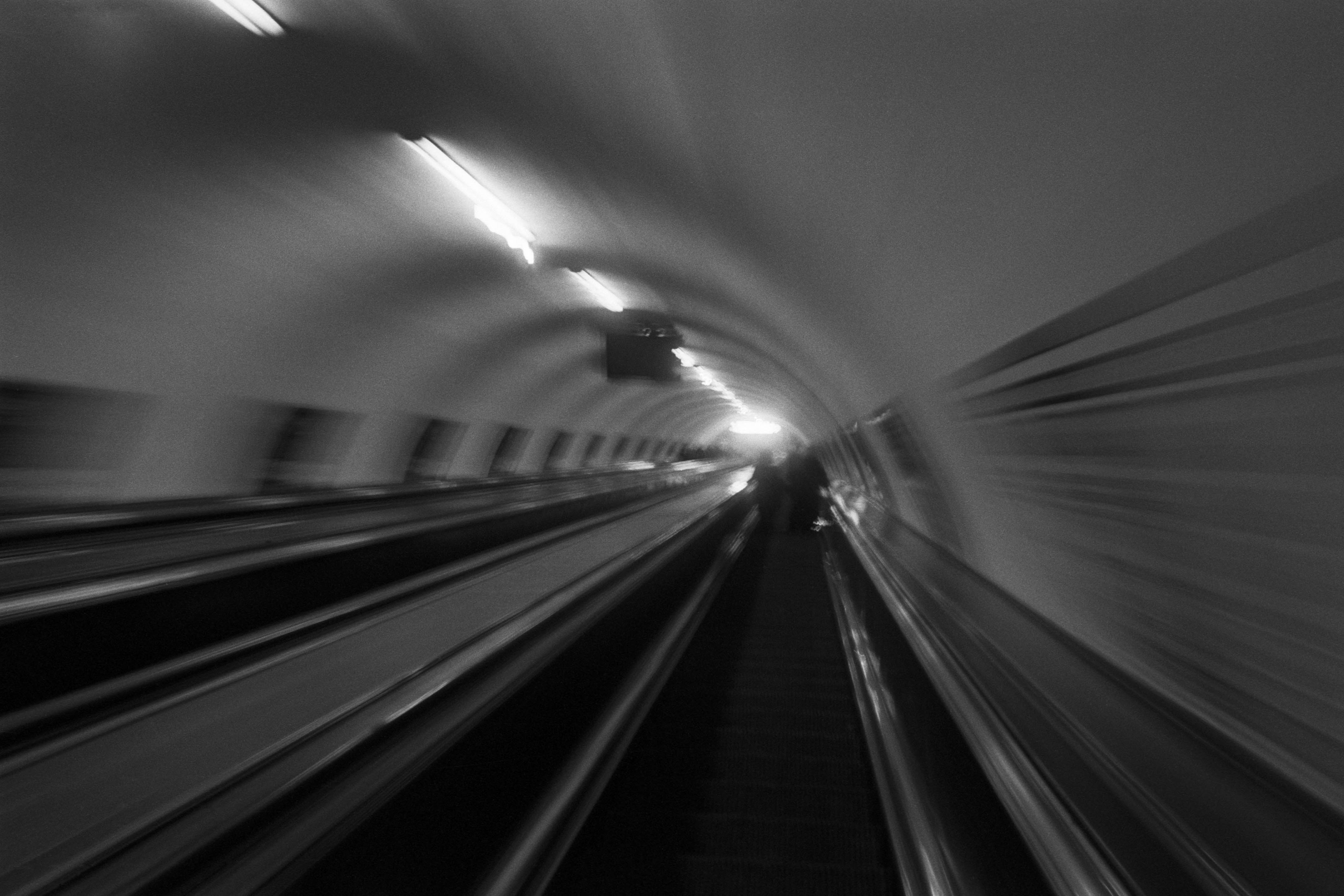
The Wall
2015Winner of the 1st prize & Golden Glass Award at the 11th Photographic Open Championship Olsztyn, and 1st place with the Special Prize of FORMAT magazine at the 3rd Biennial of Art in Piotrków Trybunalski.
View Series →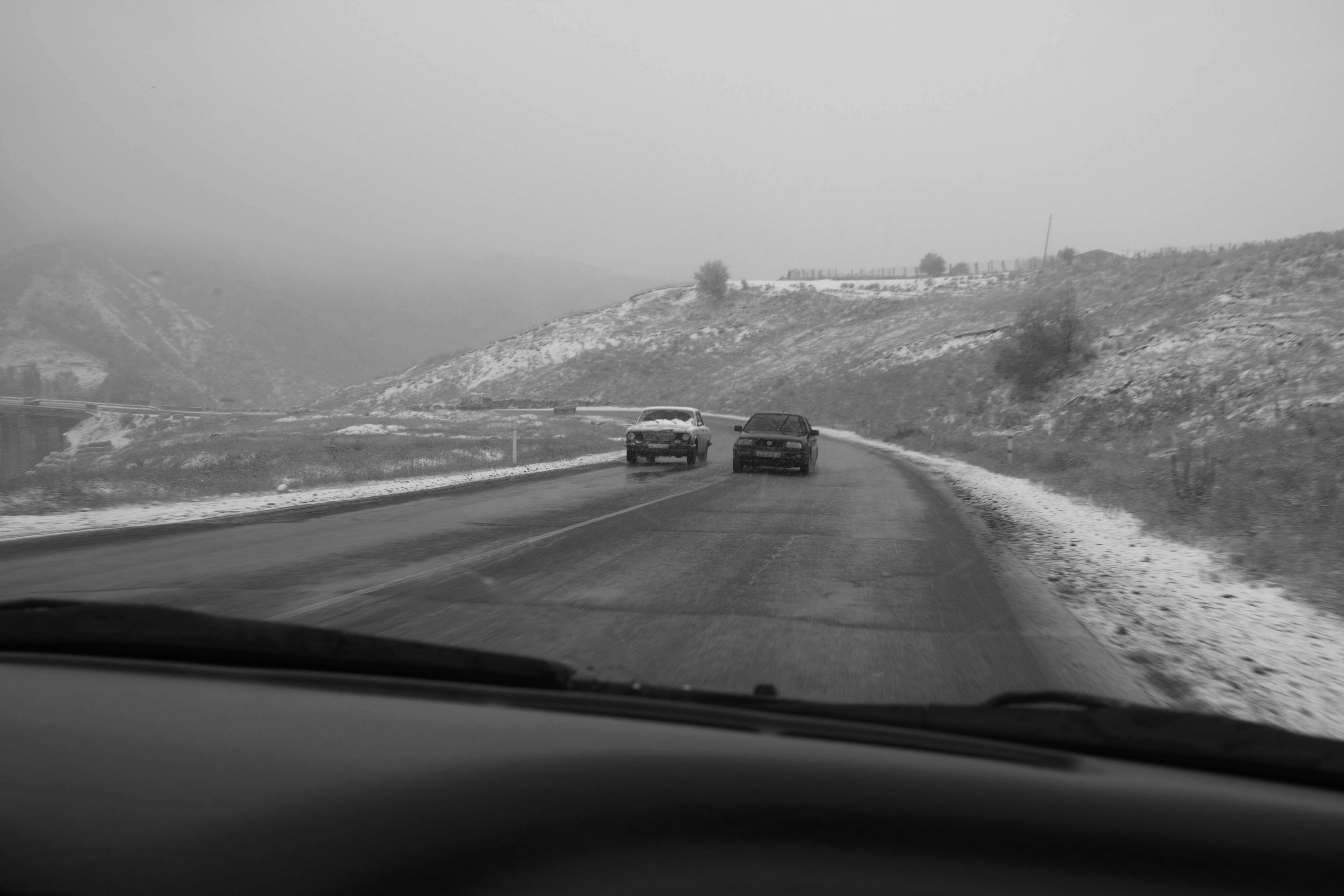
An Engagement Ring
2011A narrative series set in Wrocław in August 2011. Awarded 2nd prize & Silver Glass at the 10th Photographic Open Championship Olsztyn in 2014.
View Series →
Heat Wave
2014A documentary series recording spontaneous events across August and September 2014, capturing the raw energy of a city under the grip of summer.
View Series →