"Photography is not about the thing photographed. It is about how that thing looks photographed."
How to photograph architecture as a background for portraits
When architecture is used as a background for portraits, it should do more than confirm a location. It can establish a profession, reveal a personality, balance colour and texture, and give a viewer a sense of place. The building becomes part of the portrait’s story, while the person remains the point of attention.
The central challenge is to work with structure rather than merely find a wall. Doorways, repeating windows, shadows and converging lines all carry visual weight. A technically neat frame can still feel lifeless if the subject appears pasted onto it, so composition, light and direction need to be considered together from the outset.
Scouting is therefore a creative exercise, not just logistical preparation. A useful location offers enough depth, clean sightlines, changing light and a surface of visual interest without competing with faces. A quiet corner may be ideal for a formal portrait, whereas a busy streetscape can produce a more energetic image.
This is especially relevant in Australia, where contemporary glass towers sit beside nineteenth-century terraces, weatherboard cottages, industrial sheds and verandah-lined homes. Local streets can provide a rich architectural portrait background without studio construction, provided the photographer attends to access, traffic and the distinctive quality of the light.
Find a backdrop with purpose
Begin with a visual inventory rather than a favourite view. Look for a strong material palette, a framed area of shade, repeating geometry or a point where two planes meet. Check what the lens will actually see from the intended position: a pleasing doorway from across the street may disappear behind a parked van or a tree.
Local character gives generic corporate imagery a sense of place. A sandstone terrace in Sydney, a laneway studio in Melbourne, a subtropical Queenslander or the clean curves of a Perth civic building can all become active portrait settings. Choose one defining feature and let it support the person instead of turning the frame into an architectural catalogue.
Next, separate the portrait elements from the documentary detail. Traffic lights, bins, tourists and temporary signs may add realism, but they can also pull the eye away from the subject. Decide which distractions are welcome, then plan camera height and timing to avoid them.
Read the light before the pose
Light determines whether a building feels monumental, intimate or severe. In Australia, clear skies can make open shade look clean while direct sun creates hard-edged shadows across façades. Scout at the same time of day as the session and note how the sun moves across the wall, especially when the portrait is scheduled near sunrise or late afternoon.
Use the Sun Surveyor app or a similar shadow tool to check orientation, but confirm the result on site. Turn the subject towards the brightest open area for gentle modelling, or place them just outside a patch of sun to retain detail in both skin and masonry. Meter for the face and check that the background is not several stops brighter.
Reflections can be as important as direct light on glass, stone and metal. A polariser may reduce glare, although it also removes light and can make skies unnaturally dark, so use it selectively. Buildings hold traces of time as well as light; Imelda Almqvist’s painting time before time offers a useful parallel for seeing architecture as a record of duration and memory.
Place the person within the structure
Once light and location are secure, establish the relationship between figure and building. A person standing close to a window reads as part of the architecture; several steps away may become isolated against it. Test both distances, because physical proximity changes the apparent scale of doors, bricks and people.
Keep the face away from busy intersections of lines. A head placed against a bright window edge or a diagonal roofline can look accidental, while a little deliberate negative space gives the subject room to breathe. Headroom, direction of gaze and the amount of context should reinforce the portrait’s intended tone.
Vertical or horizontal emphasis changes the result too. A low viewpoint can lend authority to an executive portrait, while a level camera and a symmetrical façade can suggest stability and precision. Ensure any diagonal energy is intentional, and check that verticals remain convincing unless a deliberately tilted perspective supports the concept.
Choose the lens and camera position
Environmental portraits often benefit from a 35mm or 50mm lens, which can include the building without forcing the subject so far away that expression becomes distant. An 85mm lens isolates detail and compresses layers, producing a more formal result. For medium-format work, frame deliberately and allow extra space for movement rather than filling the frame from the waist up.
Change position before reaching for a different lens. Moving one or two steps can remove a distracting edge, reveal depth and alter perspective more than switching focal length. A little space between camera and subject also gives the photographer room to direct natural gestures instead of chasing rapid changes in expression.
Keep the sensor or film plane as parallel to the façade as practical when straight architectural lines matter. Tilt-shift lenses and digital perspective correction can rescue converging verticals, but they should support the composition rather than announce the technical adjustment. Leave enough resolution for a commercial crop without weakening the final image.
Work with the Australian context
Australian portrait direction can be conversational without being vague. People often respond well to clear, relaxed instructions: ask them to look towards the doorway, rest one hand on the rail, or take three slow steps. Phrases such as “no worries” and “take your time” can settle a nervous subject, but the key is to give one action at a time.
Commercial demand extends beyond conventional office headshots. Architects, property developers, hospitality groups, creative studios and small-business owners often need portraits that demonstrate both personality and place. A café owner beside the original tiled counter of a Melbourne venue, for example, offers more context than a neutral office wall and becomes valuable for a brand profile.
Build the quote around intended use, including campaign duration, digital channels, print reproduction and exclusivity where required. Australian agencies may book corporate portrait days across several locations, while direct clients frequently need a straightforward licence for websites, press and social media. Clarifying usage in advance prevents a strong image from being limited by an incomplete agreement.
Direct the portrait and manage the setting
Give the subject something to do that relates to the space. A designer can review a detail on the façade, a host can greet an imaginary guest, or a founder can pause beside the entrance before walking towards camera. These actions create changes in posture and expression without requiring exaggerated smiles or stiff, fixed poses.
Watch the transitions rather than only the held pose. The best frame may arrive between instructions, when shoulders settle and the gaze becomes natural. In black-and-white work, pay attention to tonal separation in hair, collars and masonry; in colour, coordinate subtle elements such as fabric, signage and reflected light without making the styling look forced.
Public locations bring practical variables. Melbourne trams, Sydney buses, passing cyclists and Brisbane downpours can interrupt a frame, while a Perth morning may heat exposed brick quickly. Have a nearby indoor alternative, keep equipment under cover, respect property owners and council rules, and carry an appropriate model release and permissions for commercial use.
Build a consistent portrait workflow
A repeatable process protects creative energy on the day. Review the brief, create a location shortlist and note the light direction for each. Visit at the planned hour, make a few test compositions with a stand-in or the subject, then confirm exposure and focal length before producing the final sequence.
The finished series should read as a coherent body, even when the portraits were made at different sites. Keep recurring choices—cropping, black-and-white treatment, background density and level of formality—while allowing each setting to contribute something distinct. Retaining the raw files and a concise record of settings supports future print or campaign requests.
- Scout the exact camera position at the planned hour, including sun direction, reflections, traffic and likely pedestrian movement.
- Record two or three compositions before directing the subject, then mark any background elements that must be excluded.
- Meter for skin, bracket only when necessary, and review histogram and highlights to protect both face and pale masonry.
- Use a longer focal length for restrained portraits and a wider one when the architecture must carry the story.
- Direct one physical action at a time and capture movement between poses to obtain a less guarded expression.
- Secure releases, property permissions and usage terms, then save colour-managed masters and carefully corrected web versions.
Once the sequence is complete, compare the images at full size rather than as small thumbnails. Look for a consistent visual grammar, natural skin tones and backgrounds that support rather than overpower the person. The final body of work should feel specific to its subjects, plausible within its locations and ready for editorial, brand and portfolio use.
Selected Series
A cross-section of commissioned and personal projects spanning fine art, commercial, and conceptual work.
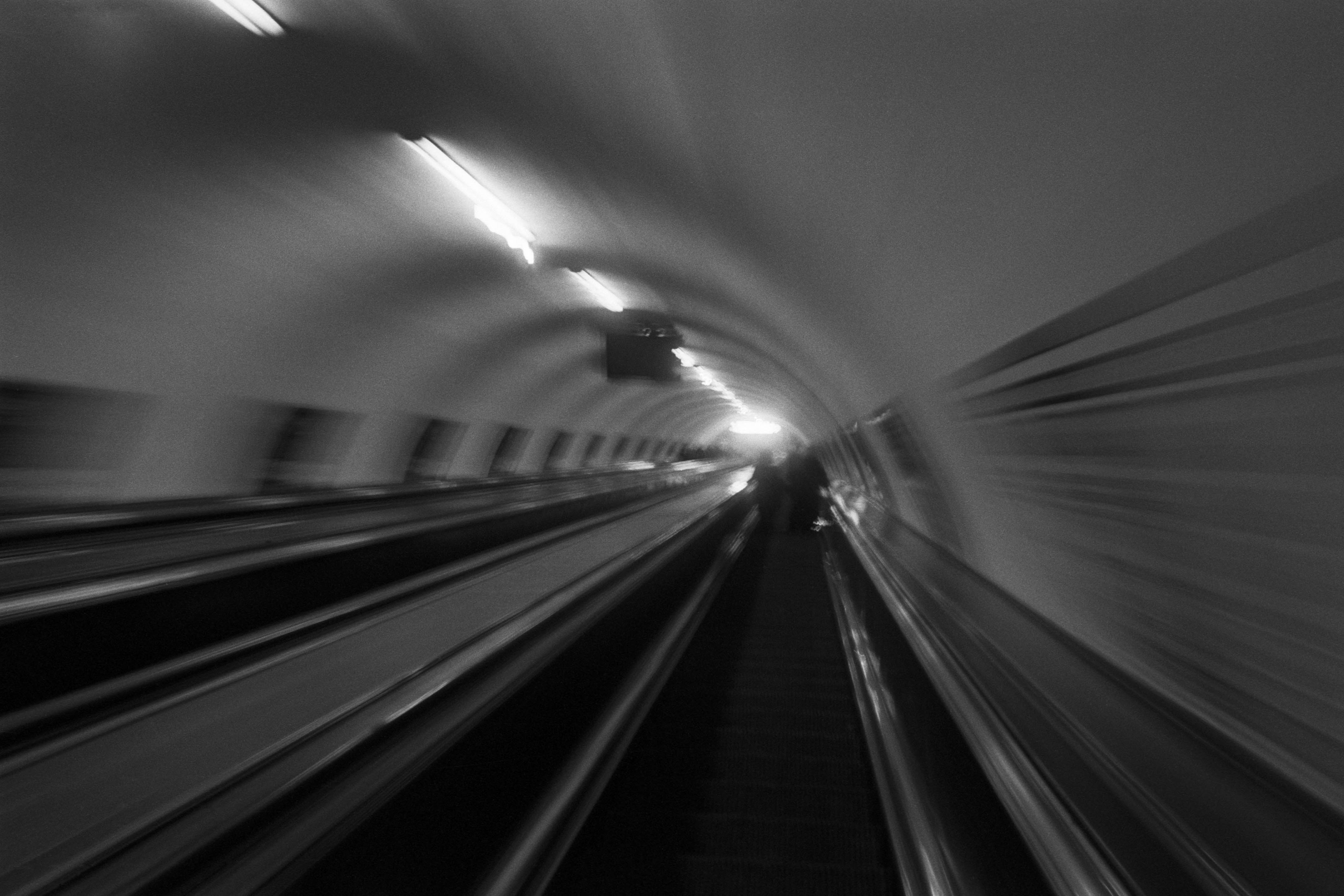
The Wall
2015Winner of the 1st prize & Golden Glass Award at the 11th Photographic Open Championship Olsztyn, and 1st place with the Special Prize of FORMAT magazine at the 3rd Biennial of Art in Piotrków Trybunalski.
View Series →
An Engagement Ring
2011A narrative series set in Wrocław in August 2011. Awarded 2nd prize & Silver Glass at the 10th Photographic Open Championship Olsztyn in 2014.
View Series →
Heat Wave
2014A documentary series recording spontaneous events across August and September 2014, capturing the raw energy of a city under the grip of summer.
View Series →