"Photography is not about the thing photographed. It is about how that thing looks photographed."
Preparing a large-scale photographic commission
A large-scale photographic commission can combine several teams, locations, subjects and delivery formats, often under a fixed date and a substantial production budget. Preparation should turn an attractive visual idea into a controlled working method: clear decisions, named responsibilities, tested equipment and realistic alternatives. That structure gives the photographer room to observe and make deliberate images rather than solving avoidable problems on the day.
Preparation also protects the relationship between client, creative team and production crew. It establishes what “final” means, who can approve an image, how revisions will be handled and what happens when weather, talent or access changes. For fine art, fashion, events or business portraiture, the visual language may differ, but the discipline is similar: define the evidence required before committing resources and preserve enough flexibility to protect both the artistic standard and the commissioned outcome.
Define the purpose, scope and deliverables
Begin with the communication objective rather than a preferred lens, location or style. Identify the audience, the action the images should support and the environments in which they will appear. A campaign may require campaign portraits, environmental details, behind-the-scenes material and social-media crops, while an event commission might need speaker portraits, audience studies, sponsor visibility and same-day selects. Linking each category to a communication purpose prevents visual quantity from becoming an substitute for relevance.
Define the scope in measurable terms. Record image dimensions, minimum pixel requirements, colour profiles, file formats, retouching expectations, delivery dates and the number of edited selects. State whether the client expects RAW files, layered working files, high-resolution TIFFs, web JPEGs or scans of analogue negatives. Detail matters such as crop safety, headline space, retouch limits and usage duration should appear in the written brief rather than being inferred later.
Build the budget from the finished requirement. Include creative fees, casting, travel, accommodation, permits, crew, assistants, styling, hair and makeup, equipment hire, film processing, scanning, post-production, insurance, storage and tax. State clearly whether quotations are in Australian dollars and whether GST applies. A contingency of roughly 10–15 per cent is a useful planning assumption for a multi-day production, subject to the commission’s risk and complexity.
Build the brief and decision structure
Turn the central concept into a concise creative brief that everyone can interpret. Describe the visual proposition, mood, palette, contrast, degree of direction and relationship between posed and observed moments. Include a small group of trusted references while explaining what each reference is meant to demonstrate. Distinguish mandatory elements from desirable discoveries, since an extensive reference list can otherwise restrict the photographer without producing a coherent visual result.
Create a responsibility map before production begins. Name the client lead, creative director, brand approver, talent coordinator, location manager, photographer, stylist and lead assistant. Record who controls the schedule, approves portraits, checks factual accuracy and resolves conflicting notes. Establish one primary contact for daily decisions and one final authority for image selection. Agree on a response time for approvals so a delayed decision does not become an excuse for rushed work or extended storage.
Work backward from the final delivery date. Add finishing, review and approval stages before calculating backwards through capture days, location recce, casting, equipment preparation and briefing. Build realistic buffers into travel and setup. Australian productions must account for interstate travel, urban traffic, public holidays, school holidays and widely separated time zones. A team coordinating with Wrocław should also agree on a single production time zone, especially for calls, live approvals and archival transfers.
Plan people, locations and conditions
Choose people for character, reliability and suitability for the brief, not simply for conventional modelling portfolios. Hold a directed pre-shoot or camera test when the lighting, styling or movement is unfamiliar. Confirm availability for the entire call period and discuss wardrobe changes, grooming, breaks and on-set conduct before arrival. Any participant who is under 18 needs an appropriate guardian, school or venue arrangement, and relevant consent. Crew members should also confirm qualifications, insurance, first-aid certification and emergency contacts.
Survey each location at the intended time of day. In central Sydney and Melbourne, loading zones, tram routes, apartment access, event traffic and restricted parking can consume hours that appear insignificant on a simple call sheet. Check lift dimensions, power locations, background noise, signage and permission to move equipment. Perth’s intense light and coastal winds, Brisbane’s humidity and Darwin’s wet-season conditions require different approaches to exposure, comfort and equipment protection. A remote recce should include representative angles rather than relying only on venue photographs.
Build a weather plan around the region and season. Track heat, UV exposure, rain, wind and fire warnings through official local sources, then define thresholds for moving, delaying or changing the production. Outdoor work may need shade, water, sunscreen and shorter exposure blocks, while dust protection becomes important in dry conditions. Confirm whether generators, venue power or battery charging is available, and remember that Australian mains power is generally 230 volts with Type I sockets. Adapt the equipment list after seeing the site rather than discovering these realities during setup.
Create a resilient capture and post-production system
Design the capture method around the commission’s visual requirements. In my practice, analogue and digital systems serve different purposes: medium-format and black-and-white film can provide a distinctive image character, while digital workflows support art direction, selective colour, accurate focus and efficient commercial delivery. A hybrid approach still needs rules. Decide which moments require the film camera, whether digital frames are documentary or promotional, how lenses and perspectives will relate, and how both sources enter the same edit without looking visually accidental.
Write a working shot list while leaving room for observation. Group essential images by setup, subject and lighting condition, and mark the minimum viable set needed to satisfy the brief. Note details that are easy to miss, such as clean backgrounds, sponsor placement, consistent eye lines and hands. Establish a sequence that moves from controlled portraits to environmental activity, preserving natural transitions and avoiding repetitive coverage. The shot list should coordinate the team and protect coverage, not dictate every instant.
Build redundancy into equipment, media and post-production. Carry duplicate bodies, batteries, memory cards and cables, and assign someone to manage backups during changes. A 3-2-1 data strategy provides working copies, separate drives and an off-site copy; checksums and a written transfer log can reveal incomplete files before they become irretrievable. Film needs protection from heat, moisture and X-ray scanners when travelling. Agree in advance on processing, scanning, colour management, storage location, file naming and responsibility for retaining the master assets.
Secure rights, permissions and safety
Put commercial terms in a written agreement before creative work starts. The document should distinguish copyright ownership from the licence granted to the commissioning party, define permitted uses and territories, and cover duration, derivative formats, retouching, archival storage and later extensions. Under Australia’s Copyright Act 1968, payment for a commission does not automatically transfer ownership. Copyright can be assigned in writing, while moral rights require careful treatment because they cannot be assigned in the same way as economic rights. Cross-border commissions deserve particular attention to governing law and dispute resolution.
Document the permissions attached to every person and property likely to be recognisable. Releases should match the intended commercial use, including online advertising, press, social media and long-term campaign use. Where relevant, personal information and Australian Privacy Principles under the Privacy Act 1988 may affect how participant details are collected, stored and shared. Public photography can still raise privacy issues on private property, in workplaces or in healthcare settings. Check trademark rights, artwork permissions, venue restrictions and the placement of logos before those elements enter the frame.
Treat safety and access as production systems rather than last-minute details. Confirm public liability insurance and any workers compensation requirements for crew, especially on commercial sites. Event organisers may require a site induction, risk assessment, emergency plan or approval from a state or local authority. Drone operations require compliance with CASA requirements and applicable state or territory aviation rules, plus permission from landowners and relevant councils. Keep first-aid supplies, communication methods, emergency contacts and severe-weather procedures visible to the whole crew.
Test, deliver and close the commission
Run a controlled test that reproduces the hardest parts of the final job. Use a representative face, skin tone, fabric, movement and light source. Check focus, depth of field, colour rendition, contrast, portrait orientation and background separation. For analogue work, expose a test roll, process it promptly and assess the negatives or scans before committing to a large quantity. For digital work, verify tethering, cards, catalogue exports and colour profiles. Record settings and lens choices so successful tests can be repeated without relying on memory.
Run production with a brief call sheet and a visible control process. Include local call time, crew contacts, location access, weather, sun position, wardrobe, prop notes, approvals and contingency actions. Brief assistants and stylists on the visual system, then allow the lead photographer to direct the room. Track completed setups against the shot list, protect breaks in extreme conditions and review representative frames before releasing participants. Keep one person responsible for data, another for logistics and a named person empowered to approve final selects.
Close the commission through a controlled handover. Transfer masters with clear folder structures, verify file counts and checksums, and obtain written acceptance against the agreed delivery specifications. Reconcile usage rights, prop returns, equipment hire and invoices, then archive negatives, RAW files, releases, colour profiles and contact sheets in more than one secure location. A well-prepared commission ends with a complete visual record, a clear contractual trail and an image system capable of serving its purpose long after the final frame.
Selected Series
A cross-section of commissioned and personal projects spanning fine art, commercial, and conceptual work.
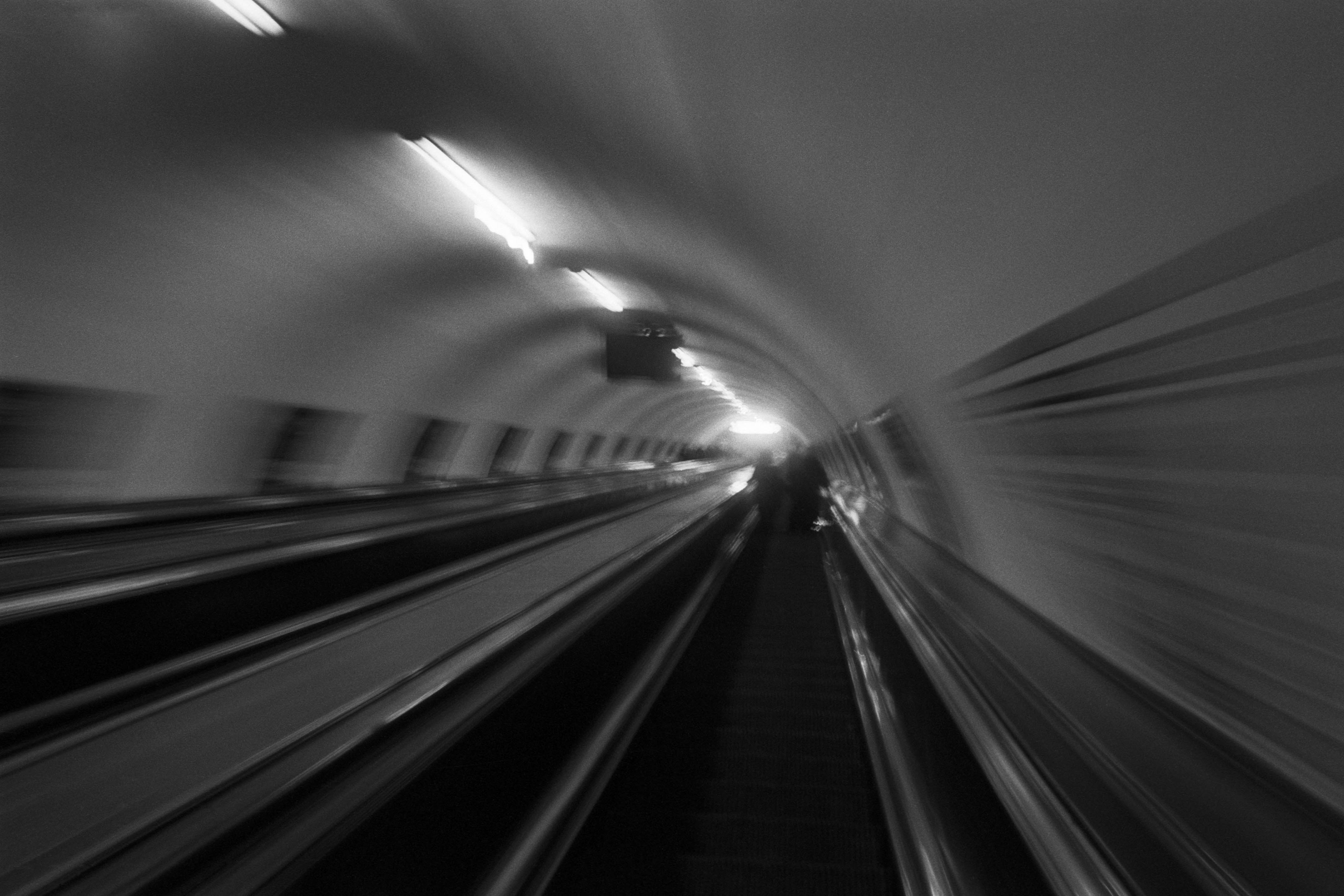
The Wall
2015Winner of the 1st prize & Golden Glass Award at the 11th Photographic Open Championship Olsztyn, and 1st place with the Special Prize of FORMAT magazine at the 3rd Biennial of Art in Piotrków Trybunalski.
View Series →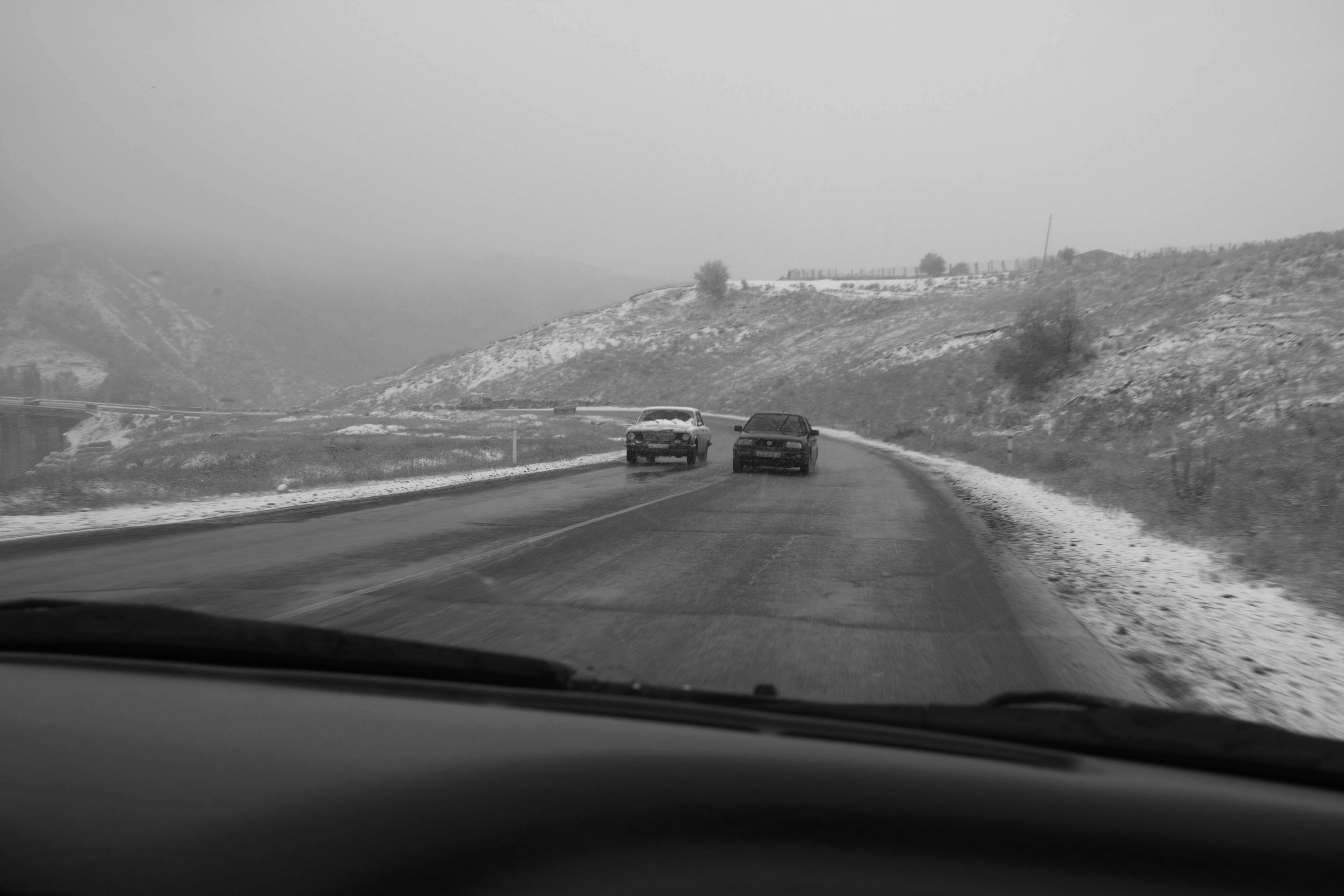
An Engagement Ring
2011A narrative series set in Wrocław in August 2011. Awarded 2nd prize & Silver Glass at the 10th Photographic Open Championship Olsztyn in 2014.
View Series →
Heat Wave
2014A documentary series recording spontaneous events across August and September 2014, capturing the raw energy of a city under the grip of summer.
View Series →