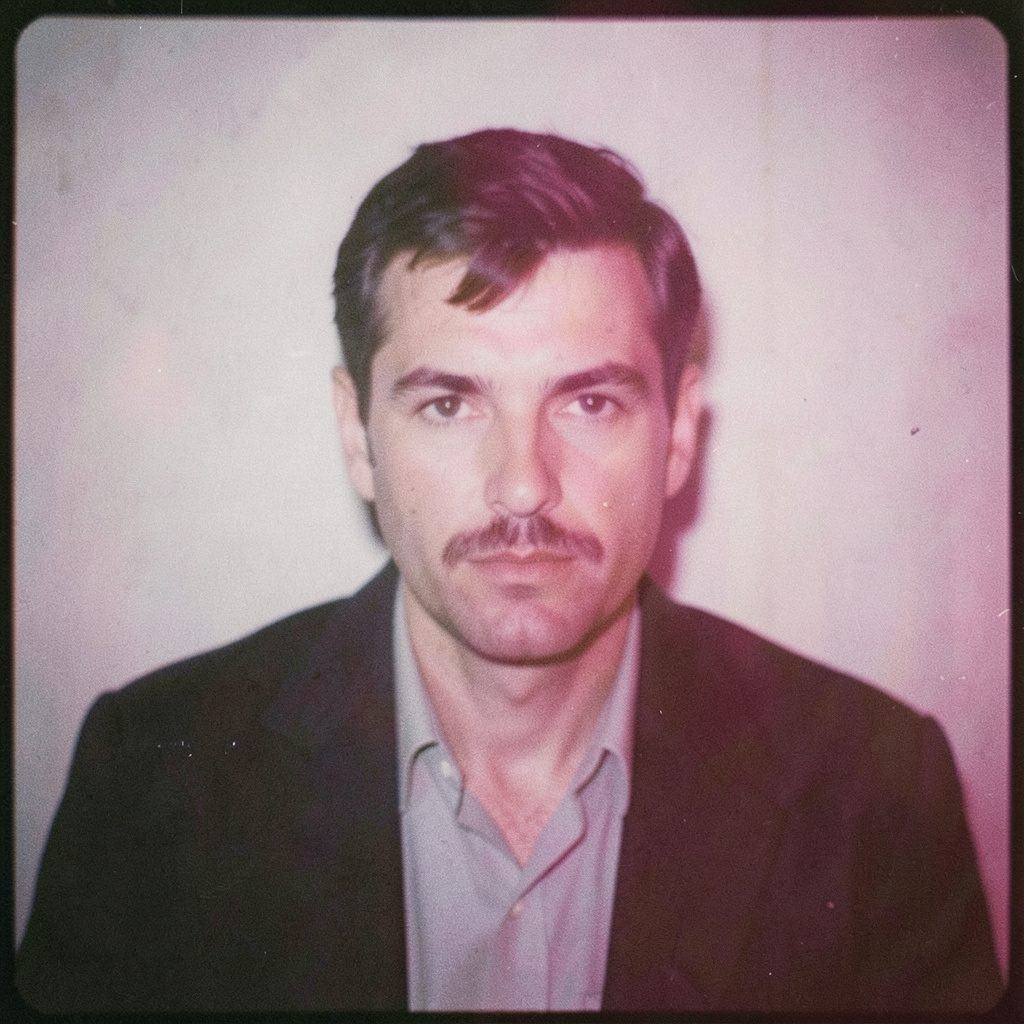
"Photography is not about the thing photographed. It is about how that thing looks photographed."
Medium format photography: cameras, lenses and technique for the discerning photographer
For photographers who want images with a particular weight of presence, medium format remains the format of choice. The larger negative or sensor records more information than 35mm, which translates into smoother tonal transitions, finer detail in shadow and highlight, and a quality of depth that smaller formats struggle to match. It is a format that rewards patience, planning, and a particular kind of looking — qualities that suit the slow, deliberate practice that defines much fine art photography.
In Australia, where light can be ferocious and landscapes stretch from the red centre to the southern ocean, that extra headroom matters. A photographer shooting a bridal portrait on a Sydney rooftop at noon, or documenting stockmen in the Kimberley, benefits from the latitude medium format offers. Whether you work in a Melbourne studio, on a commercial job in Brisbane, or in a darkened darkroom in Adelaide, the format invites a different relationship with the subject. This article explores the cameras, lenses, and techniques that make working in medium format a rewarding discipline.
Why medium format still earns its place
The case for medium format begins with physics. A 6x7cm negative covers roughly three times the area of a 35mm frame, while a 6x17cm panoramic frame captures nearly nine times. Each silver grain, or each photosite on a digital back, has more room to record light, which is why medium format images tolerate enormous enlargement without the structure becoming visible. For a fashion campaign printed across a Brisbane billboard, or a gallery print pulled from a 4x5 inch negative in an Adelaide exhibition space, that scalability is the point.
There is also a way of working that the format encourages. Medium format cameras tend to be slower, heavier, and more deliberate than a mirrorless body. The photographer composes more carefully, exposes more deliberately, and considers each frame as a deliberate act rather than a burst. In an era when thousands of images can be captured in an afternoon, this constraint feels like a luxury. Australian photographers working on long-form documentary projects in remote regions — a year-long study of a Pilbara mining town, say — often return to medium format precisely because it forces them to slow down.
The cost is real, both in equipment and workflow. A new digital back can sit comfortably above thirty thousand Australian dollars, while a complete Hasselblad kit with three lenses can climb past twenty. Film users add the cost of stock and processing. Yet for those whose work lives at large scale, the format remains the most economical path to that kind of image quality, particularly when compared with stitching or cropping smaller files.
Camera systems: from classic film bodies to modern digital backs
The medium format world splits into two broad camps. On the film side, several platforms have stood the test of time. The Pentax 67, with its 6x7cm negative and SLR-style ergonomics, remains popular among portrait and landscape photographers in Australia for its bright viewfinder and rugged build. The Mamiya 7, a rangefinder system that produces a 6x7cm negative from a body barely larger than a 35mm rangefinder, is favoured by travel photographers who want medium format quality without the bulk. The Hasselblad 500 series, with its waist-level finder and interchangeable backs, has become a studio classic, while the Bronica SQ and Fuji GF670 remain sensible choices for photographers stepping up from 35mm.
On the digital side, the landscape has consolidated around a few major players. Fujifilm's GFX system offers mirrorless medium format bodies with sensors roughly twice the area of full-frame 35mm, starting at bodies priced around six thousand dollars. Phase One and Hasselblad produce integrated digital backs paired with technical camera platforms, used by commercial studios producing catalogue and fashion imagery for the Australian and Asian markets. Leaf and Pentax once offered alternatives, and their legacy backs are still encountered on the second-hand market in Melbourne's camera stores.
Choosing between film and digital is rarely about image quality alone. Film offers a particular grain structure, colour rendition, and workflow that many photographers find irreplaceable. Digital offers instant review, faster turnaround, and lower marginal cost per frame. For commercial clients in Sydney or Melbourne who need same-day previews, digital wins. For a personal project or fine art series, film often becomes the medium that shapes the work itself.
Lenses for medium format: character, coverage and choice
Lens choice in medium format follows the same logic as smaller formats, but the differences in coverage and rendering are more visible. A normal lens for a 6x7cm frame is around 80mm, equivalent to roughly 35mm in 35mm terms; for 6x6cm, the standard is 75mm; for 6x9cm, it sits near 100mm. Wide-angle work in the 35 to 55mm range demands careful design to control distortion, while long lenses from 150mm to 300mm and beyond offer flattering compression for portraiture.
The character of medium format lenses differs from their 35mm counterparts. Many older designs, particularly the Zeiss lenses for Hasselblad and the various Mamiya Sekor optics, render skin and fabric with a particular smoothness that comes from longer focal lengths combined with shallower depth of field at equivalent framing. Portrait photographers in Melbourne studios often speak of the "Mamiya look" — a slightly warmer rendering that suits skin tones under tungsten or warm LED. For landscape work, the Schneider and Rodenstock lenses made for technical cameras are prized for their edge-to-edge sharpness, important for the panoramic work popular with Australian landscape photographers shooting from the Flinders Ranges to the coast of Tasmania.
Modern autofocus lenses for digital medium format have closed much of the gap. Fujifilm's GF lenses, designed for the GFX system, are sharp wide open and cover the full sensor area with minimal vignetting. The trade-off is size and weight: a fast 110mm f/2 for the GFX weighs close to a kilogram and costs more than many full-frame zooms. For photographers shooting commercial campaigns in Australian cities, that weight is part of the job. For those walking into remote country with a 6x9 panoramic film camera, smaller and lighter lenses from the Mamiya 7 or Fujifilm GF670 remain the more practical choice.
Film stocks, sensors and the question of character
A medium format negative is only as good as the film that records it, and the choice of stock shapes the final image as much as the lens. For colour negative work, Kodak Portra 400 and 800 remain the default choices for wedding and portrait photographers across Australia, prized for skin rendition and exposure latitude. Fuji's Pro 400H, though discontinued, still circulates through Australian labs and is sought after for its cooler, slightly green-leaning palette. For landscape and fine art, Fuji Velvia 50 and 100 continue to define saturated colour in transparency film.
Black-and-white work in medium format is its own tradition. Ilford FP4 Plus and HP5 Plus offer traditional grain and broad tonal range, while Kodak Tri-X provides a punchier contrast that suits documentary and editorial work. For the smoothest grain and the largest prints, Ilford Delta 100 and Fuji Acros push the format toward what some call "acutance" — extremely fine edge contrast that rewards careful scanning and printing.
On the digital side, sensor character matters less than processing choice. Modern medium format backs render colour with accuracy that would have been unthinkable a generation ago, and the dynamic range often exceeds fifteen stops. The aesthetic choices now happen in software. A Fujifilm GFX file can be processed to mimic the warmth of Portra or the crispness of Velvia using Capture One, Iridient X-Transformer, or dedicated film emulation profiles. Australian photographers who learned their craft on film often blend the two, shooting digital for client work and film for personal projects.
Stock choices for common situations:
- Portra 400 for weddings and outdoor portraits where lighting shifts throughout the day
- Velvia 50 for saturated landscape work in golden hour and for gallery-grade colour prints
- Tri-X for documentary and editorial projects where classic grain suits the subject
- Delta 100 or Acros for the smoothest tonal transitions in fine art black-and-white
Exposure, depth of field and the medium format advantage
The physics of medium format change how exposure and depth of field behave. A 6x7cm negative needs roughly the same total light as a 35mm frame to produce a correctly exposed image, but the light is spread over a larger area, which means the per-area exposure is lower. In practice, this translates into more usable shadow detail and less risk of highlight clipping. Photographers shooting into the harsh light of an Australian summer afternoon — a common challenge for location work in Perth or Brisbane — find that medium format holds onto the sky and the shadows in a way that smaller formats cannot.
Depth of field behaves differently as well. For the same framing and same aperture, a medium format system produces a thinner plane of focus than 35mm. This is why portrait photographers prize the format: an 80mm lens at f/2.8 on a 6x7cm camera renders the background as a wash of soft colour while keeping the eyes sharp. For landscape photographers, the reverse is true. To get front-to-back sharpness in a forest scene, a photographer shooting a 6x12 panoramic camera must stop down to f/22 or f/32 and use careful hyperfocal focusing.
These differences are not subtle, and they reward learning. Many photographers moving up from 35mm initially over-shoot depth of field, stopping down too far and losing the dimensionality that medium format offers. Others under-stop, finding later that their landscape work lacks the sharpness they expected. Australian workshops and mentors — including several run through the Australian Centre for Photography and various TAFE programs — spend considerable time on these practical differences, often using a borrowed medium format body as the teaching tool.
Lighting, workflow and shooting in the field
Working with medium format in the field demands a particular workflow. Tripods are almost always necessary at slower shutter speeds, and a sturdy head matters. In Australia's variable terrain, from the salt pans of Lake Eyre to the mossy forests of the Otways, that means a tripod that can handle wind without transmitting vibration. Cable releases, mirror lock-up where available, and careful attention to camera shake all become part of the practice.
Lighting choices depend on the subject. Studio photographers working in Sydney or Melbourne tend toward strobe and continuous LED systems matched to the longer flash sync speeds of medium format digital systems, often around 1/125 to 1/160 of a second. On location, natural light remains the dominant choice. The Australian light — fierce at midday, golden at the edges of the day — suits the format's broad dynamic range. Photographers shooting fashion or editorial work in Melbourne's laneways often plan sessions around the late arvo light, when the buildings cast long shadows and the warm colour of the stone complements skin tones.
For remote work, the discipline sharpens. A photographer on a multi-day walk through the Kimberley or on a commercial job at a remote station needs to carry enough film, manage battery life, and plan exposures around weather and light. Many Australian photographers who work in these conditions use a combination of digital medium format for client deliverables and film for personal projects, processing and scanning on return. Local labs such as those in Melbourne, Sydney, and Brisbane handle most of the scanning and printing work, though several photographers maintain their own darkrooms for black-and-white film.
Caring for your medium format kit
Medium format equipment is a long-term investment, and maintenance matters. Film cameras benefit from regular cleaning of viewfinders, focusing screens, and lens mounts. Foam light seals on older bodies, particularly the Hasselblad 500 series and Pentax 67, degrade over time and should be replaced every decade or so. Many Australian camera repairers — long-established names in capital cities — still service these systems, and parts remain available.
Digital backs and modern medium format bodies require less mechanical maintenance but more electronic care. Sensor cleaning, firmware updates, and proper storage in dry conditions all extend the life of the equipment. In coastal Australia, where humidity and salt air accelerate corrosion, storing medium format kit in a controlled environment pays dividends. Many photographers working from studios in Bondi or Fremantle keep their kit in sealed cabinets with silica gel or active dehumidifiers.
The format also invites a different relationship with resale value. Well-maintained medium format cameras hold their value remarkably well. A Hasselblad 500 series body in good condition will sell for a significant percentage of its original price decades on. This makes the format not only a creative choice but a sensible financial one for photographers who upgrade their systems slowly and treat their kit as part of a working life rather than a disposable tool.
Routine checks for medium format systems:
- Inspect foam light seals every two to three years and replace when compressed or sticky
- Clean focusing screens and viewfinders with appropriate swabs and blower brushes
- Service shutter mechanisms on mechanical bodies every decade or ten thousand frames
- Store digital backs in controlled humidity below fifty percent, away from direct sunlight
Working in medium format is, finally, a choice about how to spend your time as a photographer. The format asks for patience, rewards planning, and produces images with a particular weight and presence that smaller formats struggle to match. For photographers in Australia — whether shooting a commercial campaign in Sydney, a personal project in the bush, or a portrait series in a Melbourne studio — the format remains one of the most expressive tools the medium has ever offered.
Selected Series
A cross-section of commissioned and personal projects spanning fine art, commercial, and conceptual work.
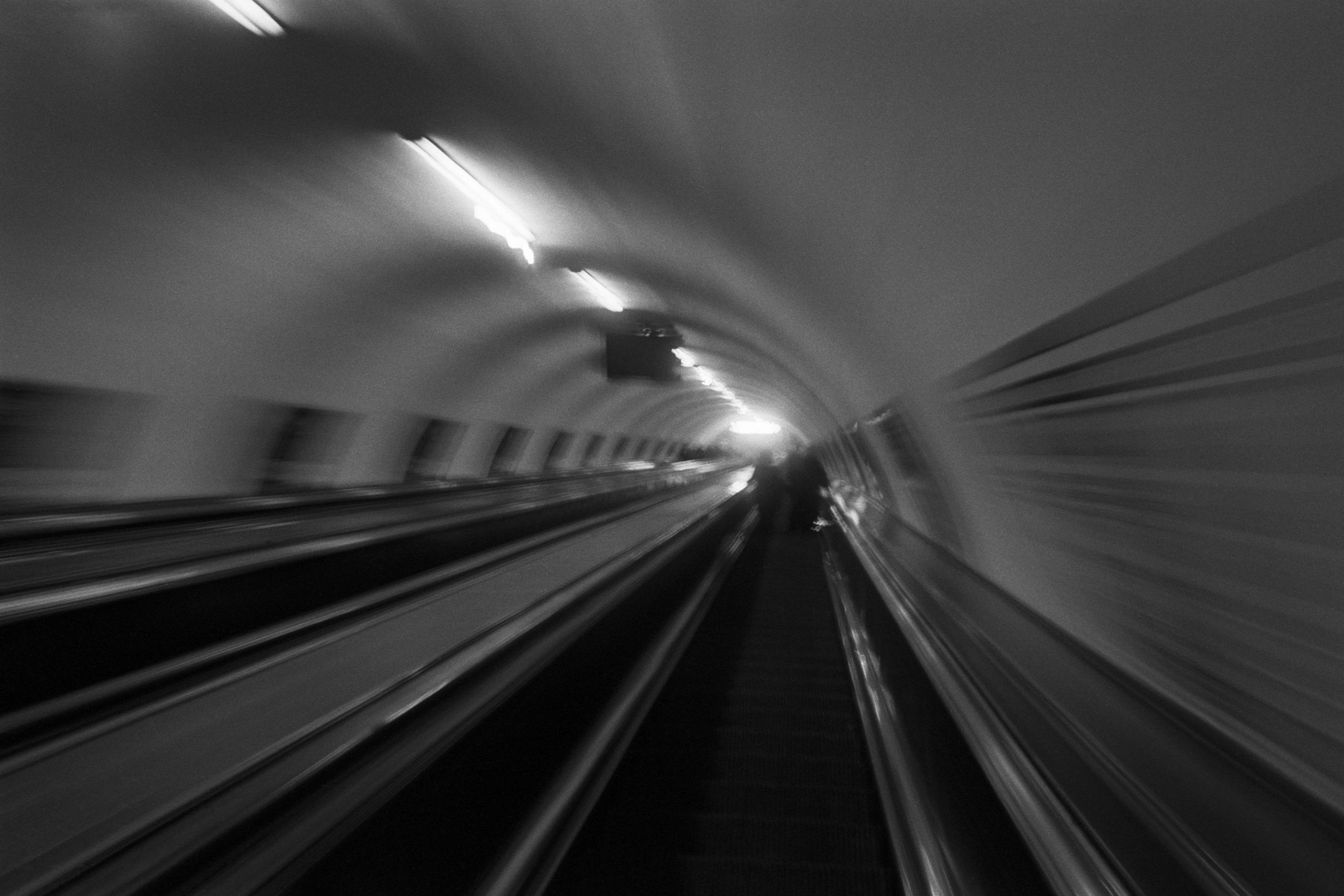
The Wall
2015Winner of the 1st prize & Golden Glass Award at the 11th Photographic Open Championship Olsztyn, and 1st place with the Special Prize of FORMAT magazine at the 3rd Biennial of Art in Piotrków Trybunalski.
View Series →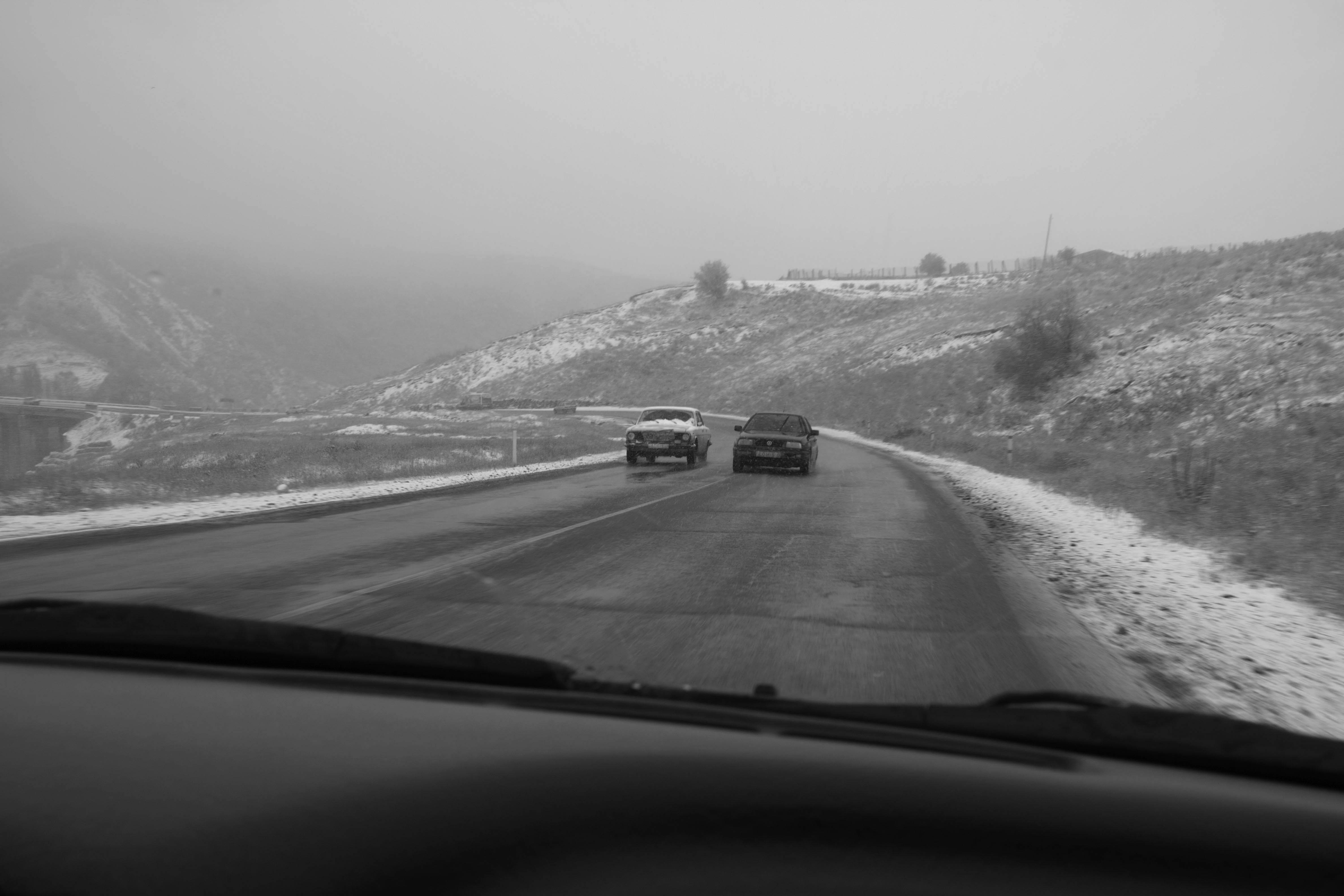
An Engagement Ring
2011A narrative series set in Wrocław in August 2011. Awarded 2nd prize & Silver Glass at the 10th Photographic Open Championship Olsztyn in 2014.
View Series →
Heat Wave
2014A documentary series recording spontaneous events across August and September 2014, capturing the raw energy of a city under the grip of summer.
View Series →