"Photography is not about the thing photographed. It is about how that thing looks photographed."
Retouching and the Fine Art Photograph
Photography has never offered a neutral record. Exposure contains choices about light, framing, timing and exclusion, while printing adds decisions about tone, colour and surface. Retouching extends that interpretation. It may remove a sensor artefact, balance a room, or manufacture a person who was never present. The ethical question is whether alteration remains honest to the work’s purpose, the people represented and the understanding an audience is invited to form.
In my Wrocław practice, I move between medium-format film, darkroom printing and calibrated digital workflows. Intervention should clarify the photographer’s intention rather than disguise its existence. For business portraits, fashion and event commissions, polish may be part of a negotiated service. For a fine art or conceptual series, alteration can become the central idea. Each context needs its own standard, grounded in responsibility rather than suspicion of every pixel.
A changing image, not a neutral one
The useful starting point is a spectrum. Removing dust, correcting lens distortion or recovering a highlight can support the image’s stated meaning. Reshaping a jaw, deleting a bystander or inserting a borrowed hand changes what the frame appears to witness. Fine art often celebrates construction, yet construction and concealment demand different judgments. A visibly theatrical set photograph can be honest when it acknowledges its artifice; a documentary image engineered to look unmediated can deceive.
Intent matters, but it cannot operate alone. A fashion image designed to idealise clothing may permit selective refinement, while a portrait intended to reveal character may be damaged by the same technique. Context and audience affect the claim a photograph makes. The photographer should state what the image evidences: a sitter at a moment, a constructed likeness, a composite memory or an experiment in perception. Without that clarity, a beautiful result can be ethically weak.
Authenticity has several layers. The sitter’s presence, the photographer’s framing, the studio’s direction and final manipulation can each be authentic parts of a work. Calling a photograph “untouched” settles none of these questions, because cameras, software and printing already transform what the eye sees. Calling every adjustment a lie is equally unhelpful. Ethical practice depends on proportion and disclosure: the closer an edit changes apparent facts, the more clearly its nature must be communicated.
Where retouching crosses an ethical line
Not every retouching decision carries equal weight. Spot removal, tonal balancing and colour correction are often invisible and expected. Cloning away evidence, changing age or ethnicity, idealising anatomy or combining figures affects how a viewer understands a person. Generative fill may invent detail with no physical referent. A fine art label does not exempt an image from scrutiny; presenting a manipulated photograph as a direct record merely because it appears in a gallery creates a false distinction between art and evidence.
Four descriptions help separate these actions: correction restores an intended appearance; enhancement strengthens an effect; alteration changes represented content; fabrication invents content. The categories can overlap, and a result may sit differently across cultures. A skin adjustment can look technical to one client and function as an ideological standard of beauty to another. Ethical judgment must consider the pattern of change, its social meaning and the pressure behind it, rather than the software slider used.
Documentation is essential, but a hidden archive does not make manipulation acceptable. Retaining source files, layered working files and a record of major edits enables verification and reinterpretation. It also clarifies authorship when a retoucher, assistant or automated tool has contributed. For long-term projects, I keep a clear chain from capture to final print. This makes decisions inspectable and gives a future audience a way to distinguish deliberate concept from accidental residue.
Consent, authorship, and the photographed body
Consent in photography has layers: permission to capture, agreement about use, and expectations concerning representation. A model release can cover commercial use, yet its effect depends on wording and circumstances. For corporate commissions in Sydney or Melbourne, employees may expect a routine headshot to receive the same flattering treatment as everyone in a campaign. That assumption deserves a clear brief. Explain what will be corrected, changed and subject to approval. Transparency reduces the chance that “standard polish” becomes an unspoken demand to erase age, disability or cultural markers.
Legal rights provide a floor, not a complete ethic. Australia’s Copyright Act 1968 includes moral rights concerning attribution and integrity, subject to its limits. Employment contracts, commissioning terms, privacy and related state or territory laws can also affect control. The Australian Competition and Consumer Commission’s enforcement of the Australian Consumer Law makes claims about service quality and outcomes commercially material. A photographer may break no law while still misrepresenting a photograph. A disclosed alteration can also be lawful but ethically questionable.
Consent also requires an understanding of power. A person may agree to a portrait while feeling unable to reject requests that alter their body, background or history. Respectful consultation and the option to withdraw can protect agency where there is an imbalance. Work involving Aboriginal and Torres Strait Islander people or cultural material needs particular care: individual permission may not replace authority to speak for a community or Country. The CARE Principles for Indigenous Data Governance offer a frame for collective benefit, authority, responsibility and ethics.
Commercial polish and the Australian market
Australian commercial photography often operates in a culture of visible refinement. Fashion campaigns in Sydney and Melbourne, hospitality imagery for Brisbane cafés, property advertising and polished LinkedIn portraits regularly use skin cleanup, reshaping and compositing. These choices answer market expectations in busy image feeds. The ethical task is not to reject those standards. It is to distinguish enhancement supporting a legitimate purpose from alteration that conceals a material feature or creates a false promise about a product, place or person.
Everyday viewing habits sharpen the issue. Audiences scroll through filtered Instagram images, compare professional headshots on phones and accept compression as part of digital circulation. A commercial image may be judged as a sales tool, while an exhibited print invites slower attention. The same file should not silently carry conflicting claims. For a café, a retouched menu photograph and an editorial profile of the owner need not look identical. For a fashion client, an unretouched garment detail can be preserved even when the campaign image is heavily refined.
Institutional settings add another layer of accountability. The National Portrait Gallery in Canberra, the Art Gallery of NSW and the National Gallery of Victoria each set their own curatorial and acquisition practices, so no single Australian house style should be assumed. A work submitted for exhibition or collection may be assessed for process, intent and provenance as well as image quality. Those conversations are strongest when the photographer arrives with an accurate process statement, not a vague assurance that the image is “authentic.” Institutions can provide space for complexity; photographers must supply evidence supporting it.
What transparency can and cannot do
Disclosure works best when it describes what changed and why, rather than attaching a label. “Retouched,” “composite,” “digitally constructed” and “analogue photograph” answer different questions. A caption might explain that exposure was balanced, a distracting object was removed and two source frames were combined. For a series, wall text or process notes can connect those decisions to a larger argument. Transparent language allows viewers to participate knowingly and gives critics more than a binary accusation of manipulation.
Disclosure cannot repair every mismatch between image and claim. Calling a fabricated scene documentary does not make it documentary, and a disclaimer buried on a web page may be ineffective when the photograph circulates alone. Context should not license deception. If visible evidence says one thing and surrounding text says another, ethical clarity has failed. Conversely, uncertainty can be productive in fine art when alteration is perceptible and the concept relies on that instability. The aim is informed interpretation, not suspense about whether the photographer has been caught.
Digital provenance requires care because edits can be separated from the delivered object. Embedding instructions, preserving layered masters and recording the production sequence can support responsible archiving. If generative tools contribute material, their role should be stated where it bears on authorship or content. This does not require a technical inventory for every personal image. It becomes important when work enters exhibition, commercial licensing or long-term collection, where custodians need to know what the photograph is made from and how its meaning was shaped.
Preserving the work beyond the edit
Traditional darkroom practice shows that selective intervention has long been central to photography. Dodging and burning shape tonal emphasis, contrast papers guide print depth, and cropping can redirect attention. Visible grain in medium-format film may coexist with extensive adjustment, just as a pristine digital file may carry almost no manipulation. In my work, analogue processes encourage acceptance of the material record while digital tools support precision and repeatability. Neither medium is morally pure. The issue remains whether each choice is integrated into the work and represented honestly.
A responsible digital workflow keeps the decision chain intact for later evaluation. I retain the capture, calibrated working files and versions showing significant changes, then distinguish technical correction from creative alteration in the archive. An unretouched master allows the photograph to be revisited without treating today’s aesthetic judgment as permanent. For editions, test files should reflect the final print process, since contrast, colour and detail can shift between screen, ink and paper. Consistency protects the edition; transparency protects trust.
Surface and finishing choices deserve scrutiny because they affect what viewers encounter. The craft process of sealing painted typography shows how resin can protect a work while changing its gloss, colour and texture. The parallel is instructive: a protective layer is not automatically neutral, and presentation can modify perception. Fine art prints may be dry-mounted, framed under museum glass, coated or left matt; each choice has benefits and conservation trade-offs. Preference for varnish or gloss should follow the work’s needs rather than conceal craft or masquerade as the photographer’s hand.
A durable standard for artistic integrity
An ethical standard can be compact: preserve the work’s stated purpose, obtain informed consent, make proportional changes, disclose material interventions and retain evidence of the process. These principles adapt across markets. A business portrait needs consistency without erasing identity. Fashion may construct an idealised image if the art direction is clear. Event coverage needs accurate memory without misleading claims of spontaneity. Fine art may alter radically when visual experiment is the subject. The common requirement is that the photograph’s form and account of its making share an artistic logic.
Commercial and fine art practice benefit from different delivery systems but shared candour. Commercial clients should receive agreed retouching examples, scope limits and final and source files where contractually appropriate. Editorial clients need a record of substantial changes, especially where an image could influence public understanding. Fine art projects need process notes, installation context and archives that explain intervention. My aim is to make invisible labour visible enough to be judged, while keeping the delivered work free from defensive explanation.
The most ethically responsible photograph is not always the least altered. It is the image in which technique, intention and representation remain in dialogue. Technical restraint can conceal a questionable premise, while visible transformation can disclose and challenge one. By treating retouching as consequential decisions, documented rather than disguised, photographers can preserve trust without surrendering artistic freedom. The resulting work may be subtle, severe, beautiful or unresolved, but it asks the viewer to engage with an image whose construction has been acknowledged.
Selected Series
A cross-section of commissioned and personal projects spanning fine art, commercial, and conceptual work.
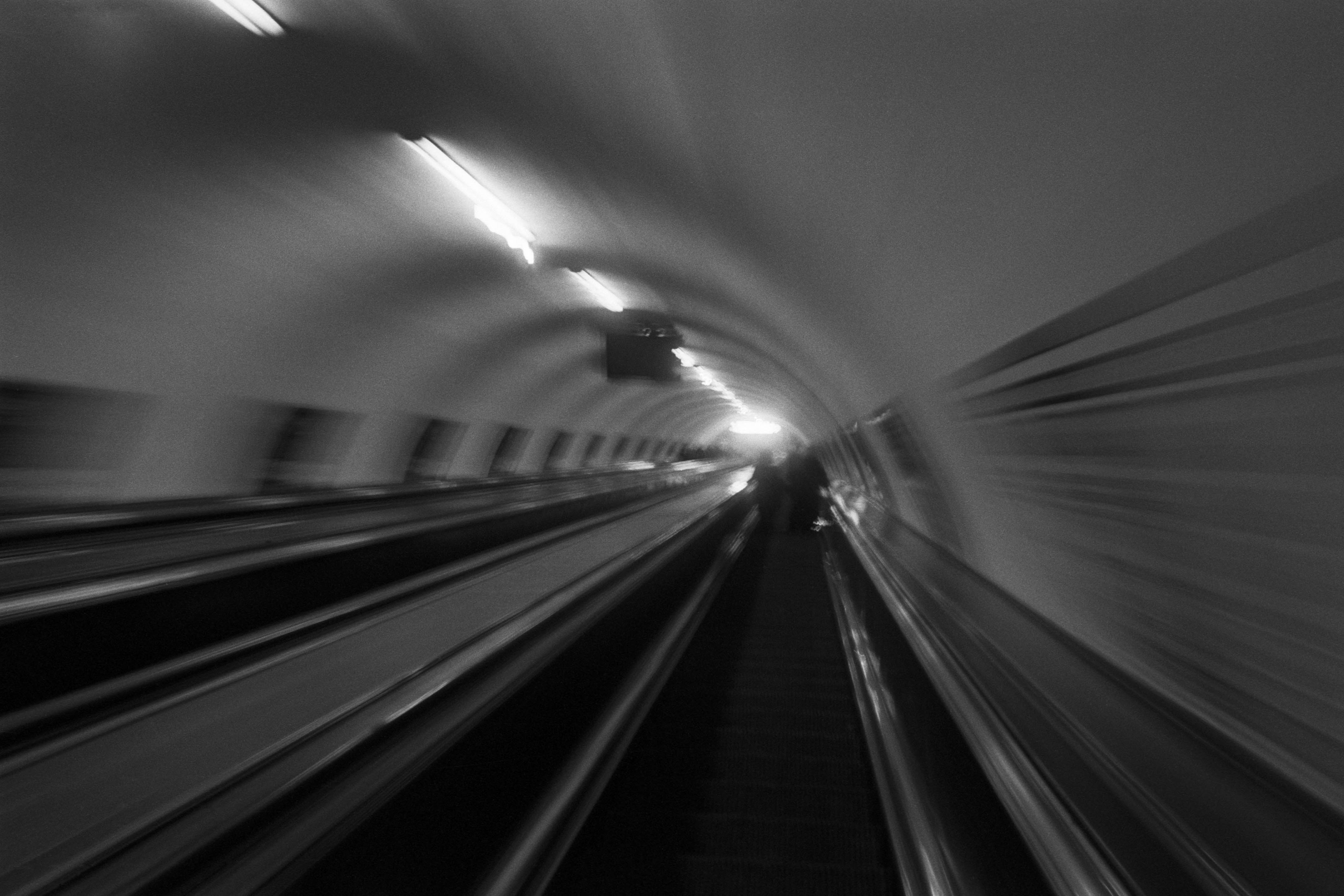
The Wall
2015Winner of the 1st prize & Golden Glass Award at the 11th Photographic Open Championship Olsztyn, and 1st place with the Special Prize of FORMAT magazine at the 3rd Biennial of Art in Piotrków Trybunalski.
View Series →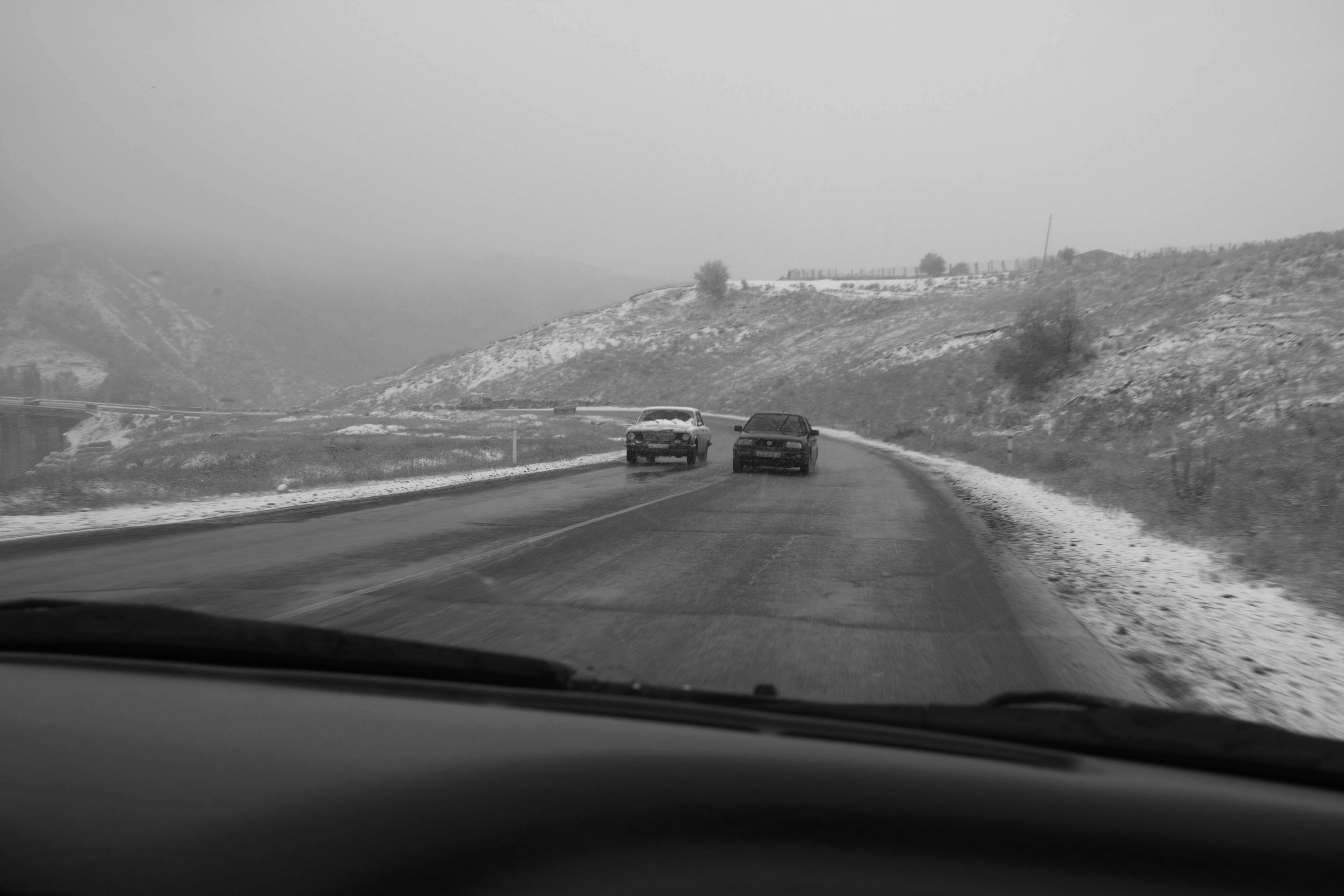
An Engagement Ring
2011A narrative series set in Wrocław in August 2011. Awarded 2nd prize & Silver Glass at the 10th Photographic Open Championship Olsztyn in 2014.
View Series →
Heat Wave
2014A documentary series recording spontaneous events across August and September 2014, capturing the raw energy of a city under the grip of summer.
View Series →