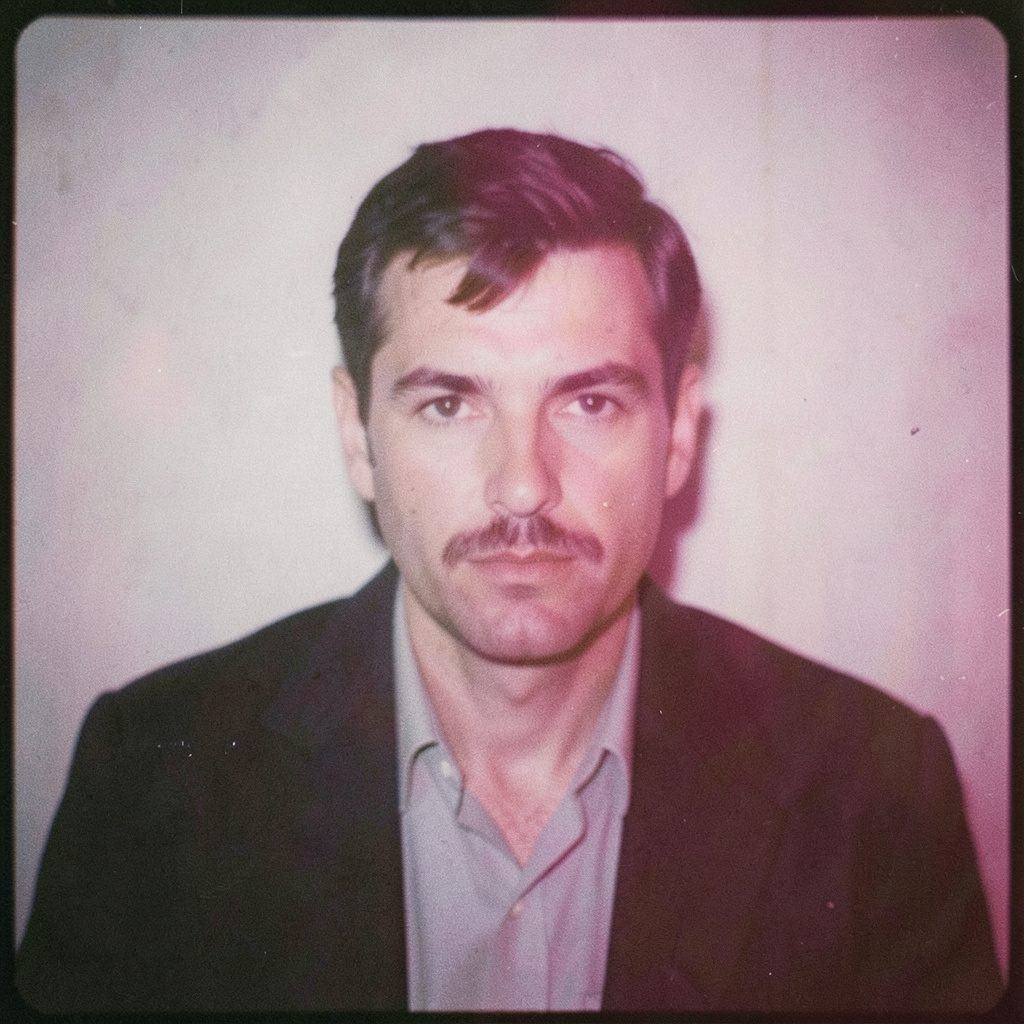
"Photography is not about the thing photographed. It is about how that thing looks photographed."
Classic cinema and the quiet craft behind my photographs
When I develop a new series in the darkroom or plan a portrait session in a converted Sydney warehouse loft, the first references that arrive in my mind are rarely drawn from photography books. They come from films I have watched and re-watched for years, from the black-and-white chiaroscuro of a 1940s melodrama to the saturated frames of a bygone Hollywood epic. Cinema has become a kind of silent tutor, shaping the way I compose an image, the way I read light across a face, and the way I allow a single still moment to carry the weight of an entire story. In my work, the boundary between a photographed image and a filmed sequence often dissolves, and that is precisely where I find the most freedom to create.
Growing up in Wrocław, I spent long evenings watching restored prints on a small television set, fascinated less by plot than by texture, by the slow tilt of a camera and the way a doorway could become a character of its own. Later, studying fine art and working on editorial commissions across Europe, I noticed that the photographers I admired most shared that same cinematic instinct. Whether they were shooting on large-format film or a digital back, their pictures behaved like frames from a film that never quite existed, evocative rather than literal. That realisation quietly redirected my entire practice, pushing me toward analogue processes, hand-printed silver gelatin work, and conceptual series that ask the viewer to stay a moment longer than usual.
Light as the original cinematographer
Long before I touched my first medium-format camera, I was reading light the way a cinematographer reads a room. Classic studio films taught me that light is never neutral; it is a narrator that can whisper, confess, or accuse. I still keep a folder of stills from films such as Citizen Kane and The Third Man, not for nostalgia but as working diagrams of how a single source can carve a cheekbone or dissolve a background into velvet shadow.
On a commercial shoot in Melbourne's Hosier Lane, I deliberately placed a bare tungsten lamp at a steep angle so the painted graffiti would fall into darkness, leaving only the subject's profile. The client wanted something bright and even for their annual report, but the result they remembered months later was the moody portrait, the one that looked like a frame lifted from a film noir. Light, when handled with restraint and confidence, can carry an entire emotional register before a single expression is read on the model.
Australian sun, which can flatten a face within minutes, has forced me to think like a gaffer rather than a casual observer. In Perth and Adelaide, where midday light behaves almost like a studio strobe, I rely on flags and scrims the way a director of photography would. The goal is never to fight the conditions but to redirect them, the same principle that guided Jack Cardiff through the black-and-white world of Black Narcissus or that drives today's film sets in the Blue Mountains.
Composition as a language learned in the cinema
A photographic frame is not a window; it is a stage. Cinema taught me to choreograph negative space with the same care that a director gives to the corners of a wide-angle shot. I look at the four edges of my viewfinder and ask whether the eye has somewhere to travel, whether the geometry supports the mood, and whether the subject stands exactly where tension lives.
When I shot a fashion editorial on the headlands near Bondi, I framed the model off-centre and allowed the Pacific to dominate two-thirds of the image. A critic later compared it to a still from a Wim Wenders road movie, and that comparison delighted me, since it meant the cinematic instinct had translated into a new location. Composition, in this sense, is a portable language, fluent on a studio backdrop in Wrocław and equally at home on an Australian cliff at dusk.
Symmetry, too, comes directly from the movies. Kubrick's long corridors and the doll-like formality of The Shining taught me that a perfectly centred subject can feel deeply unsettling. I have used that trick deliberately in conceptual portraits, where the subject stands alone in an empty corridor of a former bank in Brisbane's CBD, light pouring in from a single tall window. The audience reads discipline, history, perhaps loneliness, and the photograph does not need a caption to deliver any of it.
The portrait as a character study
A face in a photograph behaves a lot like a face on a cinema screen: it is expected to suggest an entire biography. Bergman understood that a close-up of an eye could replace three pages of dialogue, and I have built much of my commercial portrait practice on that same belief. Before a session, I read the subject the way I would read a casting sheet, looking for tension, habit, posture, the things a casting director would underline.
In Brisbane, I photographed a creative agency owner who insisted she was "boring on purpose". Halfway through the shoot, I asked her to remember a moment from her childhood that still made her angry. Her jaw tightened, her gaze dropped, and the shutter fired. The resulting image, hand-printed on fibre paper in my darkroom, became one of the strongest portraits in her company's annual report. Cinema taught me to wait for the in-between moment, the one a screenwriter leaves on the cutting-room floor, where the character is no longer performing.
During a campaign for a Sydney legal firm, I asked each partner to bring a single object that described their work. A barrister arrived with an old dictaphone, a junior associate with a chipped coffee mug from a Melbourne laneway café. Those objects became props in a scene, and the resulting portraits behave like character studies, the kind of images that suggest a back-story without ever narrating it. The film grammar of prop, posture, and gaze travels surprisingly well into a corporate context, lifting the work above the standard headshot.
Colour, mood, and the memory of Technicolor
There is a particular kind of blue that lives in old Hollywood night scenes, the kind that never appears in real life, and yet feels more real than reality. I chase that blue in post-production and in my choice of wardrobe and set design. A black-and-white series may sit next to a Technicolor-inspired editorial on my website, and both belong to the same obsession with emotional temperature rather than documentary accuracy.
A fashion client in Sydney once requested a campaign that felt "like the last scene of a French New Wave film", which was almost too perfect an assignment. We dressed the model in a simple linen shift, drove to a beach north of Coffs Harbour, and worked only in the golden hour before the sun dropped behind the dunes. The brief asked for cinematic nostalgia, and the landscape, the wind, and the carefully graded print delivered exactly that.
Colour grading, in my workflow, is a finishing decision rather than a correction. I treat midtones the way a colour timer would in a 1970s laboratory, pushing greens toward teal, warming skin into amber, lifting shadows toward plum. Australian landscapes, from the ochre of the outback to the silver eucalyptus of the south coast, already carry a strong cinematic palette, so my role is often restraint rather than invention.
Movement, stillness, and the magic of a frozen frame
Cinema is movement, photography is stillness, yet I often find myself chasing a single moment that contains the ghost of both. Think of the famous Odessa Steps sequence in Eisenstein's Battleship Potemkin: a single still from it carries the violence, the shock, and the geometry of the entire scene. I work with the same ambition when I shoot events, editorial fashion, or performance.
At a contemporary dance performance in Melbourne's Southbank, I photographed a soloist mid-leap and later selected a frame where her arms formed a perfect diagonal across the composition. The image looked like a film poster from the 1960s, all suggestion and momentum. The lesson, repeated endlessly, is that a great frame should feel like a moment a director chose to extend indefinitely.
The challenge with movement is not freezing it but choosing the right slice of it. Cinema gives me that vocabulary, and I borrow it freely, even when the final medium is a static print on archival paper. Wedding photography, corporate events, and live theatre all benefit from this approach, since the eye still reads gesture, anticipation, and resolution in a single frame.
Analogue texture, digital polish, and the feel of grain
Watching a classic film projected on a wall carries a texture that no clean digital file can replace. The grain moves, the highlights breathe, the shadows have weight. I make my photographic prints with that sensation in mind, choosing silver gelatin paper for certain series and a careful digital workflow for others, but always preserving the gentle imperfections of light.
Some of my commercial clients initially ask for crisp, clinical images, yet they often return asking for a softer finish after seeing my editorial work. Grain, subtle halation, the slight bloom around a backlight, all of it signals authenticity and time. I have begun offering that texture as a deliberate stylistic choice on fashion shoots in Adelaide and on personal projects along the New South Wales south coast.
Medium-format film behaves like a small cinema in the hand. The negative rewards careful lighting with a tonal range that digital sensors are still trying to match, and the act of slowing down to load a roll of 120 reminds me of the patience a cinematographer brings to a long setup. That discipline, more than any specific tool, is what gives my work its atmosphere.
Narrative series and the unfinished film
The most ambitious projects in my studio behave less like portfolios and more like screenplays. A conceptual series asks the viewer to imagine scenes that fall between the prints, sounds, weather, conversations that never quite appeared on camera. Cinema has taught me that the story is told as much by what is missing as by what is visible.
For a recent exhibition, I built a series around an imagined 1970s European traveller moving slowly across Australia, using locations from the Barossa Valley to the red centre. Prints were hand-developed in my darkroom, each frame looking like a still recovered from a forgotten film archive. Visitors stayed far longer than they expected, and several asked whether the story existed somewhere as a feature. It does not, and that is precisely the point.
My practice continues to evolve, fed by late-night viewings of restored classics, conversations with directors of photography, and the patient rhythms of the darkroom. The dialogue between cinema and photography remains an open script, and every new commission becomes a chance to add another quiet scene. Readers curious about the longer arc of that conversation can read more about my exhibitions, awards, and travels on my bio page.
Selected Series
A cross-section of commissioned and personal projects spanning fine art, commercial, and conceptual work.
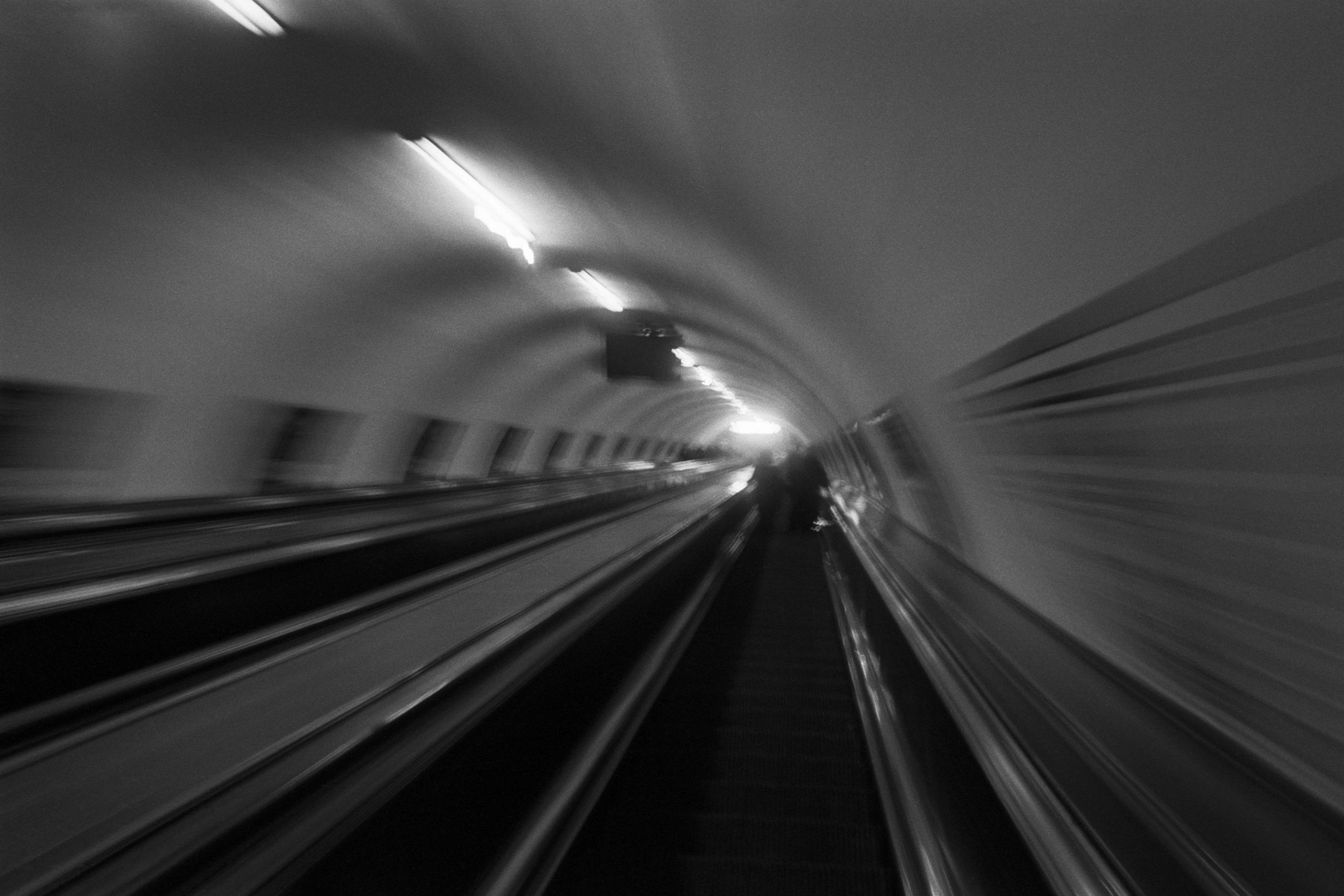
The Wall
2015Winner of the 1st prize & Golden Glass Award at the 11th Photographic Open Championship Olsztyn, and 1st place with the Special Prize of FORMAT magazine at the 3rd Biennial of Art in Piotrków Trybunalski.
View Series →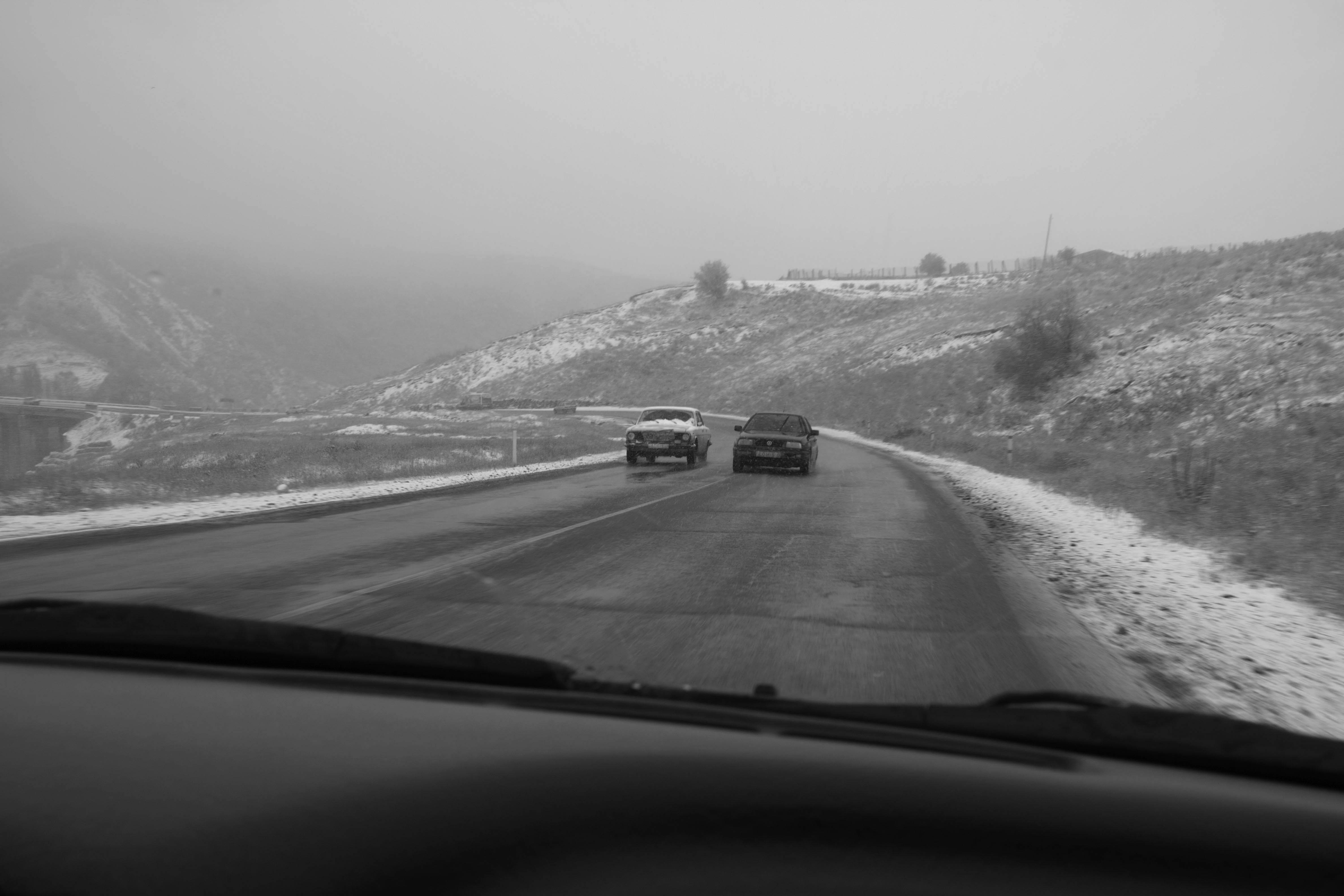
An Engagement Ring
2011A narrative series set in Wrocław in August 2011. Awarded 2nd prize & Silver Glass at the 10th Photographic Open Championship Olsztyn in 2014.
View Series →
Heat Wave
2014A documentary series recording spontaneous events across August and September 2014, capturing the raw energy of a city under the grip of summer.
View Series →