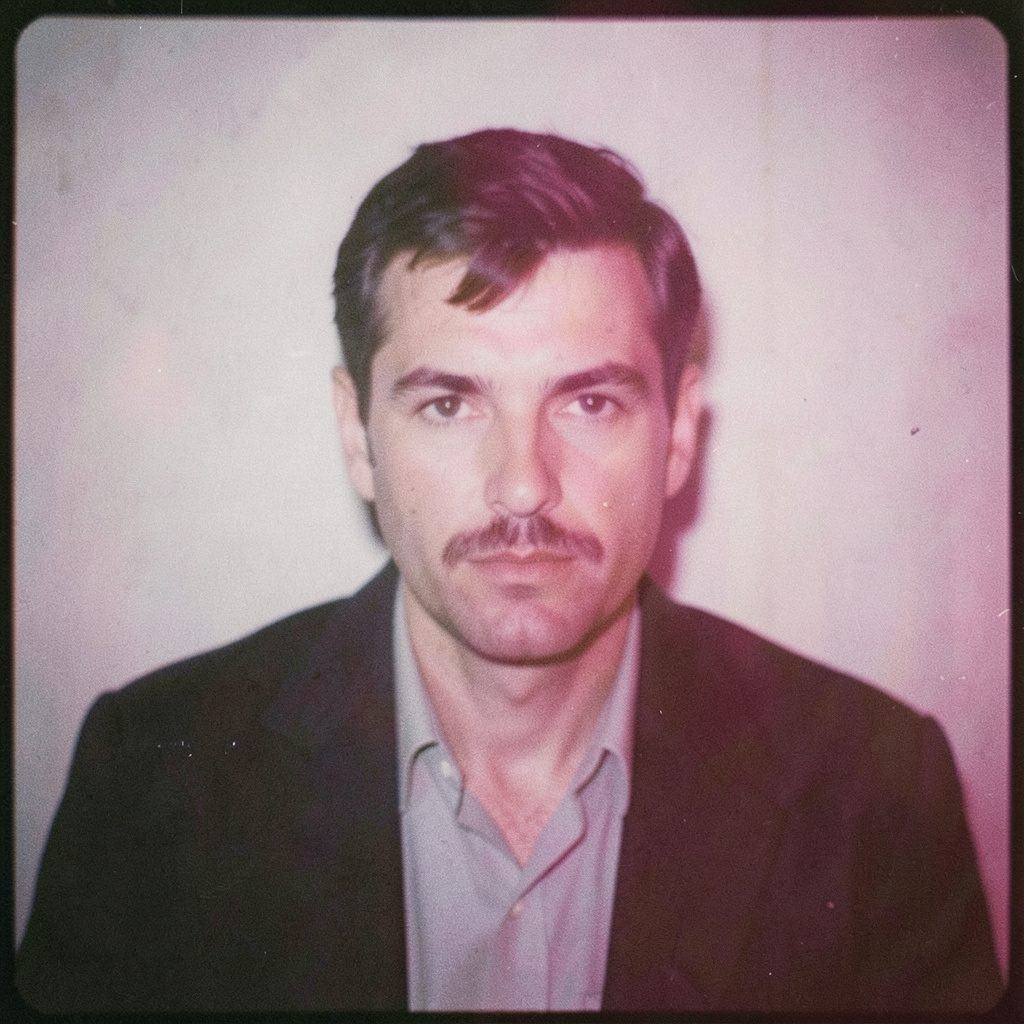
"Photography is not about the thing photographed. It is about how that thing looks photographed."
Polish Terrain and the Quiet Roots of My Photographic Vision
For an artist working out of Wrocław, the surrounding landscape is rarely a backdrop. It is the first teacher, and often the last one too. The Silesian lowlands, the slow rivers, the long winters, and the broad skies have been the silent collaborators behind every frame I have made, from early personal projects to commissioned portraits and fashion editorials. Even when a brief asks for something far removed from home, the way I frame a face, weigh a shadow, or choose a colour palette carries the imprint of the terrain I grew up reading.
People often expect a photographer's style to come from cameras, lenses, or darkroom tricks. Mine comes first from walking. From the patient observation of mist over a meadow near Oława, from the silver shimmer of the Baltic on a windy afternoon, from the heavy silence of a forest after snow. What follows is an attempt to trace those origins honestly, to name the specific Polish places and qualities that shaped the way I see, and to consider how that inheritance travels with me when I work abroad, including with collectors and clients from Sydney, Melbourne, and other Australian cities.
The lowlands around Wrocław and the weight of flat horizons
Wrocław sits on a plain that does not flatter the eye. There are no dramatic peaks nearby, no cliffs, no sudden escarpments. What the land offers instead is distance, and a kind of honesty about proportion. I learned early that a flat horizon is a test of attention: when nothing in the foreground shouts, the eye has to learn to listen. The Oder valley, the patchwork of fields around the city, the long avenues of poplars and birches that mark old country roads — these taught me that a photograph can hold its weight through restraint rather than spectacle.
Working in such a place also shapes a certain kind of compositional instinct. I look for the slight break in a line, the single tree that interrupts a sweep of grass, the figure that gives scale to a sky. The flatness pushes me to seek out small irregularities and to trust them as anchors. It is a discipline that quietly informs everything from a fashion layout to a corporate portrait, where the background must never compete with the person standing in front of it.
Mountains, lakes, and the counterweight of vertical land
The opposite of Wrocław's plain lives a few hours to the south and east. The Tatra mountains rise abruptly, almost politely, and the Masurian lake district spreads a watery quilt across the north-east of the country. Both places entered my practice during long student trips, the kind that involve too much film, too little sleep, and a lot of cold fingers. In the Tatras I learned that a vertical line carries a different emotional charge than a horizontal one. The sharpness of a ridge, the drop of a cliff into a valley, the way morning light catches granite — these taught me about tension and counterweight.
In Masuria the lesson was different again. The lakes mirror the sky so faithfully that the horizon dissolves. I spent entire mornings there watching the boundary between water and air grow uncertain, and that taught me to look for ambiguity, for the moment when a scene refuses to declare itself. Both regions quietly pulled my eye in opposite directions: the Tatras taught me structure, the lakes taught me dissolution. I think of them as the two hands that hold my composition together.
Light as a seasonal companion
Polish light is not generous. It is filtered through long grey seasons, through snow glare, through humid summers that turn the air slightly milky. The light changes its mind often, and because of that I learned to read it the way a sailor reads wind. In winter the sun sits low and throws long, raking shadows that can carve a face into something almost architectural. In summer the evenings stretch for hours and the sky never quite darkens, offering a soft, directionless glow that flatters skin and fabric alike.
This education in subtle light became the basis of my entire approach. When I travel for work, I am rarely surprised by weather, because Polish conditions trained me to expect the unexpected. Commissioning a portrait session in Sydney during a humid week felt oddly familiar; the way harbour light scattered through marine cloud reminded me of an August morning over the Oder. Australian photographers often speak of the country's famous clarity, and it is true, but I was prepared for the softer days by years of overcast Polish winters. Knowing how to work under a flat sky is, I believe, a quiet advantage in any studio or on any location.
Forest, fog, and a black-and-white inheritance
Poland is one of the most forested countries in Europe, and fog is a recurring guest in its lowlands and river valleys. The Białowieża forest on the eastern border, the Bieszczady hills in the south-east, the pine woods that surround many lakes — these taught me to look at depth in layers rather than in single planes. Fog taught me that contrast is not always about dark and light; it can be about presence and absence, about what is suggested rather than shown.
It is no accident that I keep returning to black-and-white film. Medium-format analogue work, silver gelatin prints, the patience of a darkroom — these are not affectations but continuations of what the Polish landscape first offered me. Mist over a meadow is already a monochrome image waiting to happen; a row of birches against a grey sky asks for grain rather than gloss. The traditions of Polish documentary and landscape photography, from the humanist school of the post-war decades to contemporary practitioners, fed into that instinct. I came to monochrome honestly, because the land gave me no other honest option.
Memory, history, and the land that carries it
No account of Polish landscape is innocent of history. The country carries visible layers: pre-war manor houses, traces of partition-era architecture, concrete monuments, churches with thick walls and thinner ceilings, fields that were once somebody's battlefield. Walking anywhere in Poland, you are rarely far from a ruin, a memorial, or a building that has outlived its original purpose. This gives the land a particular gravity, and it has seeped into my visual language in ways I only notice later.
In portraits, it shows up as a preference for sober backgrounds, for walls that look like they have stories, for fabrics and surfaces that carry a trace of use. In series work, it appears as an interest in the passage of time, in the quiet tension between permanence and decay. I am drawn to subjects that seem to have weight — not as a stylistic choice, but because the landscape that raised me refuses to be lightweight. Even when I am photographing in places with a younger, lighter history, such as parts of the Australian coast or the modern suburbs of western Sydney, I find myself looking for that same gravity, for the moment a place reveals something older than itself.
Carrying Polish horizons into the studio and abroad
A photographer does not leave his landscape behind at the border. He carries it in the way he composes, in his patience with weather, in his suspicion of empty decoration. Working internationally has confirmed what I suspected: the things I learned from Polish terrain travel well. Clients in Sydney who commission a business portrait respond to the same economy of background that a Silesian field taught me. Fashion editors in Melbourne who ask for mood and restraint are asking, without knowing it, for the kind of light that a Polish winter delivers almost daily.
I have exhibited work in Australia, including pieces shown through the Head On Photo Festival in Sydney, and I have been struck by how naturally Polish visual instincts translate to Australian audiences. A misty print from the Bieszczady reads as universal; an outback horizon, with its vast emptiness, shares a quiet kinship with the plains around Wrocław. Both landscapes ask the photographer to honour scale without trying to dominate it.
There is also a pleasure in the contrast. The Australian light can be sharper than anything I know at home, the colour palette more saturated, the skies more theatrical. I welcome that difference rather than fight it. Polish light made me careful; Australian light sometimes rewards boldness. Combining the two, in prints, in commissioned series, in exhibitions that hang Polish and Australian frames side by side, feels like an honest continuation of who I am.
Scenes I carry with me
- The Oder valley at dawn, when fog lies low over the fields and a single farmhouse becomes the centre of the world.
- A January afternoon in the Białowieża forest, where snow softens every edge and the silence feels physically heavy.
- The first sharp light on the Tatra ridge after a storm, when every stone looks freshly carved.
- An August evening on the Masurian lakes, when the horizon quietly refuses to declare itself.
Working principles drawn from the terrain
- Read the light before choosing the subject; let the weather set the terms of the frame.
- Trust the flatness of a background; do not decorate where emptiness will do more work.
- Choose the slow exposure, the long walk, the second look; landscape rarely offers its truth on the first pass.
- Carry grain and monochrome as honest options, not as nostalgia, when a scene asks for them.
Selected Series
A cross-section of commissioned and personal projects spanning fine art, commercial, and conceptual work.
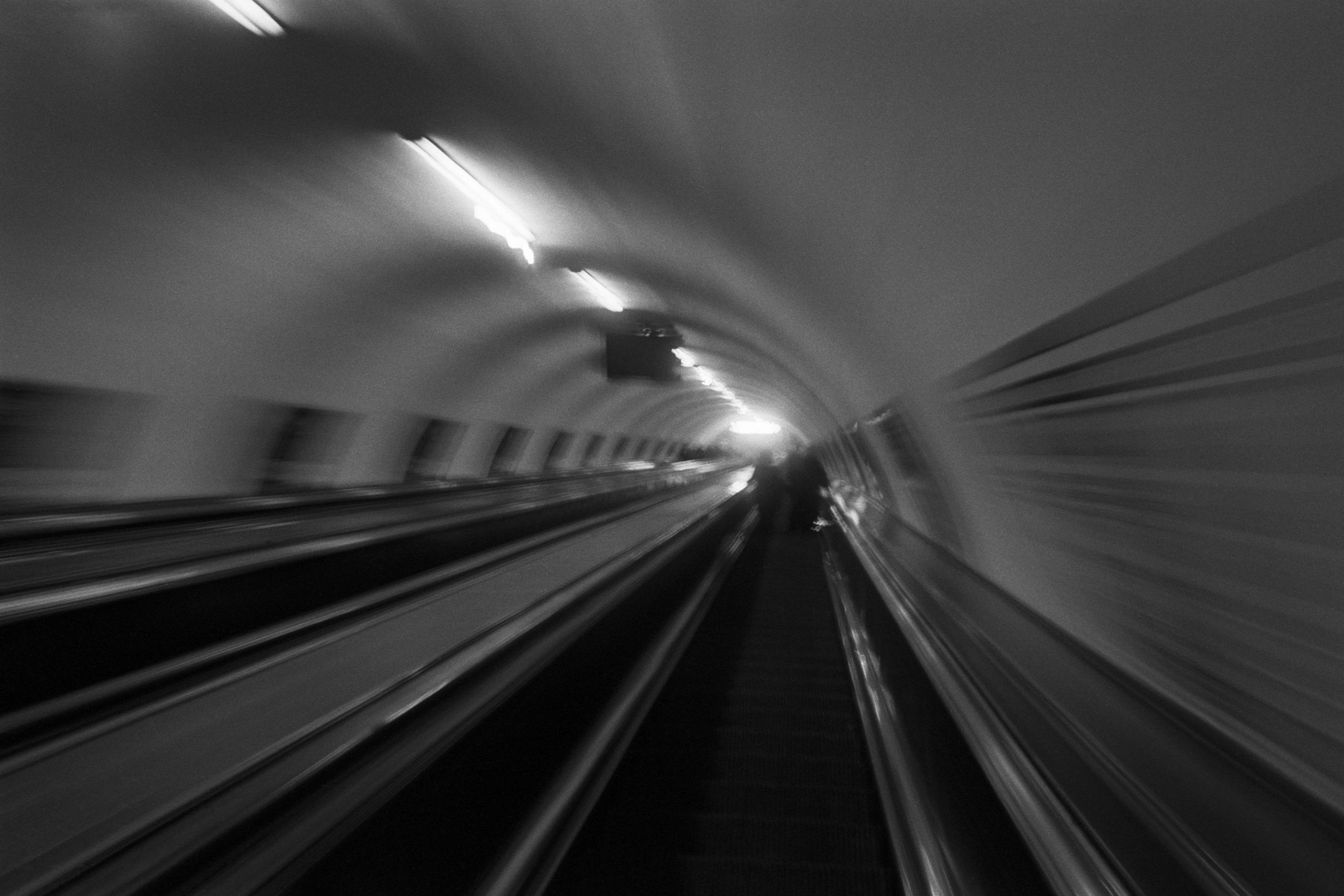
The Wall
2015Winner of the 1st prize & Golden Glass Award at the 11th Photographic Open Championship Olsztyn, and 1st place with the Special Prize of FORMAT magazine at the 3rd Biennial of Art in Piotrków Trybunalski.
View Series →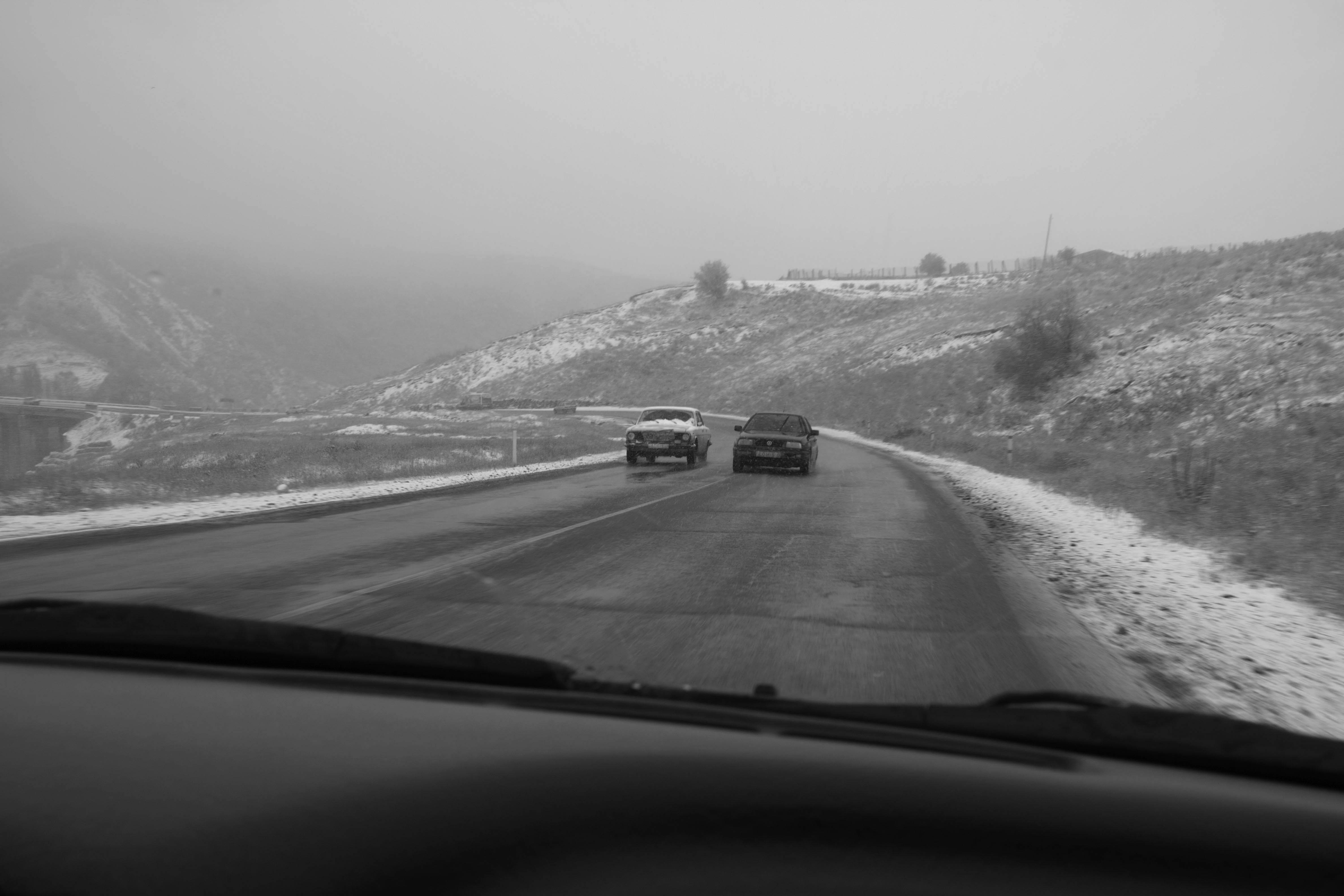
An Engagement Ring
2011A narrative series set in Wrocław in August 2011. Awarded 2nd prize & Silver Glass at the 10th Photographic Open Championship Olsztyn in 2014.
View Series →
Heat Wave
2014A documentary series recording spontaneous events across August and September 2014, capturing the raw energy of a city under the grip of summer.
View Series →