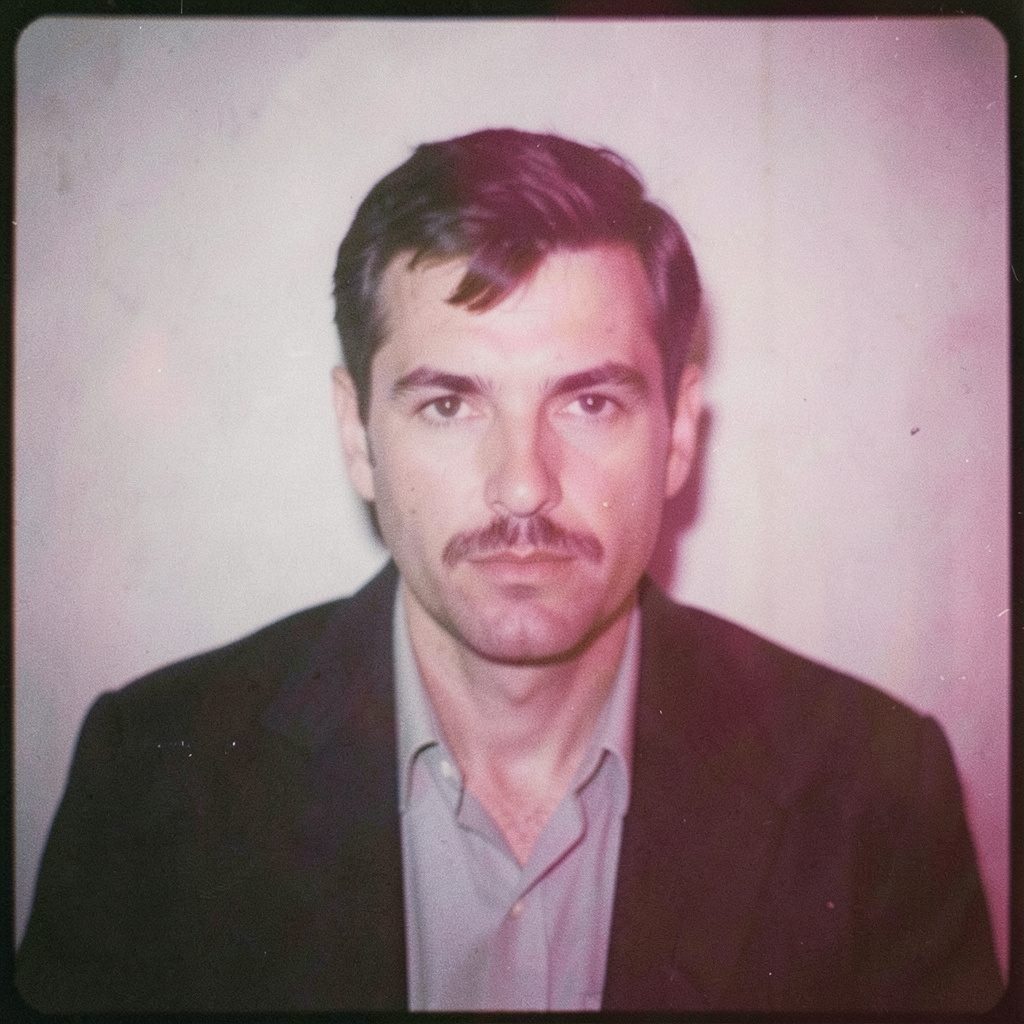
"Photography is not about the thing photographed. It is about how that thing looks photographed."
Images, verses, and the spaces between
Photography and poetry meet in my work as two ways of making attention visible. As an award-winning photographer based in Wrocław, I move between commissioned portraiture, fashion, events, and self-directed conceptual series. In each field, I look for the moment when an image carries more meaning than its surface explanation. A face can become a sentence, a gesture can act as a line break, and architecture can hold a visual silence. The camera records; the finished photograph must also invite interpretation.
The intersection of photography and poetry in my work is therefore neither illustration nor verbal captioning. A photograph may begin as observation and become a form of poetic writing; a poem can begin as rhythm and become an image. Both depend on omission, association, and the productive distance between what is shown and what is felt. I try not to close that distance too quickly. Instead, I preserve ambiguity long enough for the viewer to enter the frame and complete the thought.
My process moves between traditional analogue techniques, medium-format and black-and-white film, darkroom printing, and digital post-production. Each method has a distinct vocabulary of pressure, accident, and revision. The shifting surfaces of Wrocław often provide the first fragment: a weathered wall, a passing shadow, the geometry of glass. I collect such fragments, then ask what can be omitted without damaging their emotional charge. The resulting work may document a place, but it also seeks the metaphorical life of that place.
Photography as a form of verse
Poetry gives me a practical vocabulary for treating the photograph as verse. A poem builds meaning through cadence, repetition, compression, and pause; a photographic series can do the same through framing, visual intervals, and recurring motifs. The analogy is structural rather than decorative. It asks me to consider every image as part of a larger verbal rhythm, where silence and juxtaposition can carry as much weight as direct description.
The encounter often begins with ambiguity. During a portrait session, a subject may reveal fatigue, concentration, humor, or guardedness within seconds, yet a decisive label can flatten all of those possibilities. I prefer an image that remains open to rereading. In fashion work, clothing and pose become a syntax of attitude; in a conceptual series, a repeated object can acquire the emotional weight of a refrain. The photograph is less a solution than a concentrated question.
Events sharpen this approach because their strongest frames are assembled from fleeting gestures and interrupted attention. A hand caught before movement, a look exchanged across a room, or the temporary stillness of people at work can form a visual sentence that conventional coverage might miss. The same poem can be read as reportage, memory, or staged fiction once a sequence alters its context. I use that instability deliberately: the image is factual in origin, yet its meaning is composed through placement and rhythm.
Building a poem inside the frame
Every frame is a bounded space, and that limit can sharpen poetic attention. Negative space becomes visual silence; a single interruption can function like a stressed syllable. I compose around relationships rather than isolated detail: the distance between a body and a wall, the weight of an empty chair, the direction of a glance. Cropping often matters more than adding elements. By removing peripheral information, I let the remaining forms establish their own grammar.
Medium-format film supports this patient construction. Its scale and tonal depth make small gestures available to the lens, while black-and-white film reduces a scene to shape, texture, density, and light. I pay close attention to skin, fabric, and architectural surfaces because these materials hold traces of touch and time. A faint mark, a crease, or a hard shadow can carry more force than an elaborate gesture. The photograph gains poetry when texture stops being incidental and starts to speak.
In conceptual work, I extend that close reading into constructed situations. A recurring chair, doorway, or hand may become a word whose meaning changes each time it returns. In portraiture, the same principle applies without making the session feel theatrical: a slight shift in posture can revise the emotional sentence created by the previous frame. I look for transitions rather than definitive expressions, since transitions preserve movement and allow the viewer to sense a life continuing beyond the shutter.
Memory, rhythm, and sequence
A single image may be striking, but sequence is where relationships become visible. Photographic editing has much in common with poetic montage: order can clarify, unsettle, or reverse an expected meaning. I therefore test images beside one another rather than judging each only in isolation. The frame placed before another can alter the emotional register of both, while the gap between them may become as important as either picture.
My analogue workflow makes this process tangible. Contact sheets and proof prints reveal pacing through sequence, distance, and repetition. I often notice that the photograph which initially seemed essential has less energy beside a quieter image, while an accidental frame creates a productive interruption. Such judgments cannot be understood through pixel density or a technical score alone. They depend on duration, the viewer’s eye moving from one picture to the next, and the small shock of recognition.
The broader context for these experiments can be found in this visual journal, where photographic series and written reflection remain closely connected. That porous boundary matters to my method. Text can preserve a thought that preceded an image, while an image can complicate a sentence after the fact. Neither serves as a caption for the other. Each introduces a different rhythm of attention, and their tension sometimes becomes the most articulate part of the work.
Between the darkroom and the screen
The darkroom keeps that tension present in a physical form. A selected negative does not determine the print by itself; development determines how its shadows gather, how highlights survive, and where the grain becomes visible. Timing introduces contingency, and contingency can correct an overly controlled idea. I have printed frames that looked merely literal on the screen and discovered, in the enlarger’s light, a deeper arrangement of tone and gesture. The image becomes more suggestive because its edges are not entirely obedient.
Digital workflows offer a different kind of authorship. Cropping, retouching, masking, and tonal adjustment allow me to rewrite relationships inside a frame, but I use those tools as editing rather than cosmetic rescue. The important decisions concern emphasis: which edge carries tension, which shadow needs density, which distraction should be removed without sterilizing the picture. I compare revisions against the original intent and against the rhythm of the complete series. Technology supports the poem; it does not become the poem.
Neither analogue nor digital has a monopoly on authenticity, and the most convincing images often combine deliberate construction with a trace of accident. A clean compositional line can survive beside an imperfect highlight, a blurred edge, or an expression that slips from the planned pose. For commissioned work, this balance protects the client’s brief while preserving a human trace. For personal series, it allows the material process to challenge the concept. Across both, precision gives the image direction, while uncertainty gives it depth.
A poetic working method
For commissioned projects and personal series alike, I use a compact set of principles to keep the visual language poetic without making it vague. These are working rules rather than formulas. They guide attention, sequencing, editing, and the physical decisions that determine how an image meets the viewer. Their purpose is to create coherence while leaving enough unresolved material for interpretation.
- Begin with sustained looking. Spend time with the setting, the available light, and the subject before choosing a dramatic setup; ordinary details often generate the strongest metaphorical tension.
- Think in sequences. Arrange a group of images as a poem, testing echoes, interruptions, and changes in scale rather than collecting variations of a single idea.
- Protect the visual silence. Preserve negative space and moments of hesitation, since an unresolved frame invites the viewer’s imagination more effectively than a complete explanation.
- Use constraints as collaborators. Limit palette, location, gesture, or camera position to make every visible decision carry greater weight.
- Edit for emotional resonance. Choose the order and final frame by what the group feels like, not only by technical polish or immediate visual impact.
- Return the work to the body. Proof prints, contact sheets, and physical prints reveal pace, surface, and scale that a screen can conceal.
Each principle depends on the next. Looking produces details; sequence gives them meaning; silence prevents that meaning from becoming too fixed; constraint sharpens choice; editing creates coherence; and returning to print restores the physical encounter with the image. Even in a commercial assignment, this chain keeps delivery from erasing discovery. The client receives a purposeful set of images, while the process retains the uncertainty that makes photography worth pursuing.
The poem I seek is never hidden inside a single frame. It lives in the relations among images, in the pause before a gesture, and in the viewer’s act of connecting what has been seen with what has been felt. That is why I move between the darkroom, the edit, the street, and the studio without treating any one surface as final. The finished photograph is a document of attention, while the series becomes a form of lyric language: precise enough to hold together, open enough to keep moving.
Selected Series
A cross-section of commissioned and personal projects spanning fine art, commercial, and conceptual work.
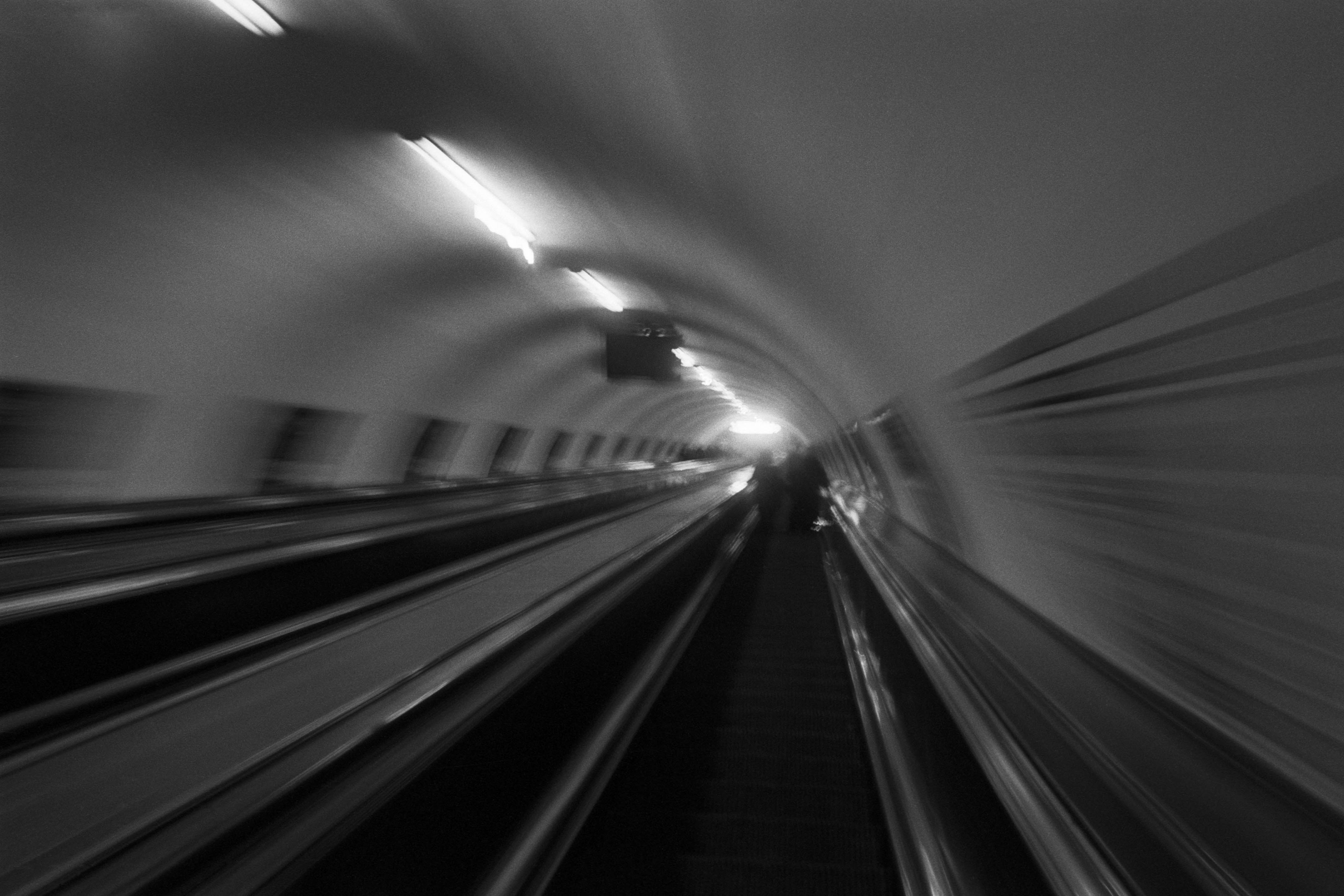
The Wall
2015Winner of the 1st prize & Golden Glass Award at the 11th Photographic Open Championship Olsztyn, and 1st place with the Special Prize of FORMAT magazine at the 3rd Biennial of Art in Piotrków Trybunalski.
View Series →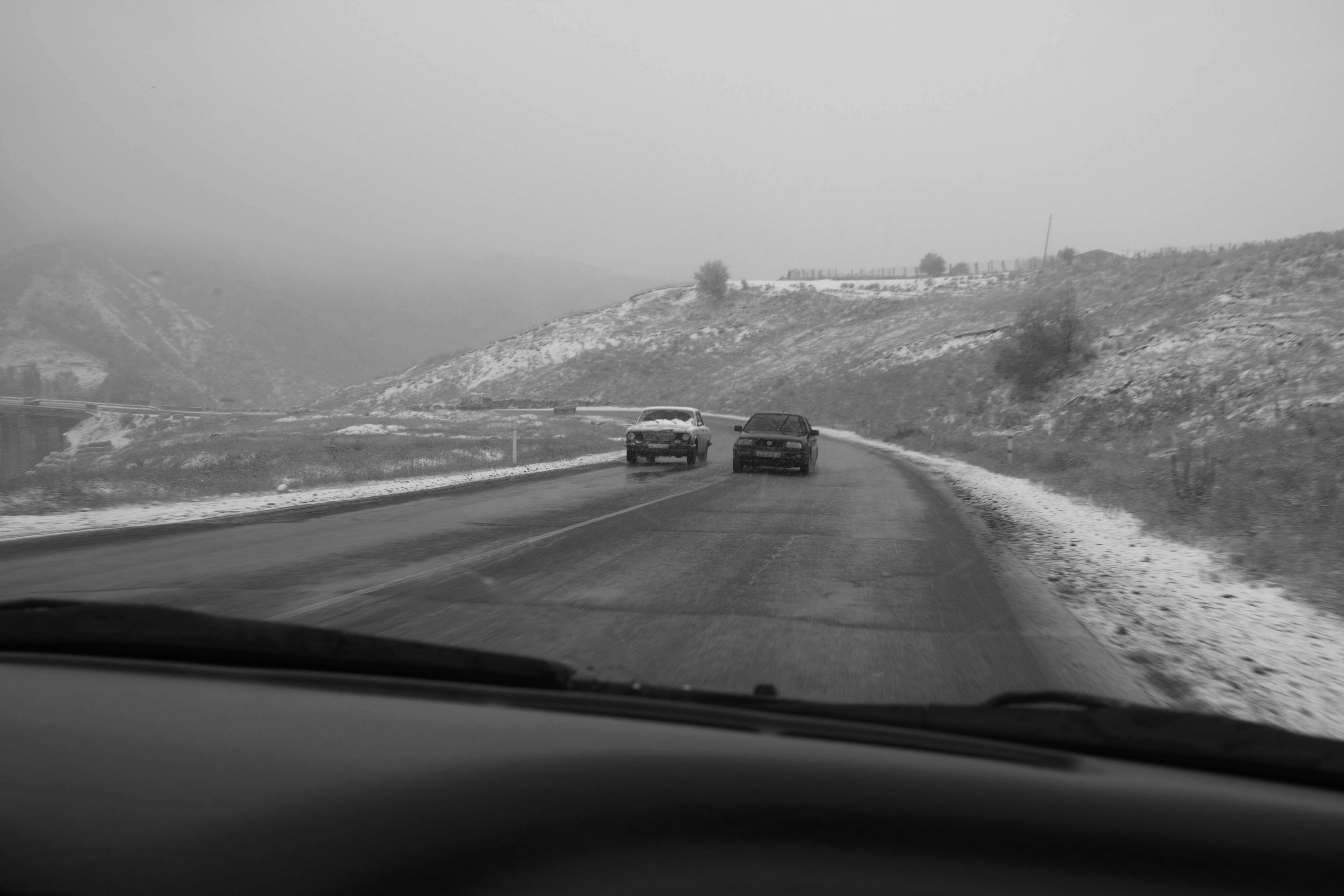
An Engagement Ring
2011A narrative series set in Wrocław in August 2011. Awarded 2nd prize & Silver Glass at the 10th Photographic Open Championship Olsztyn in 2014.
View Series →
Heat Wave
2014A documentary series recording spontaneous events across August and September 2014, capturing the raw energy of a city under the grip of summer.
View Series →