"Photography is not about the thing photographed. It is about how that thing looks photographed."
The Polish photographic legacy shaping my practice
Polish photography has taught me to treat an image as both a document and a construction. It can carry the evidence of a particular street, face or political moment while also revealing the photographer’s choices: where to stand, what to omit, how to shape light, and when to allow ambiguity. That balance sits at the centre of my work in portraiture, fashion, events and conceptual photography.
My practice is rooted in Wrocław, a city layered with changing borders, reconstructed architecture and personal histories. Working with medium-format cameras, black-and-white film, analogue printing and digital tools, I draw on the visual intelligence of Polish photography masters while responding to contemporary commissions. For Australian audiences and clients, this means images with a strong sense of place, careful observation and a finish suited to both printed walls and digital campaigns.
Photography as a form of memory
The work of Zofia Rydet remains a powerful example of how ordinary people can become the keepers of cultural memory. Her monumental Sociological Record was built through encounters in domestic interiors, where the arrangement of furniture, family objects and facial expressions revealed as much as the sitters themselves. Her photographs do not rely on spectacle. They ask us to look closely at lives that might otherwise disappear from the historical record.
That approach influences the way I photograph people for business portraits and editorial projects. A professional image should not reduce someone to a polished expression or job title. A lawyer in Sydney, a designer in Melbourne or a founder in Brisbane brings a personal history into the frame. Clothing, posture, the texture of a room and the space between photographer and subject can make that history visible without forcing it into a predetermined story.
There is also a practical lesson in Rydet’s patience. Strong portraiture rarely comes from rushing through a list of poses. It develops through conversation, small adjustments and an awareness of what changes when a person stops performing confidence. This is especially important in Australian corporate settings, where clients may arrive saying they want something “natural” and may need a calm, direct process to feel at ease.
The discipline of seeing place
Jan Bułhak’s concept of native photography placed attention on landscape, architecture and national identity. His work encouraged photographers to look at their own surroundings with seriousness rather than treating local subjects as visually ordinary. That principle remains relevant in an era when images are often made for global platforms and shaped by international visual trends.
Wrocław gives me a complicated, rewarding setting in which to apply it. Gothic details, post-war modernism, industrial traces and newly developed districts sit close together. A portrait made in an old stairwell carries a different emotional temperature from one made beside a glass office block. The location is not simply a backdrop; it affects the subject’s body, the colour or tonal range, and the story suggested by the image.
For Australian commissions, the equivalent may be a sandstone lane near Sydney’s central business district, a Melbourne studio with north-facing windows, a beachside path in Perth or a warehouse in Adelaide. The local environment can give a campaign credibility that a generic studio background cannot. I look for relationships between person and place, whether the brief calls for elegance, authority, distance or vulnerability.
From Edward Hartwig to the expressive image
Edward Hartwig expanded the possibilities of Polish landscape photography through abstraction, movement and dramatic tonal structure. His images often transform familiar subjects into arrangements of line, shadow, texture and atmosphere. They show that a photograph of a place does not have to explain the place literally. It can communicate its energy.
This idea is central to my conceptual series and to the visual decisions I make in commissioned work. A business portrait may contain a recognisable face, yet its impact can depend on a reflection across the eyes, a hard edge of window light or the tension between a sharply dressed figure and an empty space. In fashion photography, fabric and gesture can become almost architectural. In event photography, a burst of motion can say more about the evening than a perfectly composed group photograph.
Hartwig’s influence also encourages restraint. I do not want every part of an image to compete for attention. Black-and-white film is particularly useful here because it removes easy colour cues and places greater emphasis on light, surface and form. When the tonal structure is strong, an image can remain compelling long after the immediate event or trend has passed.
The human presence in the frame
Wojciech Plewiński and Tadeusz Rolke demonstrated how portraiture can be intimate without becoming intrusive. Their photographs of artists, performers and public figures often retain a sense of spontaneity. The subject is not presented as a fixed symbol; there is room for uncertainty, wit and private concentration.
That sensibility shapes my approach to photographing professionals. I aim to create an environment in which the person can remain recognisably themselves while still meeting the purpose of the commission. A portrait for a law firm may require confidence and clarity, while an image for a cultural organisation may benefit from eccentricity or stillness. The work begins by identifying the character the photograph needs to communicate, then finding a visual language that does not flatten the person.
Australian business photography often operates in a direct, time-conscious market. Teams may need updated headshots before a conference, a new website launch or an annual report, and a “quick shoot” can involve several people across one day. Efficiency matters, but it should not make every face look interchangeable. A clear schedule, considered lighting and brief conversations with each sitter allow consistency without losing individuality.
Analogue methods in a digital market
The Polish photographic tradition has a strong relationship with material process: contact sheets, darkroom prints, carefully exposed negatives and the physical presence of the finished image. These methods are not nostalgic decorations in my practice. They create a way of thinking. Film slows down the act of photographing and makes each frame a decision rather than an automatic response.
Medium-format film is especially valuable for portraiture because of its presence and subtle rendering. It records skin, fabric and light with a depth that can feel quiet rather than overly sharp. Black-and-white processing can clarify a composition and remove distractions, while darkroom principles inform my digital work through controlled contrast, considered cropping and attention to the full tonal range.
Digital photography remains essential for many commercial assignments. Australian agencies, brands and corporate teams often require rapid delivery in several formats, from social media crops to large campaign files. My workflow combines the reliability of digital capture with the discipline learned from analogue practice. The result is not an imitation of film, but an image-making process that values intention, texture and longevity.
Documentary truth and constructed fiction
Polish photographers have often worked in the space between reportage and interpretation. The image may begin with a real person or event, yet the final photograph is shaped by framing, timing and context. This is clear in the work of Chris Niedenthal, whose photographs recorded political and social realities with immediacy, and in the psychologically charged portraits associated with artists such as Witkacy.
That tension interests me because commissioned photography is always a form of collaboration. An event photograph records what happened, but the selection of moments gives the occasion a particular character. A fashion image may be staged, yet it can still reveal genuine movement or emotion. A conceptual series may use constructed sets to speak about real experiences of isolation, memory or identity.
At a conference in Melbourne or a public event in Sydney, I look beyond the official handshake. Audience attention, a private exchange backstage, the geometry of a crowded foyer and the pause before a speaker begins can all become meaningful. Clients need usable coverage, but they also benefit from photographs that preserve atmosphere. The aim is to document the event as it felt, not merely prove that it occurred.
Light, shadow and the ethics of attention
Polish photography masters have shown me that visual intensity does not require exaggeration. A narrow beam of light, a weathered wall or a partially hidden expression can hold attention because it respects the viewer’s ability to interpret. This is particularly important in black-and-white work, where shadow can suggest rather than explain.
Light also carries ethical weight. The way a photographer illuminates a face can dignify, expose or stereotype. I try to make lighting decisions that support the subject rather than impose a dramatic effect for its own sake. This matters in portrait sessions involving executives, performers, models or people who are not accustomed to being photographed. Technical control should create trust, not dominate it.
The same principle applies to events and commercial storytelling. Australia’s strong sunlight can be beautiful, but harsh midday conditions may reduce every face to a squint or flatten a carefully designed location. I may look for open shade, reflected light or a transition into evening. In the language of a local crew, the best result may come from waiting for “the good light” rather than forcing a complex setup at the wrong moment.
A contemporary practice with historical roots
The legacy of Polish photography is not a style to reproduce. It is a set of attitudes: respect for ordinary lives, curiosity about place, confidence in ambiguity and commitment to process. Those attitudes help me move between a gallery-oriented conceptual series and a commercial commission without treating either as secondary. Each project deserves a clear idea and a visual method capable of carrying it.
My photography portfolio brings these strands together across portraits, fashion, events and fine art work. Some images are quiet and observational; others depend on gesture, theatricality or a carefully constructed atmosphere. What connects them is an effort to make photographs that remain open after the first glance.
Working for Australian clients also means understanding that photography travels across different professional and cultural environments. A Sydney brand may need images for a national campaign, while a regional organisation may require a more grounded sense of community. Melbourne’s creative sector may welcome experimentation, whereas a corporate team in Perth may prioritise clarity, speed and practical consistency. The historical lessons I carry from Poland help me respond to these differences without losing a personal point of view.
Principles that guide each commission
A strong photograph depends on more than equipment or a recognisable visual signature. It depends on the quality of attention brought to the subject, the usefulness of the collaboration and the care taken after the shutter is pressed. These principles keep the work coherent across different formats and audiences.
- Begin with the person, place or event rather than forcing it into a fashionable template.
- Use analogue and digital processes according to the emotional and practical needs of the project.
- Build enough time into a portrait session for genuine expression to emerge.
- Treat light, location and composition as part of the subject’s meaning, not as decoration.
- Deliver images that work for their immediate purpose while retaining a sense of authorship and permanence.
Polish photographic history continues to shape how I look, but the practice remains responsive to the present. A portrait made in Wrocław, a fashion story produced in Melbourne or an event covered in Sydney can belong to different visual worlds while sharing the same foundation: careful seeing, material awareness and respect for the complexity of human presence.
Selected Series
A cross-section of commissioned and personal projects spanning fine art, commercial, and conceptual work.
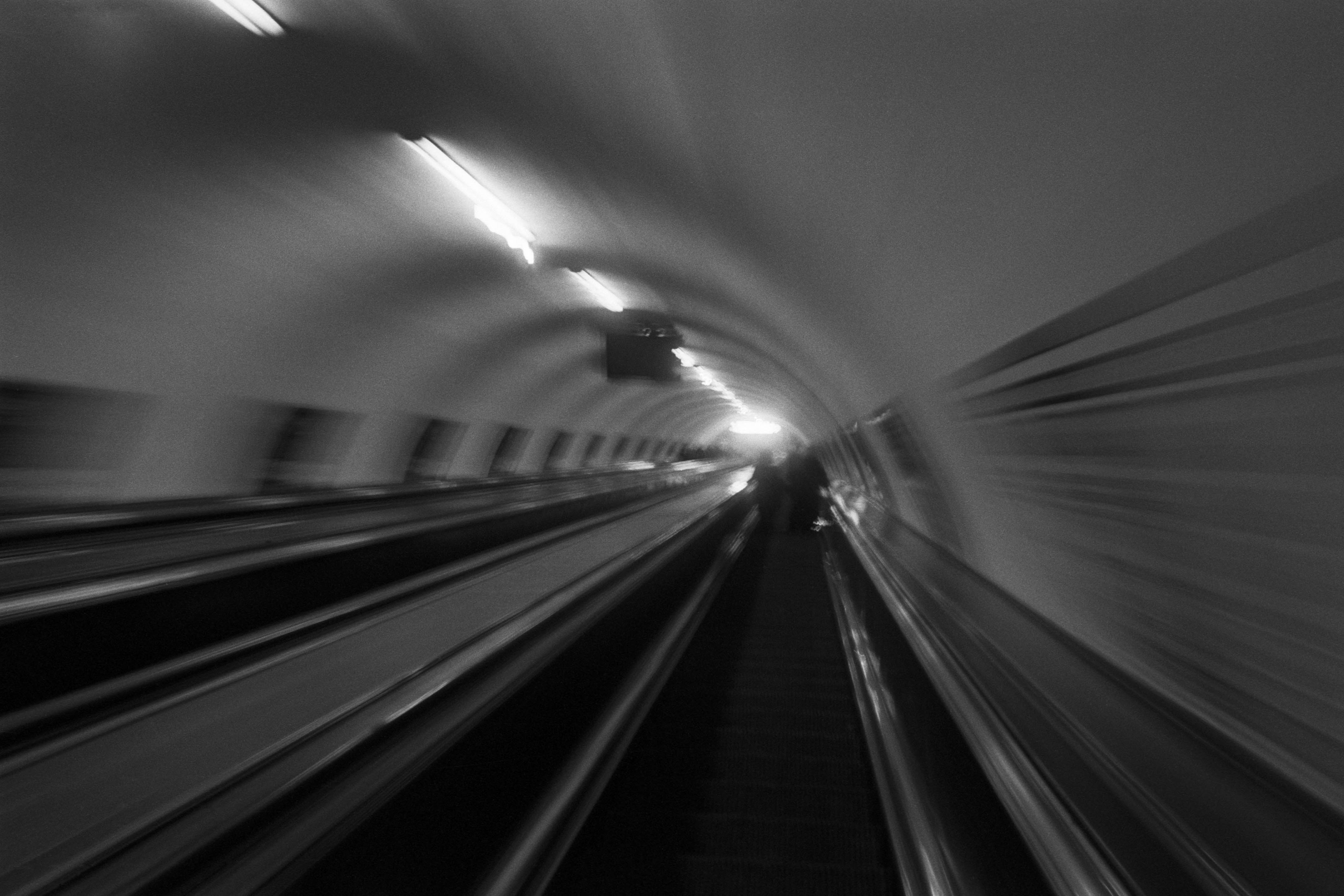
The Wall
2015Winner of the 1st prize & Golden Glass Award at the 11th Photographic Open Championship Olsztyn, and 1st place with the Special Prize of FORMAT magazine at the 3rd Biennial of Art in Piotrków Trybunalski.
View Series →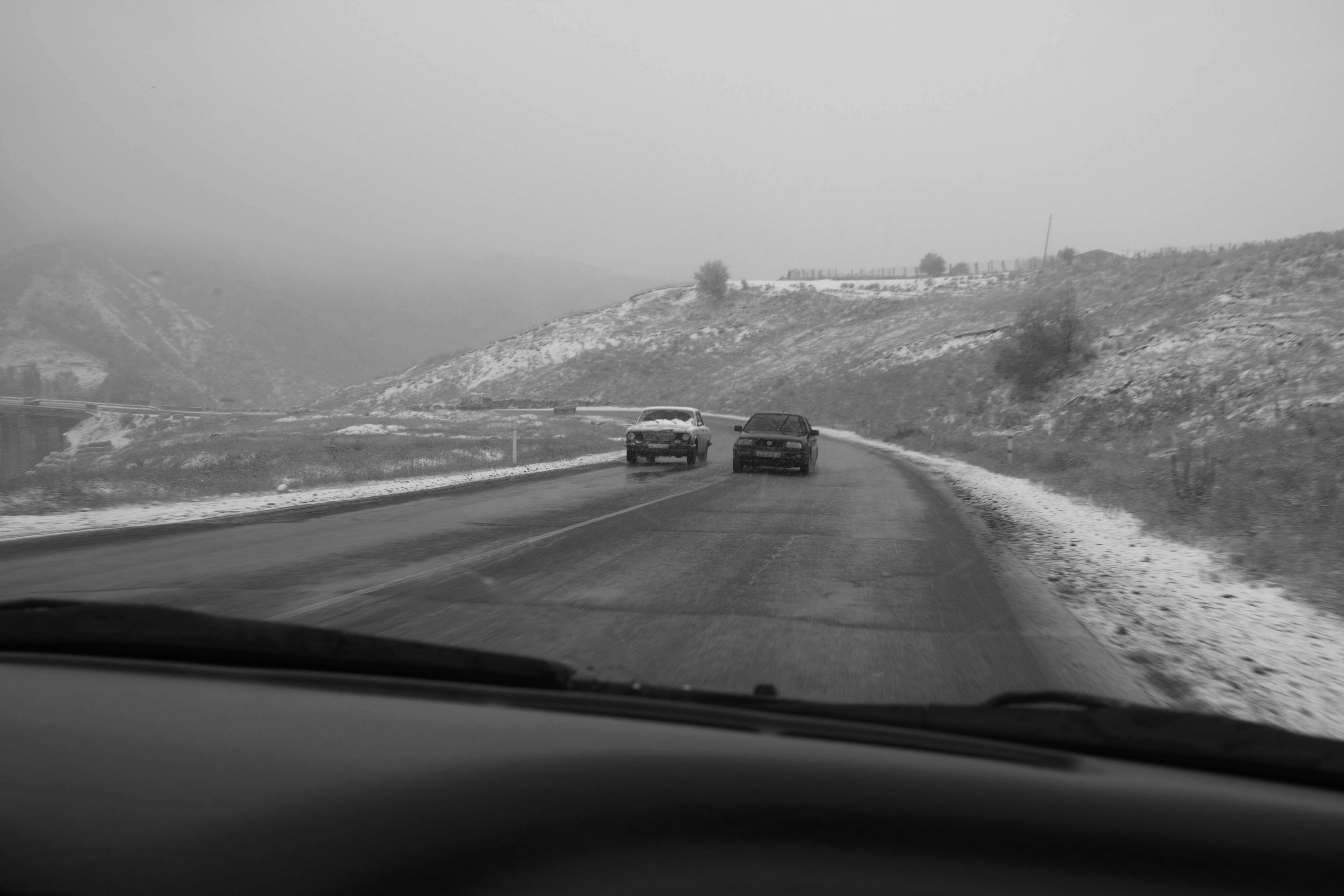
An Engagement Ring
2011A narrative series set in Wrocław in August 2011. Awarded 2nd prize & Silver Glass at the 10th Photographic Open Championship Olsztyn in 2014.
View Series →
Heat Wave
2014A documentary series recording spontaneous events across August and September 2014, capturing the raw energy of a city under the grip of summer.
View Series →