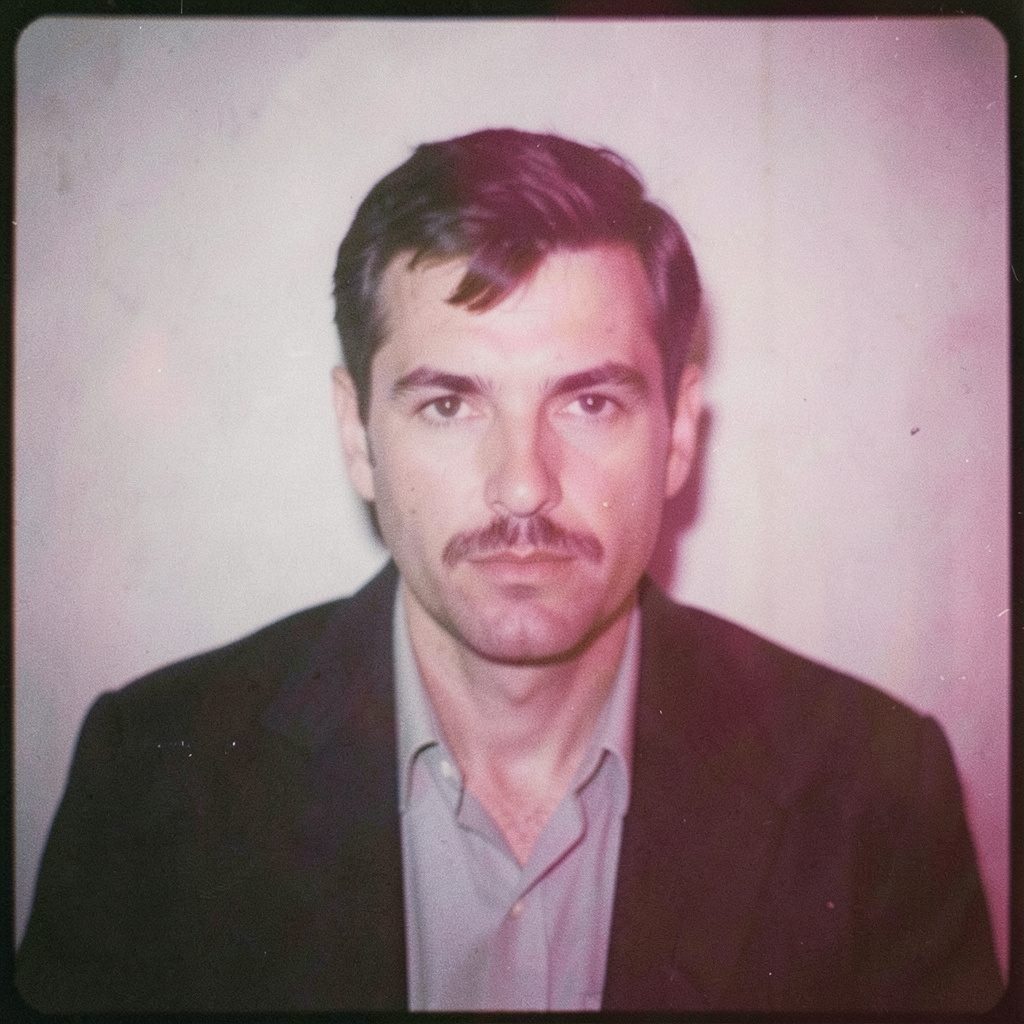
"Photography is not about the thing photographed. It is about how that thing looks photographed."
The Quiet Engine Behind Every Photograph
There is a particular quiet that settles over a studio when the work is going well. It is not the absence of noise — a tram rattling outside the window, a kettle, a conversation in the corridor — but a silence the photographer constructs on purpose: the shutter held back, the question left hanging, the attention narrowed to a single thing. In my practice in Wrocław, silence has never been an aesthetic pose or a personality trait. It is the working condition that makes a photograph possible.
Clients arrive with a brief, a wish list and a deadline. Behind every assignment I accept — business portraits in a glass-walled Sydney boardroom, backstage at a Melbourne fashion week, a conceptual series developed slowly in the darkroom — sits a process that, seen from outside, resembles waiting. This page is about that waiting. It examines why stillness is as much a technical discipline as a philosophical one, why the quietest part of the process often yields the most assertive images, and what changes when noise is removed on purpose.
Silence as a Working Method
Silence carries two meanings in a studio, and only one of them is useful. The acoustic version is trivial: mute the phone, close the door, ask the crew to hold the conversation until the frame is made. The second version is harder and far more valuable. It is the silence of attention — the state in which nothing competes for the eye, and a single subject, a face or a patch of light, can hold the entire field of view.
This is where medium format earns its keep. A Hasselblad or a Pentax 67 imposes a rhythm that instant cameras have trained us to abandon: compose, wait, commit, then wait again before moving on. When I cut a portrait session down to a dozen usable frames instead of a thousand, something shifts in the room. The subject stops performing for the machine and begins to inhabit the space.
The same quiet has to be built inside me. Phone face down, notifications off, the histogram forgotten for ten minutes, no comparison of a promising frame against a better one. The darkroom rewards this state of patient concentration, and the digital workstation, for all its speed, punishes its absence. A quiet workflow is not slower. It is simply less interrupted, and interruption is what quietly ruins most work.
Listening Before You Look
Portraiture starts with listening, long before anything is recorded. A subject tells you how they want to be seen, but what they actually show you arrives in the gaps — in the half-second after a question, when a rehearsed answer has been exhausted and something unguarded surfaces instead. Photographers who fill every pause with reassurance usually photograph the performance. Photographers who can tolerate a pause photograph the person.
Australian commissions have sharpened that skill for me. In Sydney's central business district and along Melbourne's laneways, I shoot founders, medical practices, architects and senior executives, and the brief is rarely "formal and imposing". It is "approachable", "credible", "not the stiff annual report photograph". The local culture leans casual — an open-plan office on a Friday, a shirt worn without a tie, an afternoon meeting that starts with coffee — and the silence gives people room to be themselves in front of the lens.
My method is simple enough to explain. I ask a question, then stop talking. I lower the volume of my own voice. I give the sitter a task that is not "smile" — hold the coat, look out of the window, turn toward the light. Then I wait longer than feels comfortable, and something in the face reorganises itself.
The Darkroom Teaches You to Wait
Black and white film is an apprenticeship in patience. You expose, develop, fix, wash, dry, and only then enlarge — and the print appears in the tray in stages you cannot rush. Watching an image surface slowly under safelight, hearing the faint tick of the enlarger and smelling the stop bath, teaches a lesson digital tools never will: the image arrives on its own schedule, and force produces waste rather than speed.
The digital workflow does not cancel that lesson, it only relocates it. The equivalent moment is the cull. Sliding a contrast slider back and forth until a frame feels finished, then rejecting it anyway, is the same impatience the darkroom punishes. When I edit a series properly, I print contact sheets, put them on the wall, walk away, and come back the following morning with less enthusiasm and clearer eyes.
Australia has its own quiet culture around analogue work — darkroom co-ops, film workshops and small gathering circles in Melbourne, Sydney and Hobart, where photographers share chemistry and talk in half voices — and professional bodies such as the Australian Commercial Photographers keep the commercial conversation moving in the other direction. That pairing, patient craft alongside a brisk market, mirrors how my own studio operates.
Silence, Frame and Australian Light
Wrocław gives me soft northern light: overcast, forgiving, grey enough to model a face without drama. Australian light is the opposite, and my eye had to relearn it. The sun in Sydney or Melbourne in summer arrives with an authority that would be considered unkind on a film set, dropping contrast so hard that a mid-tone grey becomes a decision. Further inland, around Alice Springs or beneath the bulk of Uluru, the light has nothing to bounce off, and the silence of that country is as much an optical fact as an acoustic one.
That emptiness teaches composition faster than any rule about thirds. A horizon, a road, a single tree, a stretch of dust and sky — and nothing asking to be looked at. I have made frames in the Australian outback that would be over-composed anywhere else, because there was no second idea competing for attention. Negative space in a photograph is silence made visible, and it is the first thing I look for when a frame feels cluttered.
Practically, that means metering for the sky and letting the land fall dark, waiting out a squall on a beach at first light when the rain eventually breaks, and resisting the urge to fill the gap between two storms with more shots. The cicadas, the wind, the distant engine of a ute — all of it is context, and context needs a quiet frame to register.
Quiet Rooms, Loud Events
Events invert the problem. A function is defined by noise: glasses, laughter, a microphone squealing, a crowd shifting its weight — and the demand is volume, movement, everything happening at once. Yet the photographs people keep are rarely of the loudest moment. They are of the pause before the toast, the hand on a shoulder, a guest looking at something the camera cannot see, a chair still empty after the room has emptied.
Working an Australian corporate event means knowing which silences exist. There is the hush of a conference room before a keynote, the collective attention of a fashion week front row in Melbourne, the odd stillness of a crowded Friday drinks bar, the murmur of an EOFY party in a Sydney rooftop, the packed roar of an AFL final at the MCG where a single frame can hold a thousand people and no one is still. Adelaide Fringe and the Sydney Festival each hand photographers a different version of the same problem: a room full of performance and nowhere to hide.
My approach is to shoot the gaps. Available light wherever possible, a shutter slow enough to let movement blur while the essential gesture holds, and the discipline to wait for the two seconds after the noise. Chasing the peak of the party produces competent images. Waiting produces the ones a client will frame on a wall.
Conceptual Series and the Unsaid
A conceptual series depends on silence between the pictures, not only inside them. Meaning accumulates in the gap: the second image reads differently because of what the first withheld, and the wall becomes a room the viewer walks through rather than a set of pictures to tick off. My longer series are built over months, reshot and reconsidered, and the editing is a subtraction exercise. Each frame that survives has had to earn its place against silence.
Working with analogue materials sharpened that instinct. There is a lesson in craft traditions that reward slowness — in lettering on ceramic mugs, for instance, where a single mark is laid down by hand, judged, dried, and sometimes scraped back and begun again. The patience required to accept the first attempt is not acceptable is precisely what a personal series asks of me. A painted mug carries its maker's tempo; so should a photograph.
The same restraint applies to how the work is presented. Wall text should whisper. Captions that explain too much relieve the viewer of the effort that makes the work worth looking at. I would rather leave a viewer with a question than a conclusion, because a question keeps the silence active long after the gallery has emptied.
Quiet Work in a Noisy Market
Commercial photography runs on speed: quick turnarounds, large selections, feeds that need constant refresh. Working quietly inside that market is a deliberate choice rather than a refusal of it. The argument I put to clients is simple — fewer images, chosen with more care, delivered in a form that still meets every practical brief. A set of twelve considered frames holds its own against a set of two hundred, and it protects the subject's dignity while doing it.
Working with Australian clients adds a pleasant irony. A 9 a.m. session in Brisbane's Fortitude Valley or a portrait booked in Perth is an evening shoot in Wrocław, and the time difference does something useful: it gives a brief room to breathe before anyone picks up a camera. Notes arrive, questions are answered without urgency, and the silence that follows is genuine rather than a courtesy.
The record of my training, residencies, awards and working life sits in my biography, where it is kept deliberately factual. What matters for a commission is that the process behind it stays quiet, consistent and unhurried, whether the subject is an executive, a garment, a speaker or an idea in a series. If your next portrait, fashion or event brief calls for that kind of approach, write to the studio and we will begin with the questions rather than the camera.
Selected Series
A cross-section of commissioned and personal projects spanning fine art, commercial, and conceptual work.
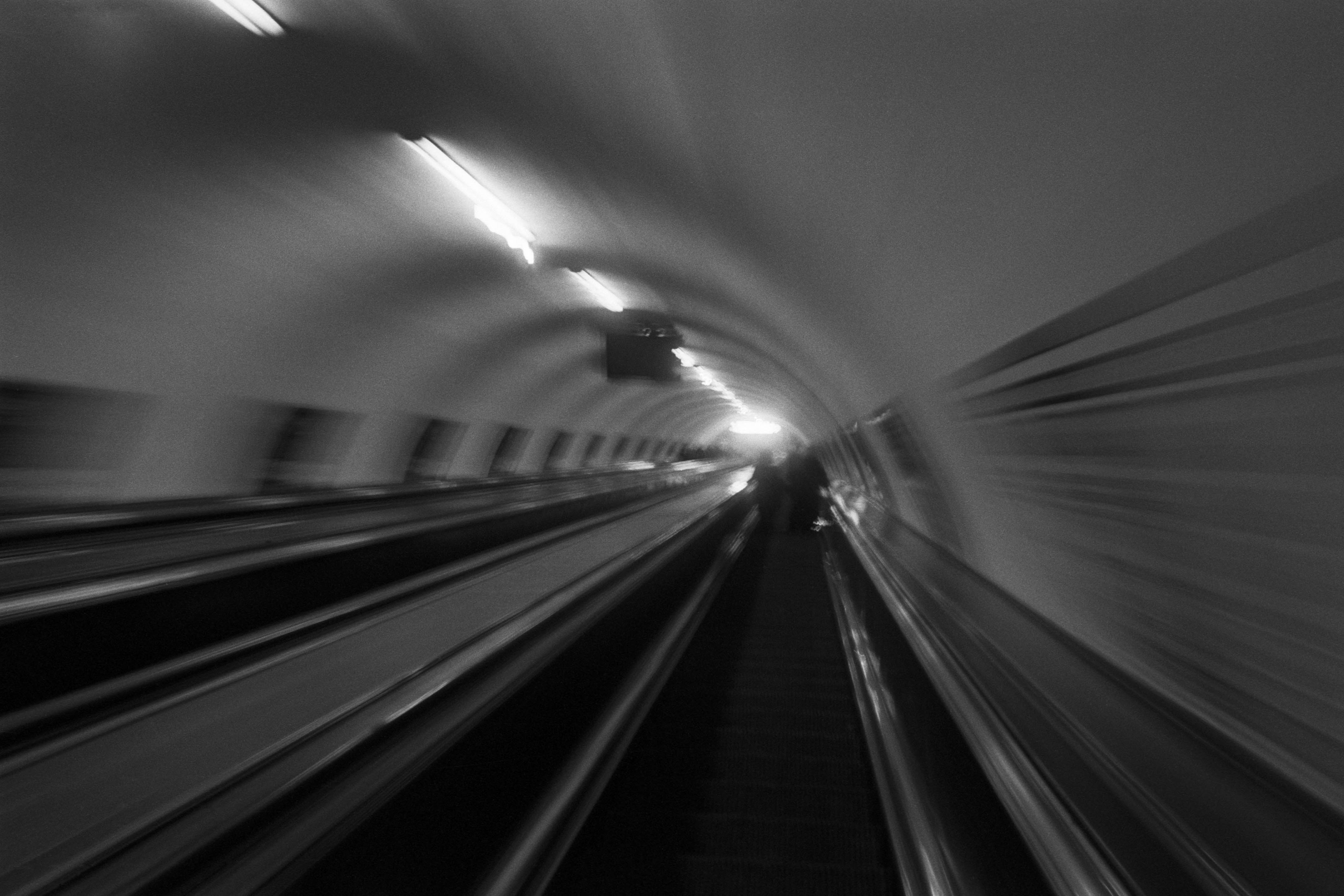
The Wall
2015Winner of the 1st prize & Golden Glass Award at the 11th Photographic Open Championship Olsztyn, and 1st place with the Special Prize of FORMAT magazine at the 3rd Biennial of Art in Piotrków Trybunalski.
View Series →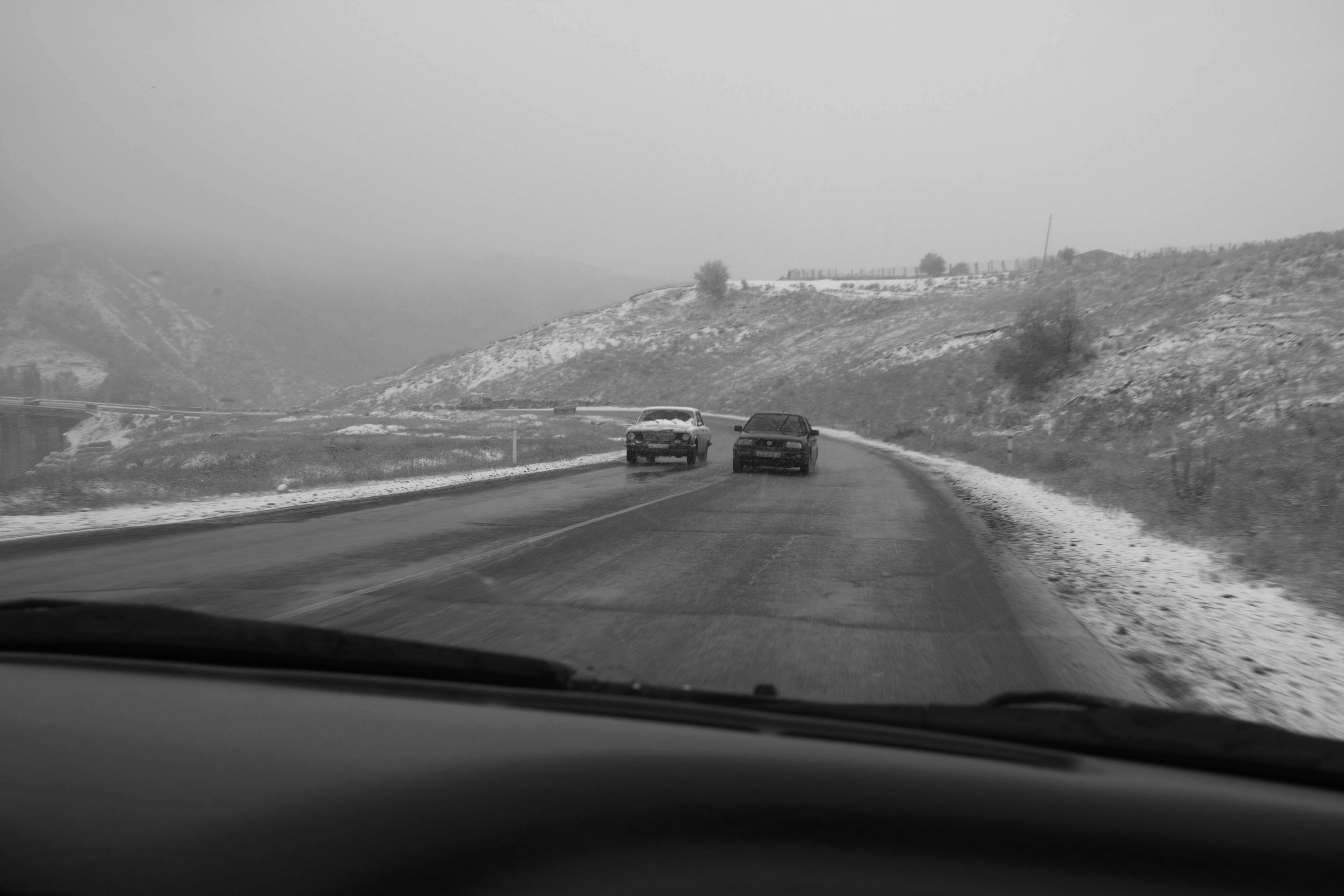
An Engagement Ring
2011A narrative series set in Wrocław in August 2011. Awarded 2nd prize & Silver Glass at the 10th Photographic Open Championship Olsztyn in 2014.
View Series →
Heat Wave
2014A documentary series recording spontaneous events across August and September 2014, capturing the raw energy of a city under the grip of summer.
View Series →