
"Photography is not about the thing photographed. It is about how that thing looks photographed."
Finding Balance Through Symmetry And Asymmetry
Composition gives a photograph its internal order. Before a viewer studies texture, colour, expression or atmosphere, the eye begins searching for relationships: a central axis, a repeated shape, an interrupted line, or an area of visual quiet. Symmetry can provide stability and clarity, while asymmetry can create anticipation, movement and emotional unease. Neither approach is automatically stronger. Their effect depends on the subject, the intended audience and the feeling a photographer wants the image to sustain.
For a fine art photographer, these choices are part of a broader visual language. In commercial work, a balanced frame can communicate confidence and reliability; in a fashion portrait, a disrupted arrangement may suggest individuality and energy. Rafal Michalak’s practice, moving between analogue methods, medium-format film, black-and-white imagery and digital workflows, offers a useful context for considering how structure shapes meaning. Composition is more than arranging objects attractively. It is the way a photograph directs attention and gives an image its emotional rhythm.
How The Eye Reads Structure
Symmetrical composition is built around correspondence. Two sides of a frame may mirror each other, or a central subject may be supported by equal areas of tone, shape or space. Architecture makes this principle especially visible: a doorway, corridor, staircase or façade can create a strong vertical axis. Reflections in water, repeated windows and paired figures also produce a sense of visual order. When the alignment is precise, the viewer often experiences the image as calm, formal and resolved.
Perfect symmetry is not required for balance. A portrait can feel stable because the face is central, the shoulders create a broad base and the background carries an even tonal weight. Conversely, a composition that appears visually simple may be carefully calibrated through small adjustments. The photographer might shift a subject a few centimetres, crop a distracting edge or wait for a cloud to soften one side of the scene. These decisions are subtle, yet they determine whether an image feels composed or accidental.
The eye also responds to directional forces. Lines lead towards a face, shadows push attention into a corner, and a patch of bright light can outweigh a larger area of darkness. This is why visual weight matters as much as geometric position. A small red object may compete with a large neutral wall; a sharply focused hand may become more important than the body behind it. These relationships are central to visual storytelling principles, helping photographers shape what is noticed first, second and last.
Symmetry As A Deliberate Visual Language
Symmetry often suggests authority, ritual and permanence. In a business portrait, placing a subject centrally against a structured background can communicate composure and competence. This can be particularly effective for an executive profile, an architectural practice or a legal firm where visual identity depends on precision. The frame tells the viewer that the person is grounded and that the organisation understands its own position.
In fashion photography, a symmetrical arrangement can produce a sense of control while allowing styling to become the disruptive element. A model may stand squarely in the centre, with an immaculate backdrop and equal negative space on both sides, while an unusual garment, gesture or expression introduces tension. This contrast makes the image memorable. The formal structure gives the viewer a clear entry point, and the unexpected detail prevents the photograph from becoming static.
Symmetry also works powerfully in environmental and conceptual photography. A deserted hallway, a row of trees or a repeated industrial form can evoke discipline, isolation or ceremony. Medium-format film is particularly suited to this approach because its generous negative and detailed tonal transitions allow small differences to remain visible. In black-and-white, repeated forms become even more pronounced: shape, texture and luminance carry the composition without the distraction of colour.
For photographers working in Australia, symmetry can connect naturally with the country’s built and natural environments. The long perspective of Melbourne’s arcades, the ordered geometry around Canberra’s civic spaces or the repeating supports beneath a coastal pier can all provide strong frameworks. A central subject placed within these settings may feel connected to the scale of the place, whether the mood is polished and corporate or quiet and contemplative.
Asymmetry, Tension And Movement
Asymmetrical composition distributes visual weight unevenly while maintaining a sense of equilibrium. A subject placed close to one edge may be balanced by light, colour, texture or empty space elsewhere in the frame. This arrangement creates a more active viewing experience because the eye travels across the image rather than settling immediately at the centre. It can suggest a moment that is still unfolding.
Negative space is one of the most useful tools in an asymmetrical frame. A figure looking or moving into open space creates a sense of possibility, while a figure facing towards the edge can feel enclosed or psychologically pressured. The same portrait can therefore communicate confidence, loneliness or anticipation depending on the direction of the gaze and the amount of space around the body. Empty space is not an absence of information; it is an active part of the composition.
Asymmetry is especially effective for candid events and documentary-style work. At a busy opening, conference or community gathering, the photographer cannot control every element. Instead, timing becomes the method of composition. A guest entering from the edge, a hand raised in conversation or a sudden gap in a crowd can create a frame with natural imbalance and energy. The image feels alive because its structure reflects the unpredictability of the event.
This quality suits many Australian commercial settings, where photography often has to work across varied locations and fast-moving schedules. A brand event in Sydney may shift from a formal presentation to a relaxed rooftop gathering within minutes. In Brisbane, strong subtropical light can create bold shadows that balance a subject positioned to one side. A photographer who understands asymmetry can respond quickly without forcing every scene into a centred arrangement.
Applying Balance Across Photographic Genres
In business portraits, the most appropriate structure depends on the brand and the person being photographed. A consultant may benefit from a centred pose and a quiet background that convey trust. A creative director or startup founder might appear more naturally in an off-centre composition, surrounded by tools, sketches or architectural detail. The purpose is not to decorate the frame with workplace objects, but to use them as compositional evidence of the subject’s role.
Corporate photography in Australia also has practical demands. Images may need to work on LinkedIn, company websites, annual reports and media releases, often in both horizontal and vertical formats. A well-planned asymmetrical portrait can leave useful copy space for text, while a symmetrical headshot can provide a strong profile image. Local businesses may use the same photographs across national campaigns, so the composition must remain flexible without losing its character.
Fashion imagery invites a wider range of visual decisions. Repetition in fabric, styling and pose can establish a rhythm, while an interrupted line or unusual crop can challenge expectations. A model’s body does not need to be fully visible for the composition to feel complete. A shoulder near the edge, a tilted head or a garment extending beyond the frame can create a visual continuation beyond the photograph.
Fine art and conceptual series allow symmetry and asymmetry to develop across several images rather than within a single frame. One photograph might be rigid and centred, followed by another in which the subject drifts towards the margin. Repeated motifs then become a kind of structural grammar. Viewers recognise the relationship between images, even when the individual compositions resist immediate clarity. This is where analogue processes can be particularly expressive: grain, silver density and slight variations in exposure give repeated forms a human, tactile quality.
At Sydney Harbour, for instance, a portrait series could use the bridge or waterfront horizon as a stable axis before introducing figures that break away from it. Along Melbourne’s laneways, layered signage and uneven walls naturally support a more fragmented approach. In either setting, composition should respond to the location rather than impose a generic formula. The city is part of the subject, not merely a backdrop.
Building A Personal Compositional Practice
A reliable way to study balance is to make several versions of the same photograph. Begin with a central arrangement, then move the subject towards each side of the frame. Change the height of the camera, alter the amount of headroom and observe how the background gains or loses weight. This exercise reveals that composition is relational: a small shift can change the apparent meaning of the entire scene.
It is also valuable to inspect photographs in terms of visual mass rather than named objects. Instead of thinking “person, chair, wall and window”, consider “dark vertical form, pale horizontal area and small point of light”. This method is helpful when working in monochrome, where colour no longer explains the hierarchy. It encourages a photographer to assess tonal contrast, edge activity, texture and directional lines with greater precision.
Film encourages patience because each exposure carries a cost in time and material. Looking through a medium-format viewfinder can slow the process enough to notice the edges of the frame and the distance between forms. Digital capture offers the freedom to experiment rapidly, compare variations and refine an idea during post-production. Used thoughtfully, both workflows support the same objective: making compositional decisions intentional rather than habitual.
The Australian market rewards photographers who can combine a distinctive point of view with practical adaptability. A small business in Perth may need a portrait session that feels polished but relaxed, while a national company may require a consistent visual system across offices in Adelaide, Melbourne and Sydney. Clients often appreciate clear direction delivered in an easygoing manner—professional without making the subject feel stiff. Understanding symmetry and asymmetry helps the photographer offer that direction while preserving authenticity.
The strongest images usually contain a controlled relationship between order and disruption. A centred figure may be unsettled by a shadow; an uneven scene may be held together by a repeated colour; an empty area may give a gesture room to resonate. These decisions create a visual cadence that viewers can feel before they articulate it. Whether the final photograph is made in a darkroom or completed through a digital workflow, composition remains the quiet structure carrying every other artistic choice.
Selected Series
A cross-section of commissioned and personal projects spanning fine art, commercial, and conceptual work.
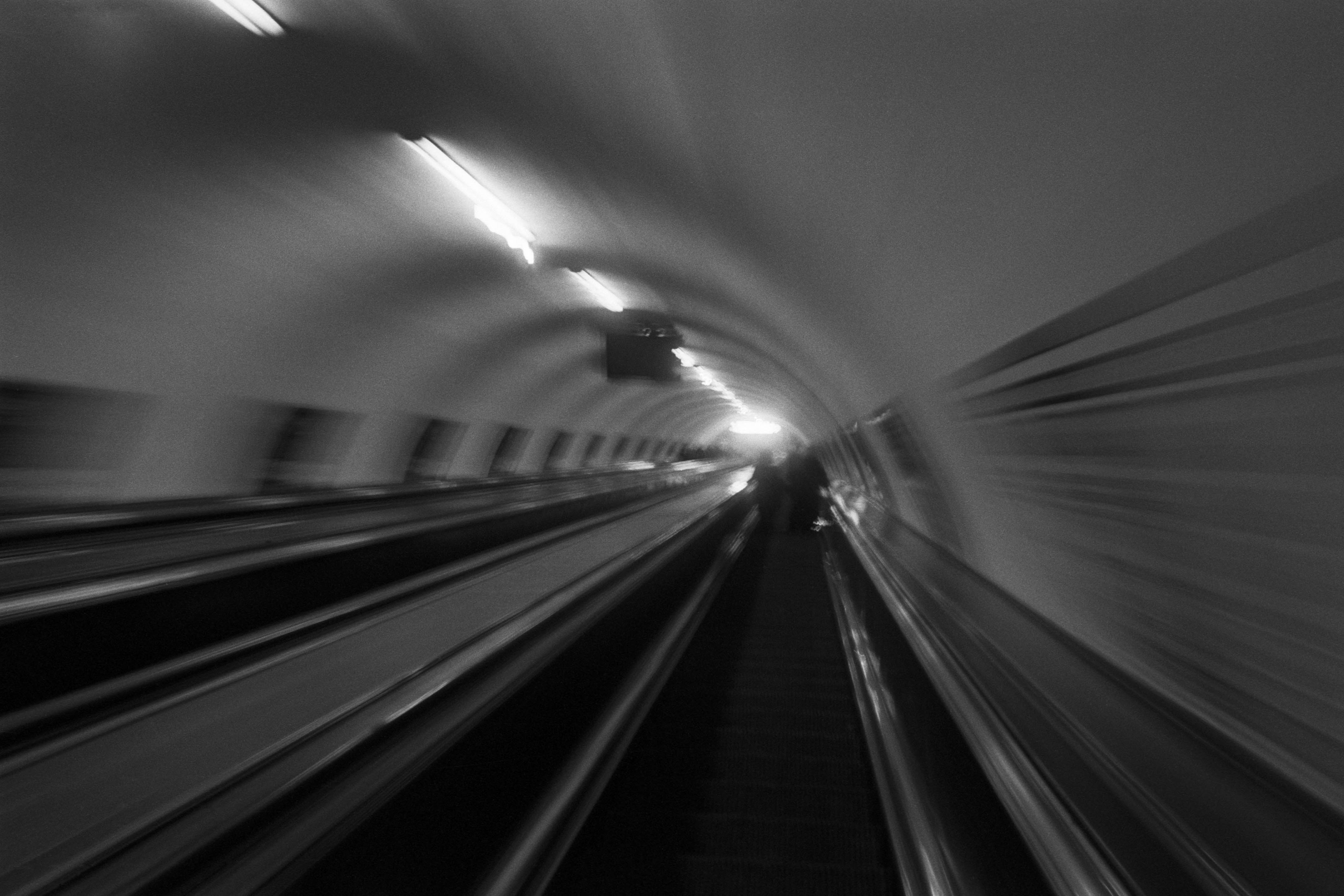
The Wall
2015Winner of the 1st prize & Golden Glass Award at the 11th Photographic Open Championship Olsztyn, and 1st place with the Special Prize of FORMAT magazine at the 3rd Biennial of Art in Piotrków Trybunalski.
View Series →
An Engagement Ring
2011A narrative series set in Wrocław in August 2011. Awarded 2nd prize & Silver Glass at the 10th Photographic Open Championship Olsztyn in 2014.
View Series →
Heat Wave
2014A documentary series recording spontaneous events across August and September 2014, capturing the raw energy of a city under the grip of summer.
View Series →