

"Photography is not about the thing photographed. It is about how that thing looks photographed."
Temperature, time and agitation in film development
Film development is the stage in which silver halide crystals exposed by light are converted into a visible negative or transparency. The camera records a latent image; chemistry reveals it. Fine-grain control matters because small changes in processing can alter grain, contrast, colour and sharpness across an entire roll. For portrait, fashion and event work, those shifts can affect skin tones, black clothing and the clean separation required for commercial reproduction.
The science of film development rests on three linked variables: temperature, time and agitation. Each influences the speed and evenness of the chemical reactions, while exposure determines how much latent image exists before development begins. Precision does not mean chasing laboratory perfection. It means establishing a repeatable routine that produces a usable result from fresh chemistry, predictable film and the working conditions of a particular darkroom or home bathroom.
Award-winning photographer Rafal Michalak’s practice combines medium-format and black-and-white film with traditional darkroom principles and digital workflows. That combination makes careful processing more than a nostalgic technique: it provides an independent check on the tonal decisions made later on a calibrated monitor. The same discipline is useful to photographers in Australia, where cameras, chemicals and film are often bought through specialist stores or online suppliers, and where a cool Melbourne morning and a hot Brisbane afternoon can demand different preparation routines.
Temperature controls reaction speed
Developer temperature is the strongest practical control over processing speed. As a rough guide, chemical activity can increase by roughly six per cent for each 1°C rise, while a 10°C increase may nearly double it. Warm developer produces the result in less time; cooler developer needs longer. If the time is left unchanged, underdevelopment can leave a thin, low-contrast negative, whereas overdevelopment can increase density, reduce shadow detail and emphasize grain. Manufacturer instructions remain more reliable than a general rule.
A working bath should be held within the tolerance stated for the chemistry, commonly a fraction of a degree around 38°C for C-41 or around 20°C for many black-and-white developers. Australian summers make this less automatic: a basin, film tank or rotary processor in Sydney, Adelaide or Brisbane can warm rapidly in an unshaded room, and water straight from the mains can be far warmer than the required 20°C. Mixing hot and cold tap water is less precise than using a thermometer, especially when the supply temperature changes.
Temperature also changes during a run. Developer loses heat to the tank, air and film, while repeated inversions can transfer warmth from a heated tank into the solution. A single reading at the start is therefore not enough. Recording the starting temperature, checking between steps and allowing time for the solution and equipment to settle improves consistency. In a small home darkroom, sealed bottles, an insulated bath and a pre-measured water reserve are more dependable than estimating by touch.
Time converts temperature into a working process
Time is often described as the easiest variable to adjust, but it is useful only when the other conditions are known. Exposure, film format, developer activity, agitation and desired contrast all affect the target time. The label on a film carton or chemistry instruction sheet is a starting point, not a guarantee of an identical result. A laboratory may have its own tested cycle, while a small-scale processor may require a different combination of inversion intervals and rest periods.
When temperature moves outside the recommended range, time can be adjusted using the chemistry supplier’s compensation chart. Raising the developer temperature and shortening the time usually preserves the intended density better than simply extending a cool bath, which can build excessive density in the shadows and make highlights harder to print cleanly. Precise conversion is impossible across every emulsion and developer, so published factors should be treated as guidance. The sensible workflow is to make one deliberate change, process a test strip or sample frames, and compare them under consistent viewing conditions.
Modern C-41 colour film is normally developed near 38°C, with a standard cycle around three minutes and fifteen seconds, though the exact timing follows the kit and processor. E-6 reversal has separate first-developer, stop, colour-developer and final stages, each with its own temperature and duration. Black-and-white film offers wider variation: many 35mm or medium-format films are developed around 20°C for roughly four to ten minutes depending on contrast and the developer. These figures illustrate why there is no universal development time.
Agitation controls renewal and consistency
Agitation has several jobs. It moves fresh developer across the emulsion, dislodges bubbles that could mask detail, and reduces the formation of uneven density patterns as processing chemicals react at the film surface. It also helps prevent local exhaustion and temperature pockets. Too little agitation can permit stagnant zones; excessive or careless handling can introduce scratches, raise the risk of chemical contamination and make temperature control less predictable. The goal is even renewal, not speed.
Common methods include continuous rotary agitation, inversion at intervals, and intermittent agitation followed by rest periods. Some older black-and-white methods use short bursts of vigorous agitation, while modern colour processing often relies on a controlled rhythm. Initial agitation is especially important with thin modern emulsions: a brief, steady movement immediately after immersion can prevent a chemical no-action layer from forming around the film. The exact sequence should come from the process specification and processor design, not from a habit borrowed from another system.
For a photographer moving between portrait sittings and fine-art projects, consistency is easier to maintain when agitation is written down as a repeatable action. A minute-by-minute routine, the number of inversions, the use of a timer with audible cues and the orientation of the tank all reduce small uncertainties. A log can record temperature, total development time, agitation pattern and any deviation from the normal procedure. That record becomes valuable when a client wants a particular skin tone or when several transparencies from a fashion shoot must match.
Washing, water quality and the Australian context
Development does not end with the appearance of an image. A stop bath arrests development, fixer removes remaining unexposed silver halides, and a wash removes residual processing chemicals. Each stage has its own time and chemistry, and a rushed wash can shorten archival life by allowing residual fixer to react later with the image. Anti-bleach or hypo-cleaning products may extend protection, but they do not replace adequate washing. Hard water can also affect final print quality, so bath and print water may need different treatment.
Water conditions vary across Australia. Melbourne’s taps can deliver very cold water in winter and relatively mild water in summer, while Sydney and Brisbane often have warmer mains water; household filters and bore supplies can add their own mineral content or iron. Chlorine levels also change by season and treatment method. Rather than assuming every tap is identical, a photographer can test hardness and pH, note the supplier and season, and keep a reserve of filtered water at a usable temperature. Specialist camera shops and darkroom suppliers in Melbourne, Sydney, Brisbane and Adelaide serve local clubs and studios, while online retailers broaden access for regional photographers.
Waste disposal is governed by state, territory and local council requirements rather than a single national photography code. Spent developer, stop bath, fixer and bleach must not be poured into a storm drain or ordinary household sink. Small quantities may be managed through council chemical-waste facilities where offered, while studios with commercial volumes may need a licensed waste contractor or an arranged silver-recovery stream. Australian Consumer Law gives consumers guarantees that goods supplied by an Australian business will be of acceptable quality, including many purchases made online. That protection does not alter safe handling requirements or guarantee that imported chemistry was stored correctly before dispatch.
From repeatable processing to coherent photographic work
The purpose of precise development is not identical images; it is informed control. A portrait negative may need a slightly different rendering from a conceptual landscape, and a fashion sequence benefits from consistency across frames. Test strips, reference exposures and comparison prints make those choices visible. A photographer can keep the same film stock and developer while changing only time or temperature, then record how the result differs. This turns technical adjustments into creative decisions rather than accidental corrections.
Conceptual series need a parallel system for image order, pacing and presentation. External project resources such as Gestalt Projects can help place that visual thinking alongside a production method, while the photographer’s own sequence notes connect each frame to the larger idea. In Wrocław, where Michalak’s work combines fine-art practice with commercial commissions, that union of planning and craft is central: a conceptual project may begin with deliberate set construction, while a business portrait depends on trust, speed and controlled repetition.
A robust workflow links exposure notes, development records, scanning settings and final print or digital delivery. Medium-format negatives reward careful handling, and black-and-white development provides a practical foundation for tonal judgement, but both remain compatible with colour workflows and calibrated digital tools. For portraits, events and fashion commissions, keeping a client-specific reference frame prevents successive sessions from drifting. For long-term fine-art work, accurate labels and storage conditions preserve access to the original negative. The finished image then carries evidence of every decision: chemistry created its tonal foundation, and coherent intent gave that foundation meaning.
Selected Series
A cross-section of commissioned and personal projects spanning fine art, commercial, and conceptual work.
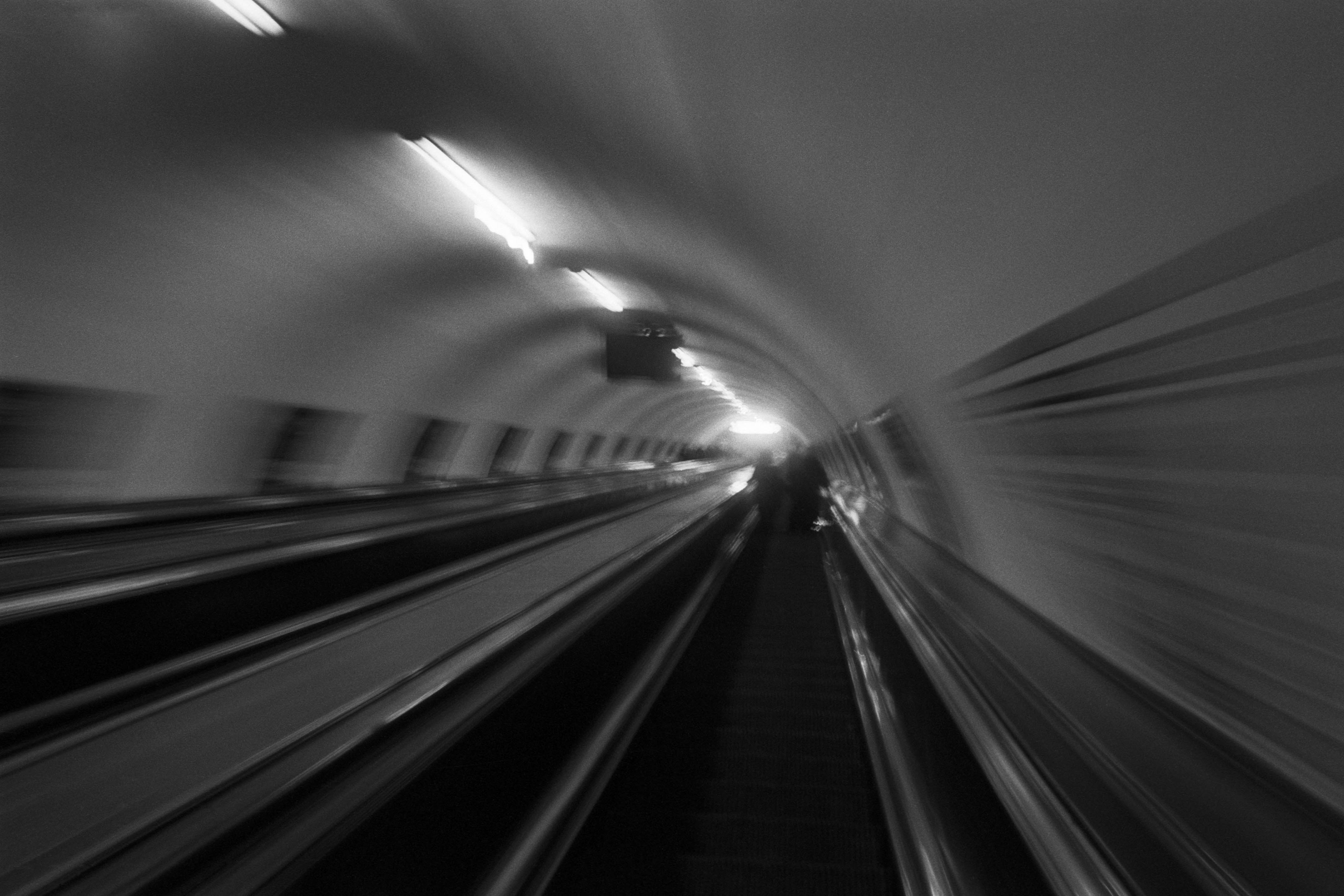
The Wall
2015Winner of the 1st prize & Golden Glass Award at the 11th Photographic Open Championship Olsztyn, and 1st place with the Special Prize of FORMAT magazine at the 3rd Biennial of Art in Piotrków Trybunalski.
View Series →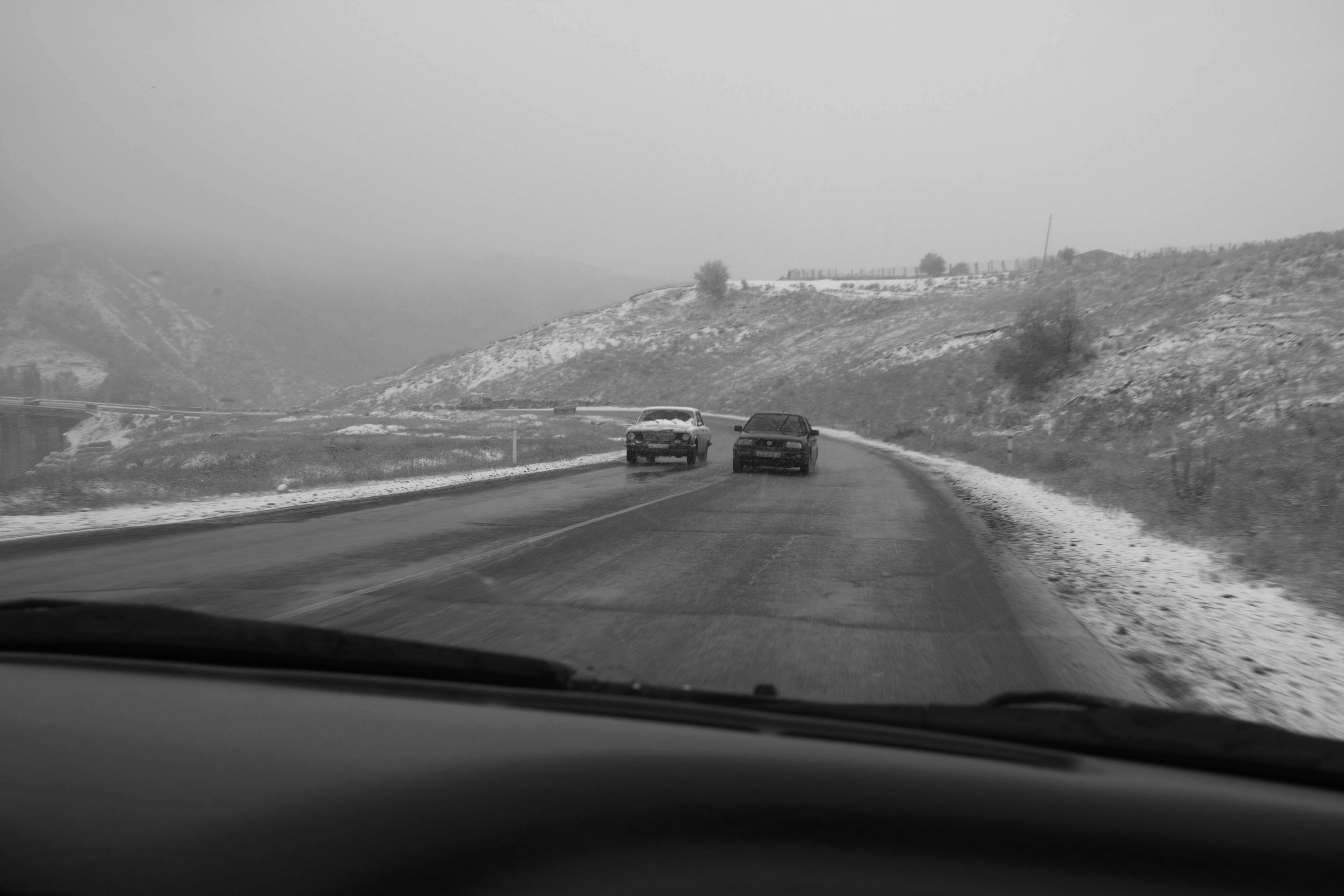
An Engagement Ring
2011A narrative series set in Wrocław in August 2011. Awarded 2nd prize & Silver Glass at the 10th Photographic Open Championship Olsztyn in 2014.
View Series →
Heat Wave
2014A documentary series recording spontaneous events across August and September 2014, capturing the raw energy of a city under the grip of summer.
View Series →