"Photography is not about the thing photographed. It is about how that thing looks photographed."
The technical side of shooting with vintage lenses
Vintage lenses bring a distinctive visual language to photography. Their rendering can be softer at wide apertures, lower in contrast, warmer in colour, or more expressive around the edges than the precise output of a modern optic. These traits are not defects to be corrected automatically; they are part of the lens’s character and can become a deliberate element of a portrait, fashion editorial, event, or fine art series.
Working with older glass also requires a more attentive relationship with the camera. Manual focus, mechanical apertures, changing flare patterns, and uncertain compatibility make each frame a considered decision. A photographer must understand how the lens behaves at different distances and in different light rather than relying entirely on autofocus, electronic corrections, or a standardised digital look.
For photographers in Australia, this approach can be especially rewarding. The hard sun in Sydney, the reflective surfaces of Melbourne’s laneways, the humid atmosphere of Brisbane, and the broad contrast of an outback landscape all reveal different sides of vintage optics. The process suits a practice that values observation, materiality, and the connection between analogue techniques and contemporary image-making.
What gives vintage lenses their character
Older lenses were designed before computer-aided optical correction became as advanced as it is today. Many use fewer elements, simpler coatings, or optical formulas that prioritise a particular balance of sharpness, size, and manufacturing cost. As a result, they may produce distinctive bokeh, visible vignetting, swirled backgrounds, flare, chromatic aberration, or a gradual fall-off in clarity towards the frame edges.
The effect is often strongest at the maximum aperture. A 50mm lens may appear dreamy at f/1.4, then become considerably crisper at f/2.8 or f/4. This change gives the photographer control over the degree of vintage rendering. A fashion portrait might benefit from gentle softness around the eyes and a glowing background, while a business portrait may call for a stopped-down aperture that retains facial definition and a controlled, professional appearance.
The word “vintage” covers many different optical behaviours. A Soviet-era lens, a Japanese manual-focus prime from the 1970s, and an adapted medium-format lens can all produce very different images. Testing a lens at multiple apertures, focus distances, and lighting angles is more useful than choosing one based solely on its reputation or sample photographs.
Compatibility comes before image-making
The first technical question is whether an older lens can safely attach to a modern camera. Mount type, flange focal distance, sensor coverage, and adapter construction all matter. A simple mechanical adapter may be enough when the lens mount sits at the correct distance from the sensor, but some combinations require optical correction or electronic communication. Incorrect spacing can prevent infinity focus, while a poorly machined adapter may introduce tilt or looseness.
Mirrorless cameras make vintage lens adaptation relatively straightforward because their short flange distances create space for many older mounts. Full-frame bodies generally preserve the original field of view, while APS-C and Micro Four Thirds cameras apply a crop factor. A classic 50mm lens can therefore behave more like a short telephoto on a cropped sensor, which may be useful for head-and-shoulders portraits but less suitable for environmental work.
Before a commercial shoot, check for practical hazards. Some older lenses have protruding rear elements that may contact a camera’s shutter or sensor assembly. Others contain oily aperture blades, fungus, haze, or stiff focusing helicoids. A lens can still create beautiful images while needing servicing, but its limitations should be understood before it is used for a client’s campaign or an event where there is little opportunity for retakes.
Manual focus demands a different rhythm
Manual focus is one of the defining experiences of adapting older optics. Modern cameras can make it more manageable through focus peaking, magnified live view, and electronic viewfinders, but these tools are aids rather than guarantees. Focus peaking may highlight areas with strong contrast instead of the exact plane of focus, and a shallow depth of field can make a portrait look sharp on the eyelashes while leaving the iris soft.
A reliable technique is to focus at the working aperture whenever possible. Wide-open focusing followed by stopping down can shift the plane of focus on some lenses, particularly older designs with spherical aberration. For a stationary portrait, magnify the eye, make a small adjustment, and capture several frames. For movement, pre-focus at a chosen distance, use a smaller aperture, and position the subject within a predictable zone.
This slower approach can be valuable during a portrait session in Melbourne’s laneways or a studio shoot in Sydney. The photographer has time to direct posture, observe expression, and respond to subtle changes rather than firing continuously. It also helps establish a calmer working atmosphere, which matters when photographing executives, artists, or people who feel uncomfortable in front of a camera.
Aperture, depth of field, and exposure
Many vintage lenses use a manual aperture ring, allowing direct control over the f-stop. Some have a click-stop design, while others can be de-clicked for smooth changes during video or precise exposure adjustments. The aperture may close immediately as it is turned, making the viewfinder darker. This is known as stop-down operation, and it can make composition and focusing more difficult in low light.
Depth of field is influenced by aperture, focal length, subject distance, and sensor size. A fast 85mm lens at f/1.8 can isolate a subject strongly, but the usable sharp zone may be only a few centimetres at close portrait distance. Stopping down to f/2.8 or f/4 often creates a more forgiving balance between separation and detail. For group portraits or event photography, this extra depth can be more valuable than the maximum amount of background blur.
Exposure metering generally works well with adapted lenses on digital cameras, especially when the camera is set to aperture priority or manual mode with auto ISO. On film, the photographer must rely on a handheld meter, an in-camera meter if available, or carefully judged light. In Australia’s intense summer sun, the difference between open shade and direct light can be substantial, so spot metering skin or using an incident meter can prevent highlights from becoming irretrievable.
Flare and contrast can become creative tools
Vintage lens coatings vary widely. Some older optics flare quickly when the sun sits near the frame, lowering contrast and producing veiling glare. Others create distinct coloured ghosts or geometric reflections. A modern lens hood can reduce unwanted flare, but removing it deliberately may produce a softer, more atmospheric image. The key is to position the light and subject with intention rather than allowing a random optical fault to dominate every frame.
Coastal locations make this experimentation particularly visible. At Bondi or St Kilda, strong reflected light from water, sand, concrete, and pale buildings can enter the lens from several directions. A lens with modest flare resistance may produce a washed, silvery effect that suits a conceptual series, while a portrait for a corporate website may require a flag, hood, or change of angle to retain clarity.
Lower contrast can also be managed in post-production. Raw files provide room to adjust black levels, local contrast, and colour separation without removing the original character. However, excessive sharpening or aggressive clarity adjustments can make a soft lens look unnatural. It is usually better to preserve the gentle transitions that attracted the photographer to the lens in the first place.
Vintage optics across film and digital workflows
On black-and-white film, the rendering of an older lens interacts with grain, development, paper choice, and darkroom printing. A low-contrast lens may work beautifully with a contrastier film or development process, while a flare-prone lens can create luminous highlights that are difficult to reproduce through digital effects. Medium-format film adds another dimension, offering a larger negative, distinctive tonal depth, and a slower, more deliberate process.
Digital cameras reveal a different set of behaviours. Their sensors may record colour fringing, purple edges, or uneven illumination with greater precision than film. In-camera corrections designed for modern lenses may not apply to adapted optics, so profile corrections must be made manually or omitted. Shooting raw is generally preferable when the final image needs both flexible tonal control and the authentic signature of the glass.
This combination of old and new methods reflects the kind of considered practice outlined in the photographer’s biography, where traditional darkroom principles and contemporary workflows can inform one another. A vintage lens does not force a photographer to choose between analogue and digital production; it can connect the two through texture, timing, and the physical behaviour of light.
Choosing lenses for portraits and commercial work
For portraits, a 50mm lens is versatile for environmental compositions, while an 85mm or 105mm lens often provides flattering compression and comfortable working distance. A vintage wide-angle lens can produce a more intimate or unconventional perspective, particularly when the subject is placed close to the camera. Such lenses should be used carefully because facial features near the edges can appear stretched.
Commercial clients usually need consistency as well as character. A vintage lens can be effective for a personal branding session, editorial campaign, or hospitality project when its visual qualities support the brand. It may be less appropriate where every product edge must be technically exact or where a series needs uniform sharpness across changing locations. Discussing the intended finish early helps align creative experimentation with practical expectations.
Australian assignments often involve strong logistical considerations. A shoot in Brisbane may require protection from humidity and sudden rain, while dust around regional locations can enter an older lens during focusing or filter changes. In Perth or Adelaide, hard afternoon light may call for a flag and a controlled shooting angle. Keeping a blower, lens cloth, spare adapter, and sealed storage pouch in the kit is simple preparation that protects both the equipment and the result.
Building a dependable vintage lens kit
A useful collection does not need to contain dozens of lenses. One normal prime, one portrait-length lens, and perhaps a wider option can cover a substantial range of work. It is more productive to learn the behaviour of three dependable optics than to purchase every celebrated model. Record notes about flare, close-focus distance, sharpness at each aperture, colour response, and the way backgrounds render at different distances.
Inspect second-hand lenses carefully. Look through the glass with a torch for fungus, separation, scratches, and haze, while remembering that a small amount of dust rarely affects a photograph. Turn the focus ring from end to end and check for uneven resistance. Test the aperture blades for oil and sluggish movement. Mount the lens and adapter securely, then examine images at full resolution before committing to an important assignment.
The most successful use of vintage glass comes from treating its limitations as part of the design process. A photographer who understands when to embrace softness, when to stop down, when to shade the front element, and when to switch to a modern lens can work with much greater freedom. The resulting photographs feel intentional: technically informed, visually distinctive, and responsive to the particular light and people in front of the camera.
Selected Series
A cross-section of commissioned and personal projects spanning fine art, commercial, and conceptual work.
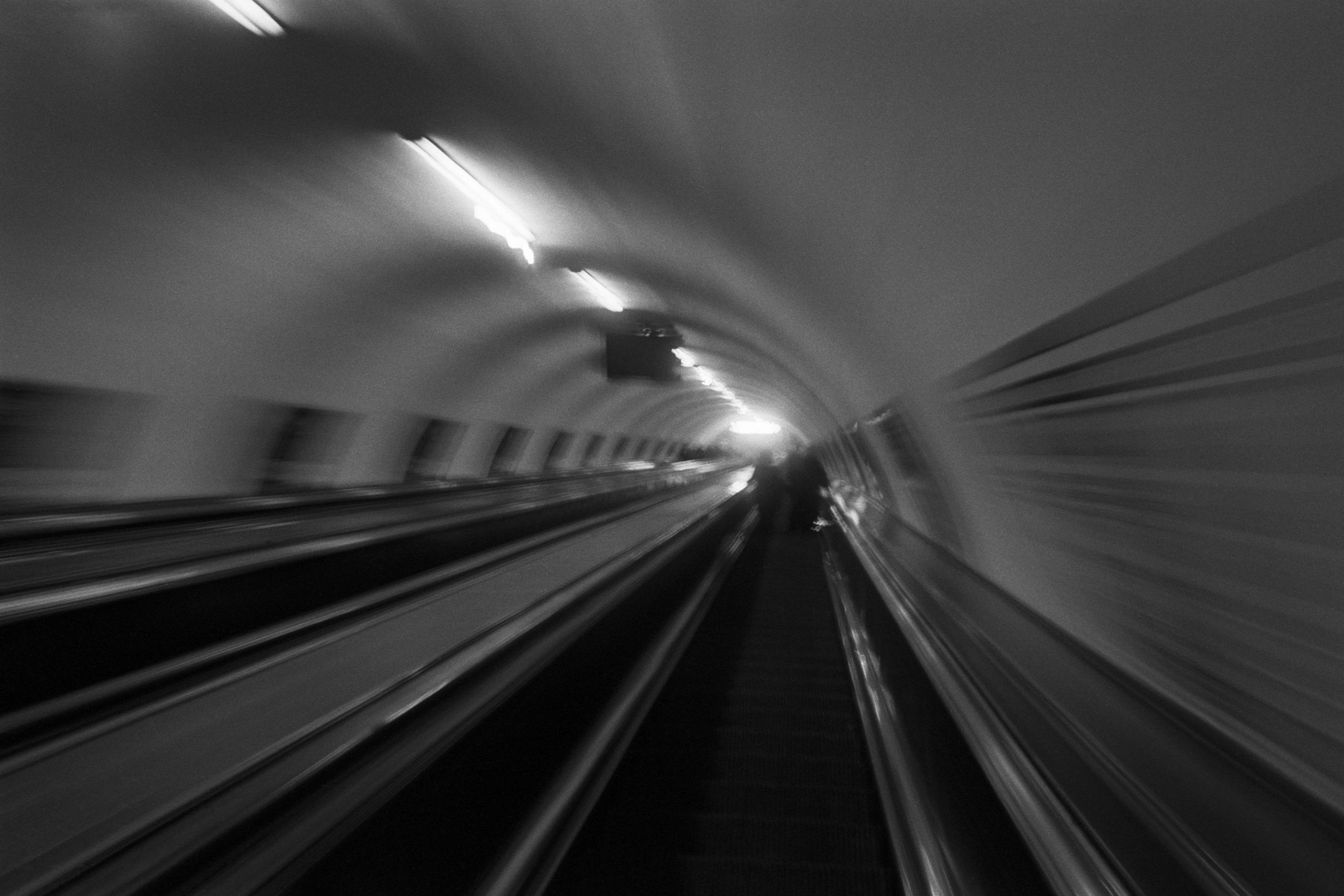
The Wall
2015Winner of the 1st prize & Golden Glass Award at the 11th Photographic Open Championship Olsztyn, and 1st place with the Special Prize of FORMAT magazine at the 3rd Biennial of Art in Piotrków Trybunalski.
View Series →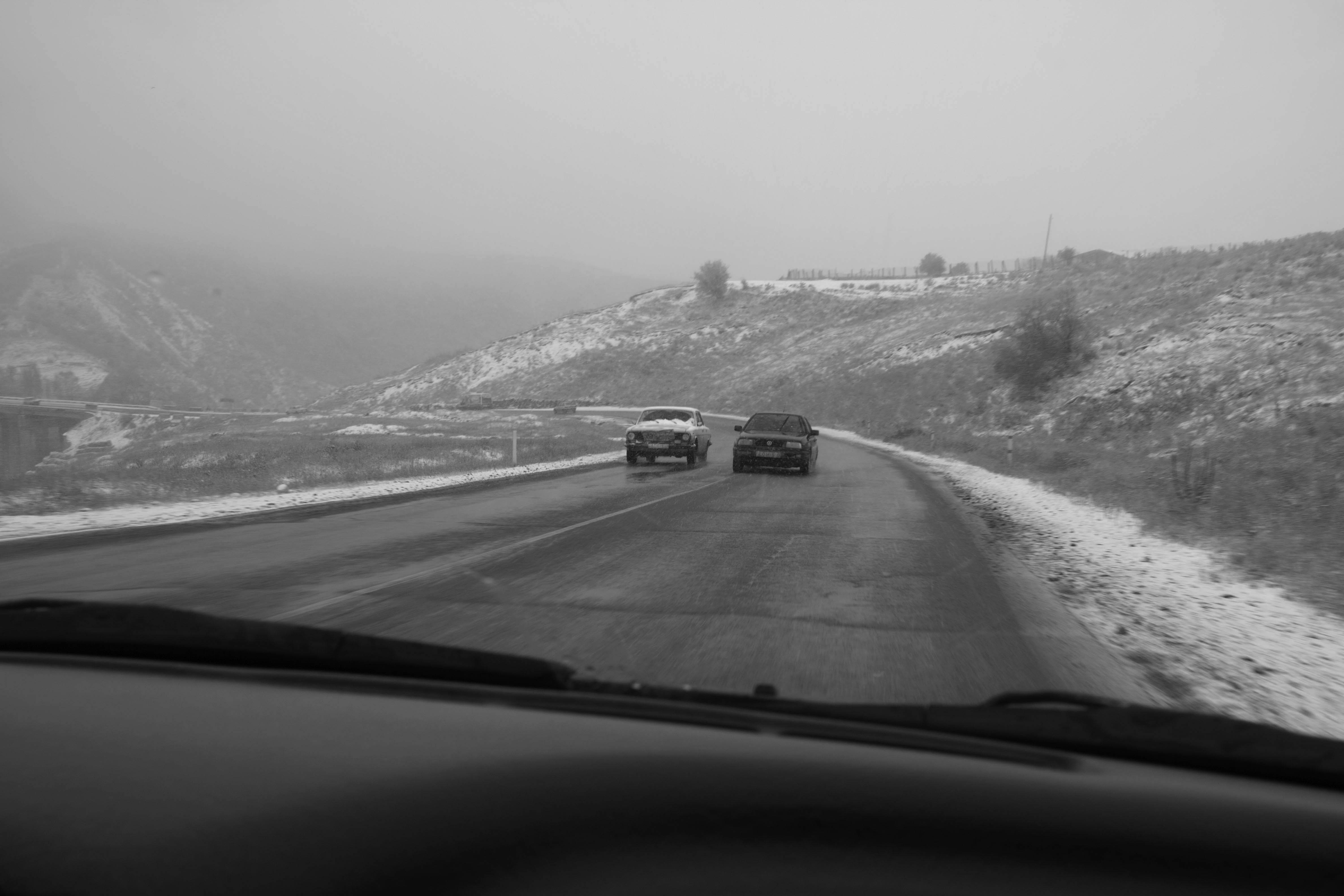
An Engagement Ring
2011A narrative series set in Wrocław in August 2011. Awarded 2nd prize & Silver Glass at the 10th Photographic Open Championship Olsztyn in 2014.
View Series →
Heat Wave
2014A documentary series recording spontaneous events across August and September 2014, capturing the raw energy of a city under the grip of summer.
View Series →