"Photography is not about the thing photographed. It is about how that thing looks photographed."
What Photographing Strangers on the Street Taught Me
The first stranger I ever photographed properly was an old man reading a folded newspaper on a bench outside a pharmacy on Świętokrzyska in Wrocław. I had spent twenty minutes waiting for the right light, and when it finally arrived, I walked over, introduced myself and asked if I could take a picture. He said yes, then asked what I was going to do with it. Nobody had asked me that before. He was right to.
That exchange still governs how I work. Twenty years of fine art and commercial photography — business portraits, fashion, events, conceptual series — have given me a set of highly controllable situations: a brief, a lighting diagram, a wardrobe rail, a call sheet. Street work strips all of that away. A stranger arrives with no appointment, no mood board and no idea that their life is about to be flattened into two dimensions.
In Australia, where I have shot on assignment and while travelling, the lesson became sharper rather than softer. The light is brighter, the footpaths are busier, and the people on them are startlingly open. What follows is the practical, ethical and emotional knowledge I gained from photographing strangers, and how it reshaped a practice built on analogue film, darkroom work and careful digital post-production.
The first ten seconds of a stranger
The hardest part of street photography is not the camera. It is the approach. You have roughly ten seconds to decide whether the person in front of you is a subject or an obstacle, and that decision registers in your posture long before it registers in your frame.
Early in my career I worked at a distance with a long lens, hiding behind a zoom. The images were safe and forgettable: people caught mid-stride, faces turned away, a wall of visual noise behind them. Switching to a 35mm lens on the hip forced me into the world, close enough to be noticed, and that is when the photographs started to say something at all.
The strongest frames I have made of strangers came from moments of interruption — a person who looked up half a second before the shutter, a figure who turned because a camera was near. The slight tension in the face is what separates a photograph of somebody from a photograph about somebody.
Reading posture, pace and politeness
Body language is the working language of the street. Before I raise a camera I look at feet: are they moving with purpose or drifting? A person mid-stride in trainers and a jogger's top tells a different story from someone in office shoes who has stopped to tie a lace.
Australians have a reputation for being blunt, and on the street that directness saves you time. A simple "hello, mind if I take a picture?" lands better here than a paragraph of preamble. I have found the local shorthand helpful: "no worries" for a refusal, "good on ya" for a yes, and a cheerful "she'll be right" for the moment the light collapses. The banter is short, generous and rarely personal.
Melbourne rewarded this directness more than anywhere else I have worked. Trams rattle through the middle of the frame on Swanston Street, crowds squeeze past umbrellas in the laneways, and the footpaths around the Queen Victoria Market are so dense with conversation that a stranger will look straight at you long before you get a shot. In Sydney, the same exchange happens along the Bondi to Coogee path, where swimmers, runners and dog owners form a rolling parade of characters.
Harsh sun, long shadows and blown highlights
Australian light is a technical problem before it is an aesthetic one. The sun sits high, the sky burns out quickly, and shadows fall hard across the eyes. I shoot mostly black and white, so the issue is simpler: contrast either splits the frame into shape and shadow, or it does not.
My approach is to work with the sun rather than against it. Side light in the late afternoon gives me the texture I want on skin, and I expose for the highlights so a white shirt does not turn into a featureless sheet of paper. Midday is almost useless for portraits, but it is superb for silhouettes against a bright wall.
Winter in Wrocław offers the opposite palette: low grey light, mist that softens every edge, and a monochrome film stock that renders a wet tram rail like a drawn line. I now think of the two cities as complementary conditions rather than competing ones.
Asking permission and giving something back
Asking changes the photograph. The moment a portrait is granted, the subject becomes a participant rather than a target, and the exchange rate between photographer and stranger shifts entirely.
Some photographers argue that asking ruins the candid image. I disagree. The candid frame still exists; it simply comes later, in the five seconds after the person relaxes, looks down or turns to a friend. I have made stronger pictures in that second window than in the first.
When I do ask, I keep the request short and I explain the intended use. I never pretend to be a tourist taking a holiday snap when I am working on a series. If the answer is no, I lower the camera and move on without comment. A refusal is not a negotiation.
Legal consent is the floor, not the ceiling. Australian privacy acts and the varying rules in each state and territory mean "it was in public" is not a complete defence, and shops, pubs, council offices and markets regularly post their own no-photography signs. Following the sign is basic manners and basic professionalism.
The stories that arrive after the click
Photographing strangers means collecting biographies you did not ask for. A retired engineer at a bus stop in Canberra, a builder at an Adelaide Central Market stall, a teenager outside a Bondi café who wanted to know whether I had been to the Kakadu.
Sometimes the story is better than the picture, and that is a lesson I have had to learn the hard way. Early on I imagined the photograph carried everything. Now I think a good image opens a door and the photograph only widens it.
The real risk runs the other way: taking so much from a stranger's presence that nothing is given back. I have started printing small editions for people I photograph, especially older subjects who rarely see themselves in pictures. It costs a few hundred dollars and a printer cartridge. It buys me something a fee cannot.
Where the street meets the commercial brief
A portfolio that contains only guarded faces is a portfolio without range. The street series taught me how to build narrative in a single frame, which is exactly what a client wants from a business portrait that has to say something about a person rather than list their job title.
Working with businesses in Australia also taught me how the market actually runs. Invoicing is in Australian dollars, GST sits on top, and a shoot day is quoted with usage rights spelled out for the web, print and paid social. Studios compete on speed and consistency, and the people willing to pay premium rates are the ones who value a considered image rather than a fast one. Weekend craft markets in Melbourne and Adelaide also sell small editions directly to collectors who want something they can hold in their hands.
My conceptual series, the other half of the practice, has travelled further through independent platforms such as Maks Art, where collectors buy work directly from the photographer and the middle layer of galleries disappears. It is a useful reminder that the audience for a serious body of work no longer sits only inside gallery walls.
Events and fashion work keeps the technical muscles sharp: staging, wardrobe, a lighting setup reset after every frame. The street keeps the eye sharp. I would not trade one for the other.
Habits worth keeping for anyone shooting in public
These routines survived the transition from film to digital and from Wrocław to Australian cities. They are unglamorous, and they are the reason the photographs hold up.
- Work at the height of the subject — a waist-level camera means a child looks at you and a standing adult does not have to perform.
- Keep the frame simple. One clear subject and a plain background will beat three subjects and clutter every time.
- Expose for highlights and check the histogram before the subject walks away, because a lost face is not recoverable in post.
- Ask plainly, accept a refusal instantly, and never argue with a stranger about their own image.
- Learn the local rules before you shoot: posted signs, private-land boundaries, and the difference between a footpath and a private forecourt.
- Shoot in black and white when colour becomes noise, and test your best work at small print size to see which images actually hold.
- Give something back when the situation allows it, even if it is only a printed copy handed over with a short note.
None of this makes street work easier. It makes it quieter, and the photographs get better for it. The strangers taught me that a camera is heavy enough to carry into a room; keeping it light enough to leave is the part that takes years to learn.
Selected Series
A cross-section of commissioned and personal projects spanning fine art, commercial, and conceptual work.
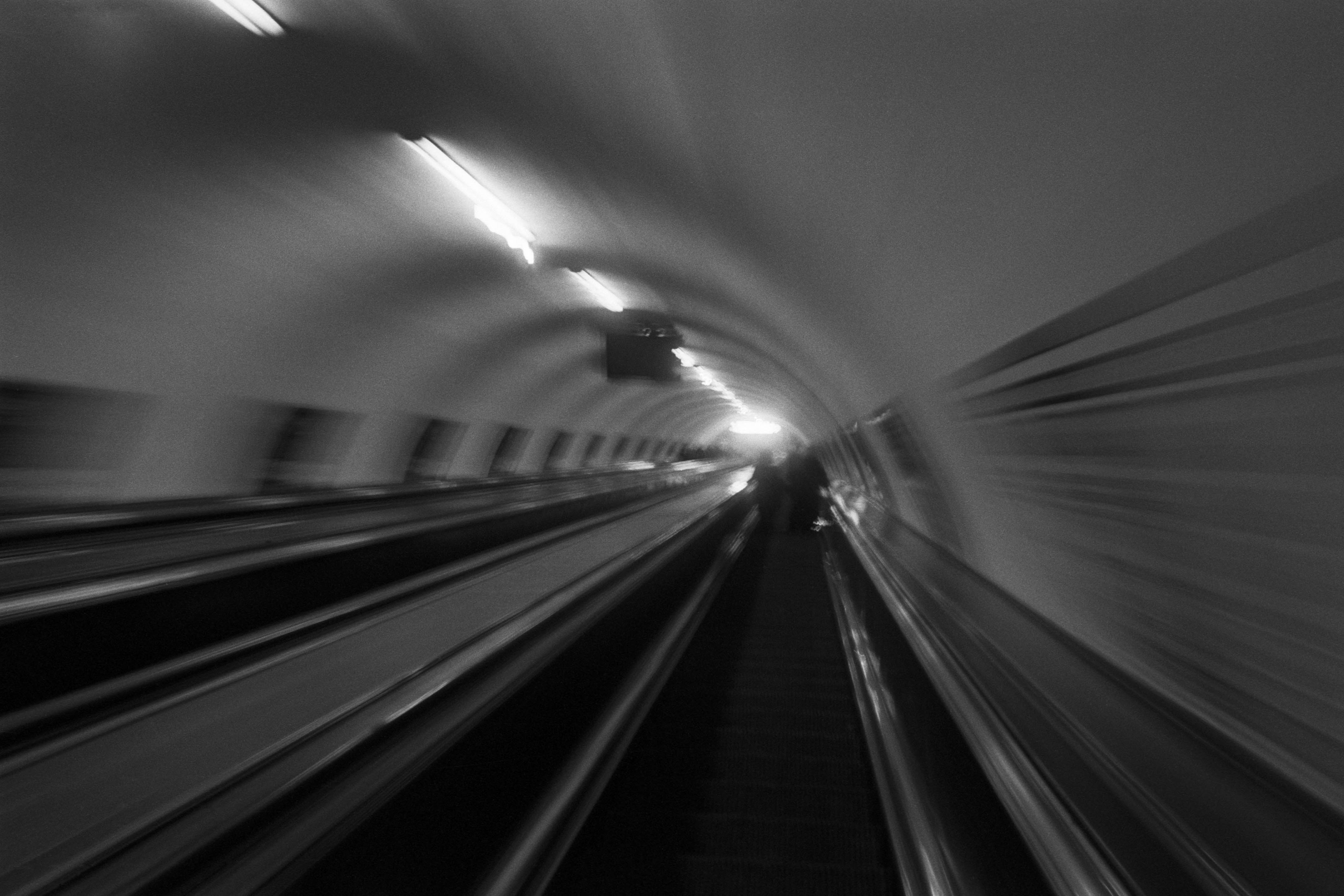
The Wall
2015Winner of the 1st prize & Golden Glass Award at the 11th Photographic Open Championship Olsztyn, and 1st place with the Special Prize of FORMAT magazine at the 3rd Biennial of Art in Piotrków Trybunalski.
View Series →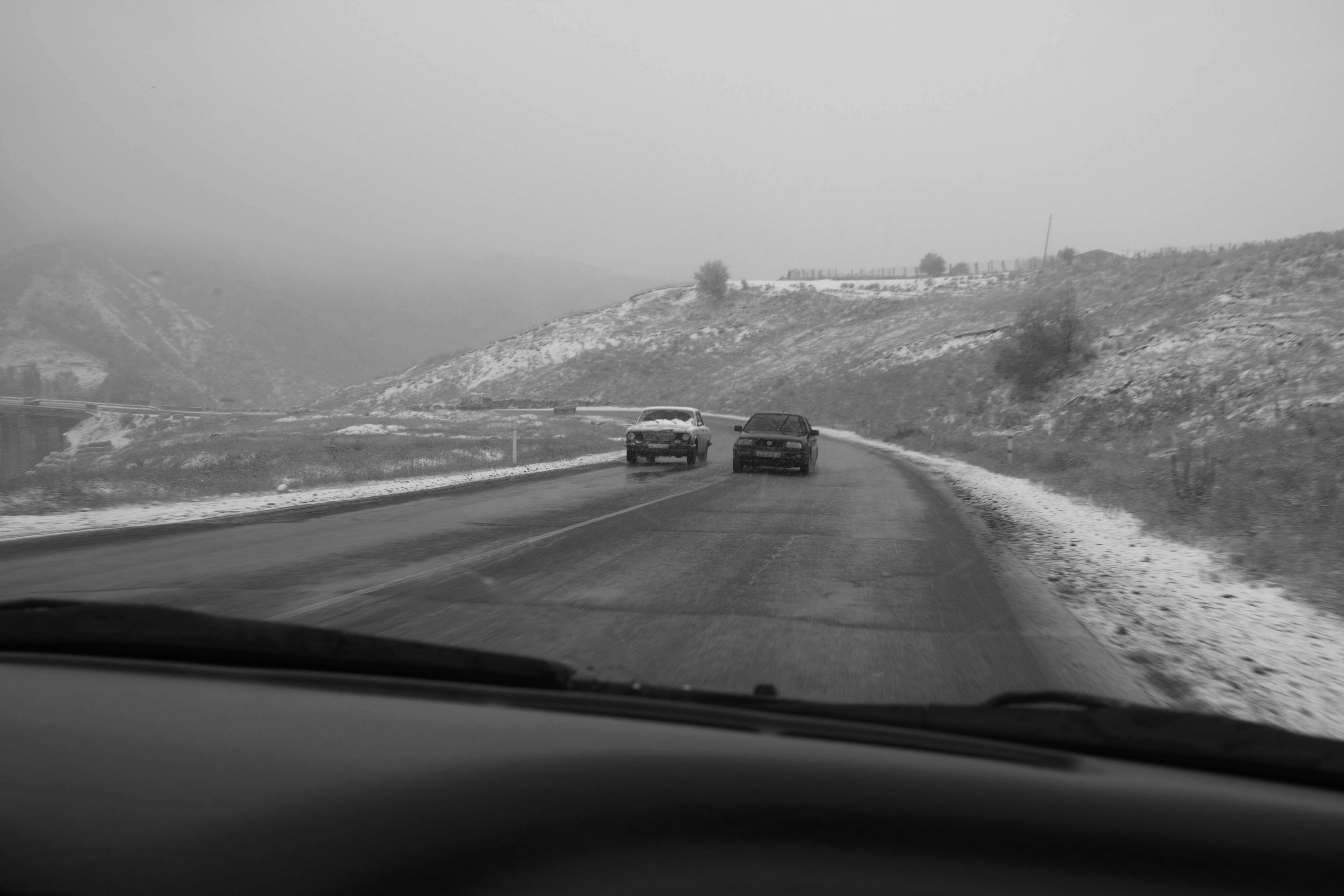
An Engagement Ring
2011A narrative series set in Wrocław in August 2011. Awarded 2nd prize & Silver Glass at the 10th Photographic Open Championship Olsztyn in 2014.
View Series →
Heat Wave
2014A documentary series recording spontaneous events across August and September 2014, capturing the raw energy of a city under the grip of summer.
View Series →