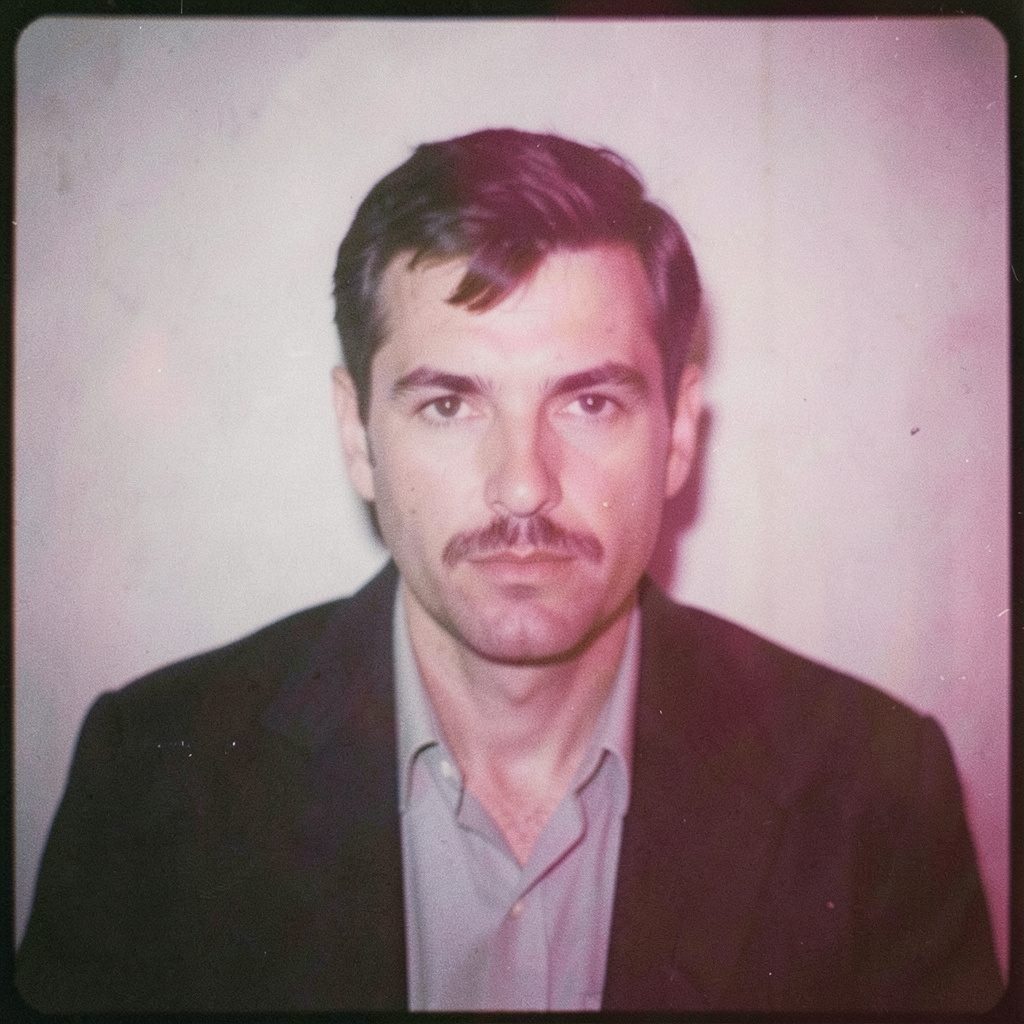
"Photography is not about the thing photographed. It is about how that thing looks photographed."
Why I Embrace the Limitations of a Fixed Lens Camera
I photograph in Wrocław, a city of brick courtyards, tram lines, and afternoon light that slants across the Oder at an angle I have never quite managed to predict. My work moves between business portraits, editorial fashion, event coverage, and long-form conceptual series, and every one of those commissions starts the same way: I decide on a camera body and I stick with the lens attached to it. There is no zoom ring, no lens barrel I twist between shots, no menu of focal lengths waiting in a bag. The optics are welded to the body, the field of view is fixed, and that single decision shapes everything that follows.
Clients sometimes read this as a limitation, and I understand why. Commercial photography rewards flexibility, and the promise of an interchangeable lens is the promise of options. I have worked with those systems, and I have seen how quickly a decision-maker's attention dissolves when framing becomes infinite. A fixed lens camera asks something different of me: it asks me to know, in advance, what kind of picture I am going to make. That is a harder question than where to point the camera, and the honest answer is that it produces better frames.
Constraint as a working method
Every commission already carries more variables than a photographer can manage. A business portrait has a deadline, a wardrobe change, a tight crop, an expression to soften, and a background to negotiate. Add a zoom lens to that pressure and the decision count doubles: now I am solving framing and distance at the same time, and the result is often a compromise dressed up as a choice. With a single focal length, one variable disappears. I know the angle before I arrive. I know how much of the frame a standing figure will occupy at a given distance. The picture gets made faster and looks more deliberate.
Over time that efficiency turns into something more valuable: intuition. After a few hundred frames with the same optics, I stop calculating and start seeing. I recognise that a portrait will breathe better with the subject a half-step closer, that a corridor of light will need a different position than I first assumed, that the shape of a room only becomes legible when the lens is held low. The fixed field of view becomes a second pair of eyes with a permanent opinion about composition. It is a modest-looking constraint that pays back attention.
There is also a commercial argument for consistency. When a company commissions a set of portraits, a set of event images, or a fashion story, they want a body of work that reads as one voice. A photographer who changes lenses unpredictably produces images that vary in perspective, in depth, in how close the lens seems to have been standing. A photographer who works with a chosen prime lens delivers a consistent visual grammar, and clients recognise that as professionalism even when they cannot name it. The fixed lens becomes a signature rather than a shortage.
Focal length and the shape of perspective
Choosing one focal length means choosing a perspective, and perspective is decided by where the photographer stands relative to the subject, not by the lens alone. My 35mm body exaggerates depth: it makes near objects loom and lets distant ones recede, which suits reportage, cramped interiors, and the restless energy of an event. My 85mm body compresses the planes between me and the subject, flattening a face against a background and separating a figure from a wall with a clarity that reads as flattering and controlled. Neither lens is better. They are different claims about space.
Working with medium format film made this even more explicit. On 120 film, in 6x4.5 and 6x7 frames, the sensor is physically larger, so the field of view changes in ways that have nothing to do with creative intention. A 90mm lens on a 6x7 back covers roughly what a 40mm lens covers on 35mm film. The camera lies about intimacy, and learning that arithmetic freed me from assumptions I had carried over from smaller formats. I compose for the frame in my hands, not for a spec sheet, and the fixed lens forces me to make peace with the actual picture it produces.
That is the deeper lesson of a non-interchangeable lens. The lens does not merely restrict me; it teaches me that every picture has an inherent point of view and that the photographer's job is to align their body with it. A zoom lens lets a photographer retreat from that responsibility by pulling back and pushing in. A fixed focal length asks me to walk forward, to kneel, to find the distance at which the frame holds together, to accept that a portrait made from six steps further back is a different photograph rather than a safer version of the same one.
A fixed maximum aperture changes how I read light
If the lens is fixed, so is its widest aperture, and that single fact reorganises how I expose a frame. On my 35mm f/1.4 body the maximum aperture is a constant of my equipment. I stop treating aperture as a creative knob and start treating it as a structural property of the camera, the way a photographer treats the format of the film. My real decisions become shutter speed, ISO, and the depth of field I actually need. The exposure triangle resolves into a question with a limited number of good answers, and working inside that limit produces cleaner, more repeatable results.
In low light, at an evening event or a dusk fashion test, this constraint turns into a method. A wide maximum aperture means a shallow plane of focus and a hard requirement that I place focus precisely: on the eye, on the fabric, on the moment a hand meets a glass. I set the aperture, hold the shutter speed, let the camera raise the ISO, and accept the grain or noise that comes with it. In film terms this is push processing, and I love the density that comes from it. The image gains a texture that a carefully metered frame would have lost.
The aperture also sets the character of the out-of-focus areas. Bokeh quality, flare behaviour, the soft veil of a bright background, the way a highlight blooms around an edge: these are constants when the lens cannot change, and constants become aesthetic. I have learned to place a subject against light sources deliberately, to use the rendering of the out-of-focus zone as a compositional element rather than a by-product. A slow, heavy zoom cannot offer that aperture, and even if it could, the rendering would change frame to frame. One lens means one optical signature across the whole body of work.
Film, the darkroom, and the discipline of the negative
A camera with 36 exposures per roll asks for another kind of attention. On 35mm black and white film I decide my developer, my times, and my approach to contrast, and I get one chance at each frame with no preview on the back. That scarcity changes how I shoot: I slow down, I compose deliberately, I stop firing and hoping. The contact sheet becomes my editing desk, and the final selection is made on a sheet of small squares rather than in a grid of thumbnails. It is a slower, more physical way to judge a series, and it suits the conceptual work where sequence matters.
Medium format enlargers have their own fixed optics, and the parallel is instructive. A enlarger lens at a chosen focal length is another non-negotiable viewpoint, and the print size, the grain, and the falloff of illumination all follow from it. I built my understanding of tone on that equipment: shadows that hold detail, highlights that clip without apology, blacks that stay dense on a fibre-based paper. Digital workflows have replaced much of that process for me, but the habits survived. I still print, still work in black and white, still treat a frame as something that has to earn its place in a series.
The medium format digital back made the crop factor impossible to ignore. A 44-megapixel sensor behind a 6x7 frame does not give me the same view as a full frame camera, and the temptation to crop later felt like a cheat. Working without that escape hatch keeps the composition honest. What I frame is what I get, at a ratio and a perspective I chose when I chose the lens, and every image in a portfolio has to defend that choice on its own merits.
What this means for portrait, fashion, and event work
In business portraiture, predictability is a service. Corporate clients commission images that will appear on a website, in a press release, on a conference screen, often cropped to a square or a circle. A fixed 85mm perspective gives a consistent head-and-shoulders proportion, a predictable amount of background, a reliable degree of separation, and the flattering compression that keeps a face from competing with whatever is behind it. When a team of six people needs to look like they belong to the same organisation, consistency of viewpoint does more work than any retouching trick.
For fashion and editorial work, the fixed lens becomes a stylistic decision rather than a technical one. A story shot entirely on one prime has its own geometry, and that geometry communicates something about the designer, the photographer, and the mood of the collection. It also keeps the pace of the shoot alive: fewer lens changes, fewer moments lost to mechanical adjustments, more attention on the garment, the posture, the light in the fabric. I can build an entire editorial look around the specific way one lens renders skin and shadow.
At events, the discipline of the fixed 35mm pays off in a different currency: decisive moments. I cannot zoom to rescue a shot, which means I read the room, position myself with intent, and let the lens frame the action the way it always does. When the decisive moment arrives, the camera is already pointed at it. For the conceptual series, that same constraint becomes the organising principle of the work itself: one frame, one perspective, one optical signature, repeated across a subject until the repetition starts to say something no single image could say.
I keep returning to the same reason for working this way. A camera with a permanently attached lens turns limitation into specification. It removes the anxiety of infinite choice, sharpens observation, fixes the perspective, and gives an entire body of work a recognisable voice. The equipment ends up doing exactly what it was built to do, and the photographs begin to look like decisions rather than options.
Selected Series
A cross-section of commissioned and personal projects spanning fine art, commercial, and conceptual work.
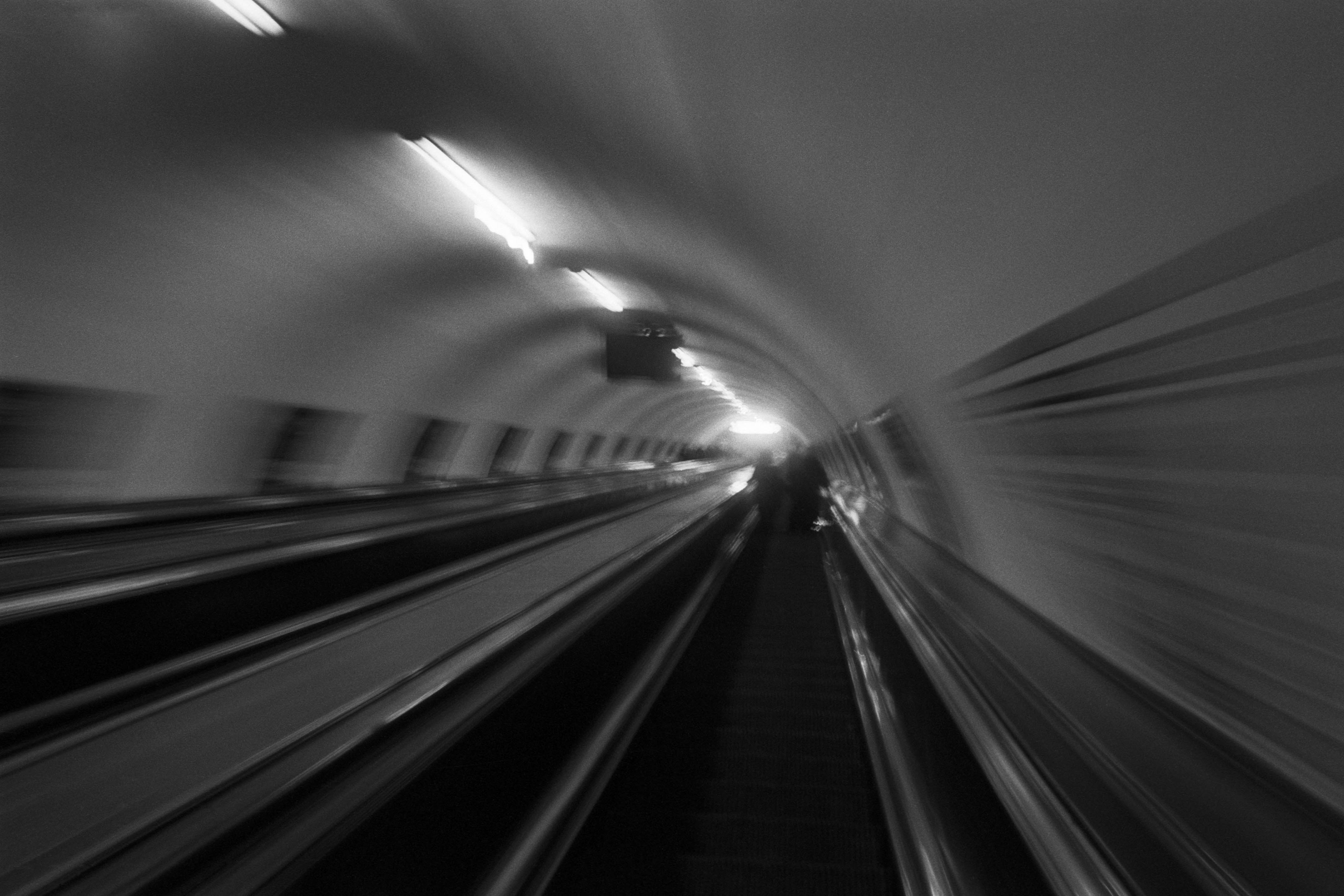
The Wall
2015Winner of the 1st prize & Golden Glass Award at the 11th Photographic Open Championship Olsztyn, and 1st place with the Special Prize of FORMAT magazine at the 3rd Biennial of Art in Piotrków Trybunalski.
View Series →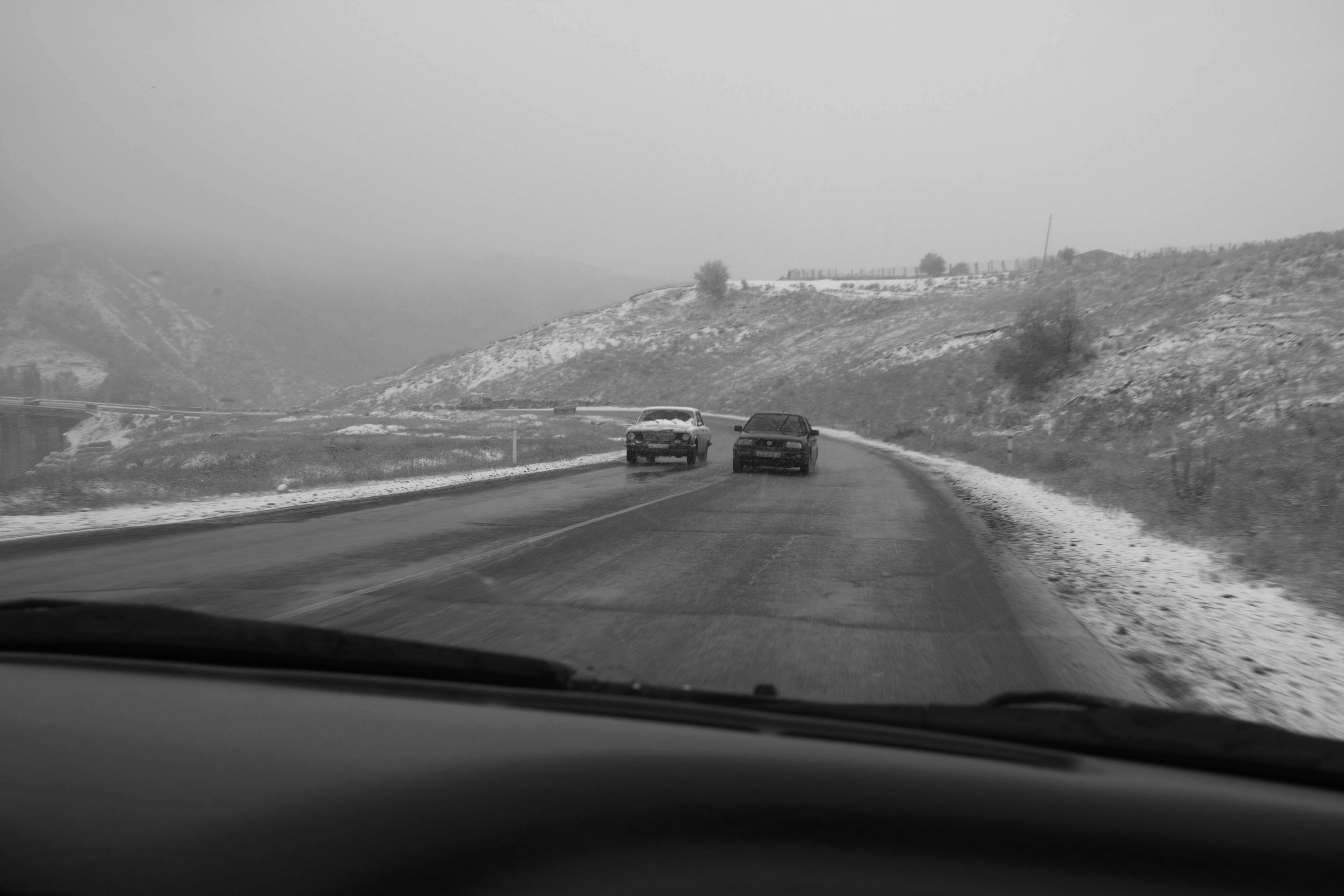
An Engagement Ring
2011A narrative series set in Wrocław in August 2011. Awarded 2nd prize & Silver Glass at the 10th Photographic Open Championship Olsztyn in 2014.
View Series →
Heat Wave
2014A documentary series recording spontaneous events across August and September 2014, capturing the raw energy of a city under the grip of summer.
View Series →