"Photography is not about the thing photographed. It is about how that thing looks photographed."
The Darkroom Still Shapes How I See
There is a particular kind of quiet that only exists after the safelight clicks on. The door closes, the street noise drops away, and the world shrinks to a rectangle of white light, a tray of chemistry, and a wet negative held gently by the corner. I have spent thousands of hours in that quiet, first as a teenager in Wrocław with borrowed equipment, then as a working photographer who could have left film behind many times and never did. People often ask why I still own a working darkroom in a city saturated with screens and software. The honest answer is that the darkroom is not a nostalgic indulgence for me. It is the place where I learned to see, and it continues to teach me every time I step inside.
This is not an argument against digital capture. I use digital workflows for commercial briefs that demand fast turnaround and high-volume output. But there is a layer of photographic thinking that only emerges when you slow down, smell the developer, and watch an image appear on paper under your hands. In a culture increasingly shaped by instant results, that layer has become more valuable to me, not less. What follows is an attempt to explain, as honestly as I can, why a private darkroom still sits at the centre of my practice.
The First Roll and a Lifelong Habit
I developed my first roll of black-and-white film in a cramped university bathroom at the age of seventeen. The negatives were scratched, the frames uneven, and several images were completely blank because I had loaded the reel in daylight. None of that discouraged me. Watching an image rise out of a chemical soup felt closer to alchemy than to photography, and the limitations of the medium forced a kind of attention I had never experienced before. Each shot had to be measured, composed, and exposed with care because there were only thirty-six chances on a roll, and the cost of getting it wrong was not just money but waiting.
That early relationship with film set the rhythm of my work for the next two decades. When I later travelled for assignments, including a long stretch documenting coastal communities along the New South Wales shoreline, I brought a medium-format camera and a small changing bag so I could reload on the road. I learned to plan ahead in a way that younger photographers working only in digital often skip. A roll of Tri-X is a budget, but it is also a discipline. You begin to understand light as something you negotiate with, not something you capture and discard.
Why a Personal Darkroom Matters
Commercial labs do excellent work. In Australia, places such as Hillvale in Melbourne, Rewind Photo Lab, and the team at Colourmetric produce negatives and prints of remarkable quality, and I send clients there when the project calls for it. A private darkroom, however, offers something no external service can replicate: the ability to sit with a single negative for as long as the image requires. Some portraits need three hours in the dark before I find the print I want. Some series only make sense once I have pinned a dozen test strips to a line and watched how they change as the day cools.
Owning the space also means owning the variables. Water temperature, agitation rhythm, paper grade, developer dilution, and the subtle personality of each enlarger lens all become familiar collaborators. When I am preparing a print for a corporate client in Sydney or Brisbane, that intimacy translates into a consistency a shared lab simply cannot match. Two prints made a week apart look like siblings, not strangers, because the same hands, the same chemicals, and the same eye are doing the work. Clients notice that, even when they cannot articulate what they see.
The Tactile Decisions Digital Cannot Replicate
Digital editing has its own poetry, and I am not interested in pretending otherwise. Layer masks, frequency separation, and colour grading tools have given photographers an astonishing vocabulary. What they have not replaced is the physical gesture of making a print. Dodging a highlight with a small piece of card on a wire, burning a shadow with my hand cupped around a hole, choosing between a warm-toned and a cool-toned paper for the same image — these are decisions made with the body, not the cursor.
When I run workshops in places like Byron Bay and Adelaide, the moment that always surprises participants is the first time they see a fibre-based print emerge from the final wash. They have spent hours staring at screens, and they expect a print to be a frozen thing, a final product. Instead they discover that a print is a living object with grain, surface, and depth. The fibres of the paper catch light differently depending on the angle, the highlight rolls off softly instead of clipping, and the shadow holds a quietness that pixel data rarely conveys. That tactile education, learned under a safelight, has shaped how my commercial clients experience the work I deliver, digital or otherwise.
Slowness as a Way of Working
Australian culture, much like everywhere else now, prizes speed. Fashion campaigns expect concepts within forty-eight hours, and event photographers in Melbourne and Perth are expected to deliver a gallery before guests have finished dessert. I have nothing against that tempo; my commercial practice responds to it when required. The darkroom, however, insists on a different tempo, and that contrast has become one of the most important gifts of my working life.
A print session cannot be hurried. The enlarger needs to warm up, the easel needs to be aligned, the easel blade needs to be tested, and the negative needs to be examined under a loupe before a single exposure is made. Hours pass. I drink too much coffee. I listen to old Polish jazz records and the occasional BBC archival broadcast downloaded the night before. By the time a finished print dries on the line, I have spent more time with that one image than I sometimes spend with an entire commercial shoot. That depth of attention is impossible to fake in front of a screen, and it is the reason my conceptual series — the work I show at festivals such as Head On in Sydney and the Ballarat International Foto Biennale — begins and ends in the darkroom.
The Chemistry of Accident and Intention
One of the things I love about film is that it does not pretend to be perfect. Grain is not a flaw, it is a record of silver halide crystals doing what they do. Slight shifts in contrast come from the temperature of the developer, the age of the fixer, the way I agitated the tank. A scratch on a negative, made by something as mundane as a loose thread in a changing bag, can become the most expressive passage in a print. These accidents are not failures. They are evidence of a process that includes the photographer's body, the room's humidity, and the chemistry's mood.
In my own darkroom I have come to welcome a controlled amount of unpredictability. I push film when the light is right, pull it when it is not, and I keep a small library of papers from Ilford, Kentmere, and Fomapan so I can match the surface to the subject. A conceptual portrait that needs gravity and weight gets a matte fibre stock. A fashion series that requires brilliance and presence gets a glossy surface with crisp highlights. These choices are made in conversation with the materials, and they lead to results I could not plan in advance. It is a kind of co-authorship with the chemistry itself, and it is what keeps the darkroom alive for me after all these years.
Sharing the Practice With Clients and Students
The darkroom is also a teaching space, and I treat it as one. Over the last decade I have hosted small groups in my Wrocław studio, including visiting photographers from Australia who wanted to understand why anyone would still invest in enlargers and chemicals in 2024. The most common remark at the end of those sessions is some version of the same revelation: they had thought they were learning a technique, and they left understanding a different way of paying attention.
Clients often experience the same shift. When a creative director flies in from Sydney to sign off on a personal portrait series, I invite them to watch the first test strip being made. They stand beside me as the paper slides into the developer and the image slowly surfaces. Something changes in their posture. They begin to read the print the way a musician reads a score, noticing where the light gathers, where the texture falls away, where the hand has been more decisive. That shared moment of witnessing has done more for my client relationships than any marketing email ever could. It reminds everyone in the room that a photograph is not a file, and that the choices behind it deserve the same care we would give to any serious craft.
That belief, more than any technical argument, is the reason the darkroom remains the heart of my practice. It is where my eye was trained, where my standards were set, and where the work continues to be made with the patience it asks for. As long as there is a roll of film to load and a tray of developer waiting, I will keep that red light burning.
Selected Series
A cross-section of commissioned and personal projects spanning fine art, commercial, and conceptual work.
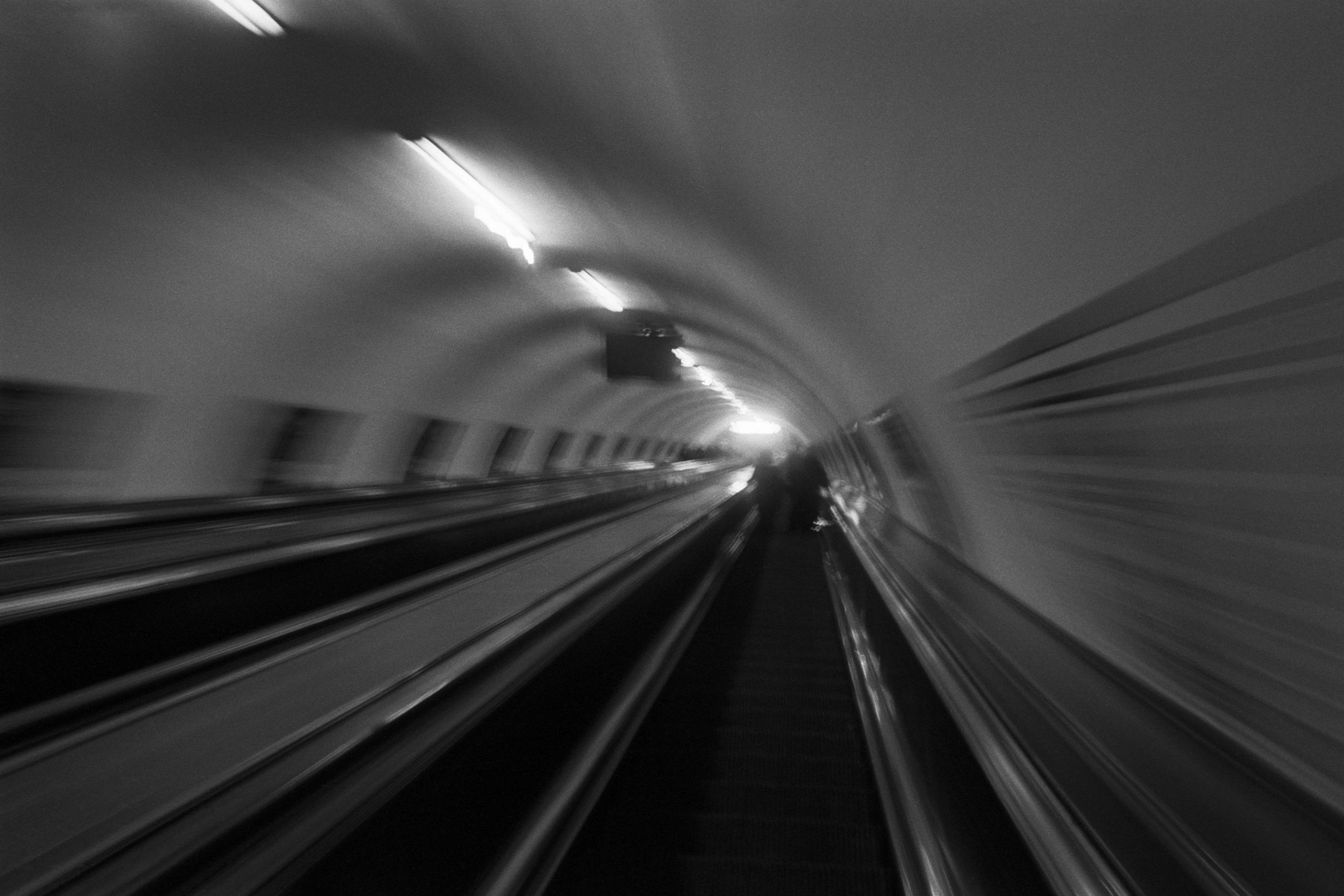
The Wall
2015Winner of the 1st prize & Golden Glass Award at the 11th Photographic Open Championship Olsztyn, and 1st place with the Special Prize of FORMAT magazine at the 3rd Biennial of Art in Piotrków Trybunalski.
View Series →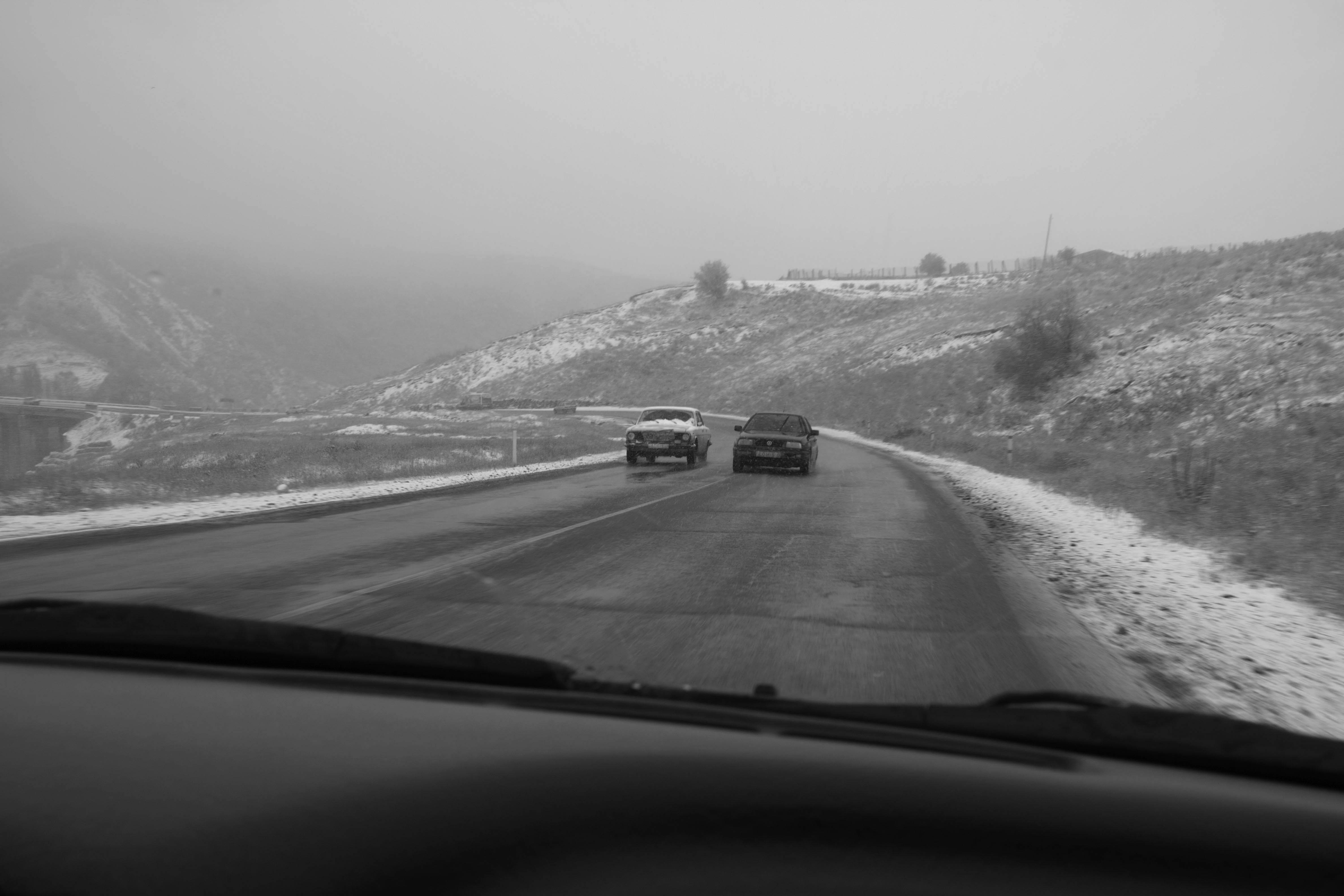
An Engagement Ring
2011A narrative series set in Wrocław in August 2011. Awarded 2nd prize & Silver Glass at the 10th Photographic Open Championship Olsztyn in 2014.
View Series →
Heat Wave
2014A documentary series recording spontaneous events across August and September 2014, capturing the raw energy of a city under the grip of summer.
View Series →