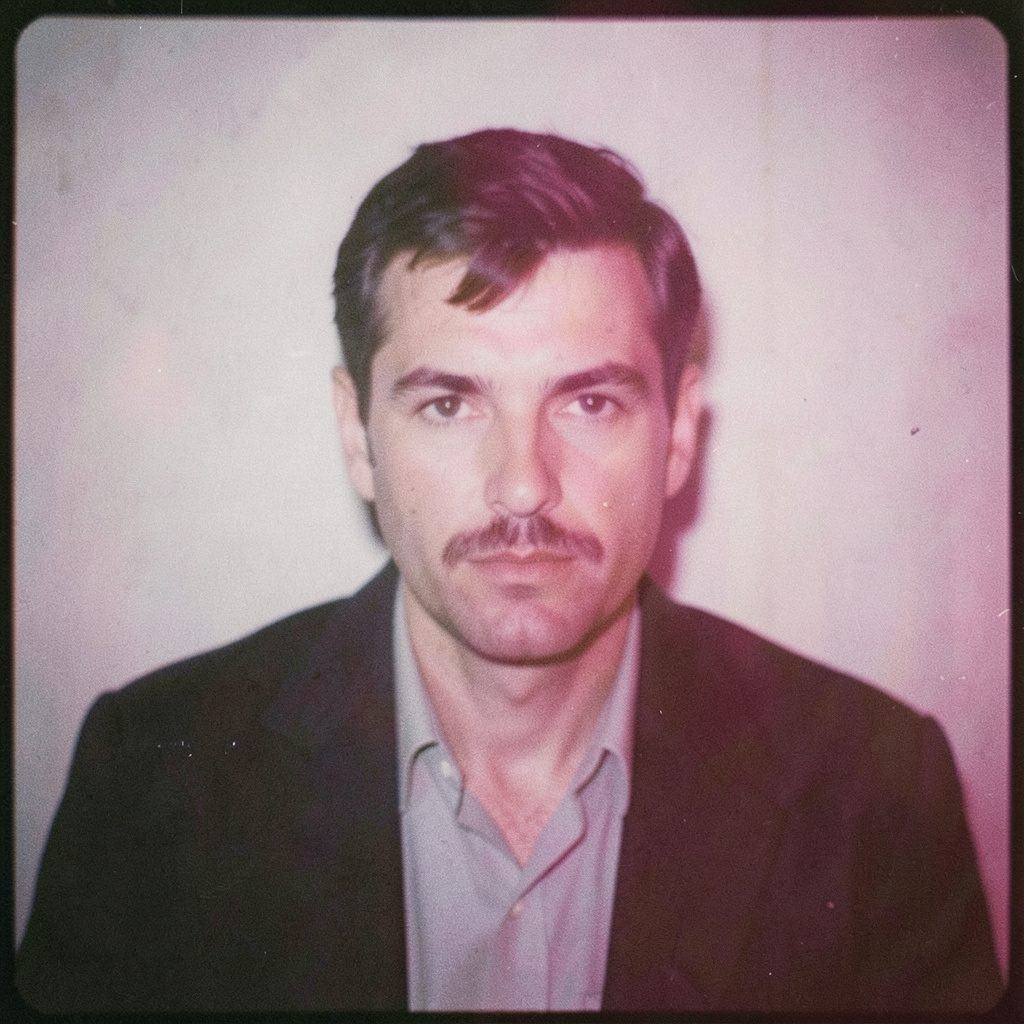
"Photography is not about the thing photographed. It is about how that thing looks photographed."
From Concept to Gallery Wall: My Exhibition Journey
For me, an exhibition is the most honest way a body of photographic work can be experienced. The screen flattens everything, but a printed photograph hung at eye level has weight, surface, and a way of holding the viewer still. I have spent the past several months guiding a new series from a half-formed idea through to a room full of framed images, and I want to share that passage honestly, including the quiet labour and the surprises that no one sees in the final gallery photograph.
This is the story of that journey, told from the Wrocław studio where the negatives were made, through a season of printing and framing, to an opening night in Australia where collectors, curators and friends finally stood in front of the work. If you have ever wondered what really happens between the first sketch and the white wall of a gallery, the following pages are an open notebook from my own practice.
The seed of the exhibition
Every series I have made began as a question rather than an image. This one started during a long walk along the Odra river in late autumn, when the light on the old brick warehouses turned the colour of weak tea and the wind carried the smell of coal from the heating plants across the water. I had been photographing industrial estates for nearly two years, and the question that kept surfacing was whether a portrait of a place could also be a portrait of the people who shaped it and were shaped by it in return.
I let the idea settle for a few months before I let myself shoot for it. I read again the writings of Polish photographers who had worked in similar territory, and I looked at how Australian photographers such as Trent Parke and Polixeni Papapetrou had approached the same kind of hybrid portraiture, where landscape and figure are inseparable. I also spent time in conversation with stylists and a hair and makeup artist who had collaborated with me on fashion editorials, because a portrait of a worker in a boiler suit still needs a careful hand with light and continuity. That early creative collaboration working with makeup artists and stylists quietly shaped the entire visual language of the series long before the first frame was exposed.
Building a curatorial narrative
Once I had around two hundred contact sheets, I stopped shooting and started editing. Editing, for me, is a curatorial act. I print small proofs in the darkroom, pin them to a long cork wall, and live with them for weeks. A good print tells me what it wants to sit beside; a weak one tells me it has to leave. The narrative slowly emerges as a rhythm of black, white and silver, with occasional warmer tones for the human figures.
I write an artist statement early, even when it is rough, because the words force me to be specific about what the work is actually saying. I then map the sequence as if I were cutting a film, paying attention to how the eye moves from one image to the next, where the room needs a pause, and where a single large print should anchor a wall. I also make a deliberate rule that no more than one-third of the final hang can be in colour, so the series keeps its tonal backbone. By the time the narrative is in place, the body of work has stopped being a collection of images and has started to behave like a single, long sentence.
Print selection and darkroom preparation
The selection is the heart of the process. I work on medium format film, mostly Mamiya 7 and Pentax 67, and I develop every negative by hand. For this series I printed in the darkroom on fibre-based silver gelatin paper for the black and white work, and I used a calibrated digital workflow with pigment inks on cotton rag for the colour frames. The dialogue between the two surfaces is part of the point, because the project itself sits between analogue memory and contemporary observation.
I keep a working list of the prints that will travel to the gallery. A small, honest list might look like this:
- Twelve fibre-based black and white prints, 40 by 50 centimetres, on Ilford Galerie
- Four larger silver gelatin prints, 70 by 90 centimetres, with selenium toning
- Six pigment ink prints on Hahnemühle Photo Rag, 50 by 60 centimetres
- One diptych, framed in a single deep oak box
The darkroom work is slow and physical. I test strip every negative, adjust contrast filters, and dodge and burn in places where the print needs to breathe. I leave each print to wash for at least an hour in archival trays, then hang it to dry in a dust-free closet. A print that is not properly washed will fox and yellow within a year on the gallery wall, and that is a failure I refuse to ship. Every print that leaves the studio carries a small archival card with its washing and toning notes, so the next person to handle it knows exactly what is on the paper.
Framing, mounting and the slow work of finishing
Framing is where a photograph becomes an object in the world. I work with two local framers in Wrocław, one of whom trained in the old conservator tradition and the other in contemporary museum practice. Between them we choose mouldings, mat boards, spacers, and glass. For most of the prints in this series we settled on a thin, hand-finished maple frame with a 5 millimetre spacer and museum glass, so the viewer can come close without losing the surface of the print to reflection.
Every print is mounted with archival corner mounts or, for the larger pieces, dry mounted to an aluminium substrate to keep it perfectly flat. The back of each frame is sealed with framer's tape, and I attach a label with title, date, edition number and my signature. For the Australian showing I was asked to provide work that complied with the resale royalty scheme administered by Copyright Agency, so each label also carries the relevant metadata. The whole finishing process took the better part of three weeks, and I lost count of the small adjustments I made at each stage, from the depth of the rabbet to the direction of the wood grain on a single frame.
Shipping the work across borders
Logistics is its own kind of craft. Art travelling from Poland to Australia has to clear customs in both Warsaw and Sydney, and the paperwork is not optional. I prepare a detailed commercial invoice in English with the declared value, dimensions, weight, and country of origin, along with a packing list, a certificate of authenticity, and a copy of my public liability insurance. The Australian Border Force can apply a goods and services tax of 10 per cent on imported works, so the consignee and I plan in advance whether the gallery, the collector, or I will absorb it.
I never use economy freight for framed work. The crates are built by a specialist art handler in Warsaw with closed-cell foam corners, double-walled corrugated board, and a tilt indicator so I can see if the case has been mishandled on the road. A typical shipment of eighteen framed pieces plus one diptych in a custom crate weighs just under ninety kilograms and travels by air with a known courier who understands that fragile is not a marketing word. Each crate is also fitted with a desiccant packet, because the humidity swing between a Polish winter and an Australian summer is one of the more practical reasons an exhibition can be ruined before it opens.
The hanging day
Hanging day is the moment the work stops being mine and starts belonging to the room. I arrive early, walk the space with the gallery director, and measure the walls by hand with a steel tape, because blueprints are always a little optimistic. I use a laser level to mark the centre of each print at exactly 145 centimetres from the floor, which is a compromise between the European standard of 150 and the slightly lower Australian convention I have encountered in places like the Australian Centre for Photography in Sydney and the Centre for Contemporary Photography in Melbourne.
There is a small, useful checklist I keep in my back pocket for hanging day, and I would encourage any artist showing overseas to adapt something similar:
- Confirm the position of each frame with a pencil mark before any drilling
- Use two-person lifts for anything over 50 by 70 centimetres
- Check the lighting track, the colour temperature, and any daylight changes through the day
- Step back to the doorway every fifteen minutes and review the room as a whole
By the end of the day the walls look inevitable, as if the prints had grown there. Of course they did not. Behind every quiet hang is a morning of measuring, a lunch of sandwiches eaten standing up, and a late afternoon of small corrections with a level and a stepladder. The last print of the day is always the one I have worried about for weeks, and it is also the one that, in the end, clicks into place with a single turn of a screwdriver.
Opening night and beyond
Opening night arrives with its own weather. I dress simply, I arrive two hours before the first guests, and I walk the room one last time on my own. The conversations I have on these evenings are the part of an exhibition I cannot plan for, and they are often the part that changes the next body of work. A curator from Brisbane asked me, over a glass of Australian shiraz, whether the workers in the frames would have recognised themselves in the prints, and I have been thinking about that question ever since.
In the weeks that follow the opening, I sit with the photographs again, write a longer essay for the catalogue, and start the very slow process of imagining what the next series might be. An exhibition is not an ending. It is a punctuation mark in a longer sentence, the moment a private practice becomes a public one, and the moment a wall in Wrocław or in Sydney briefly holds a small piece of the world's attention. The prints will eventually come down, the crates will return, and the room will be handed back to its everyday life, but the conversation the work has started will keep travelling well past the gallery wall.
Selected Series
A cross-section of commissioned and personal projects spanning fine art, commercial, and conceptual work.
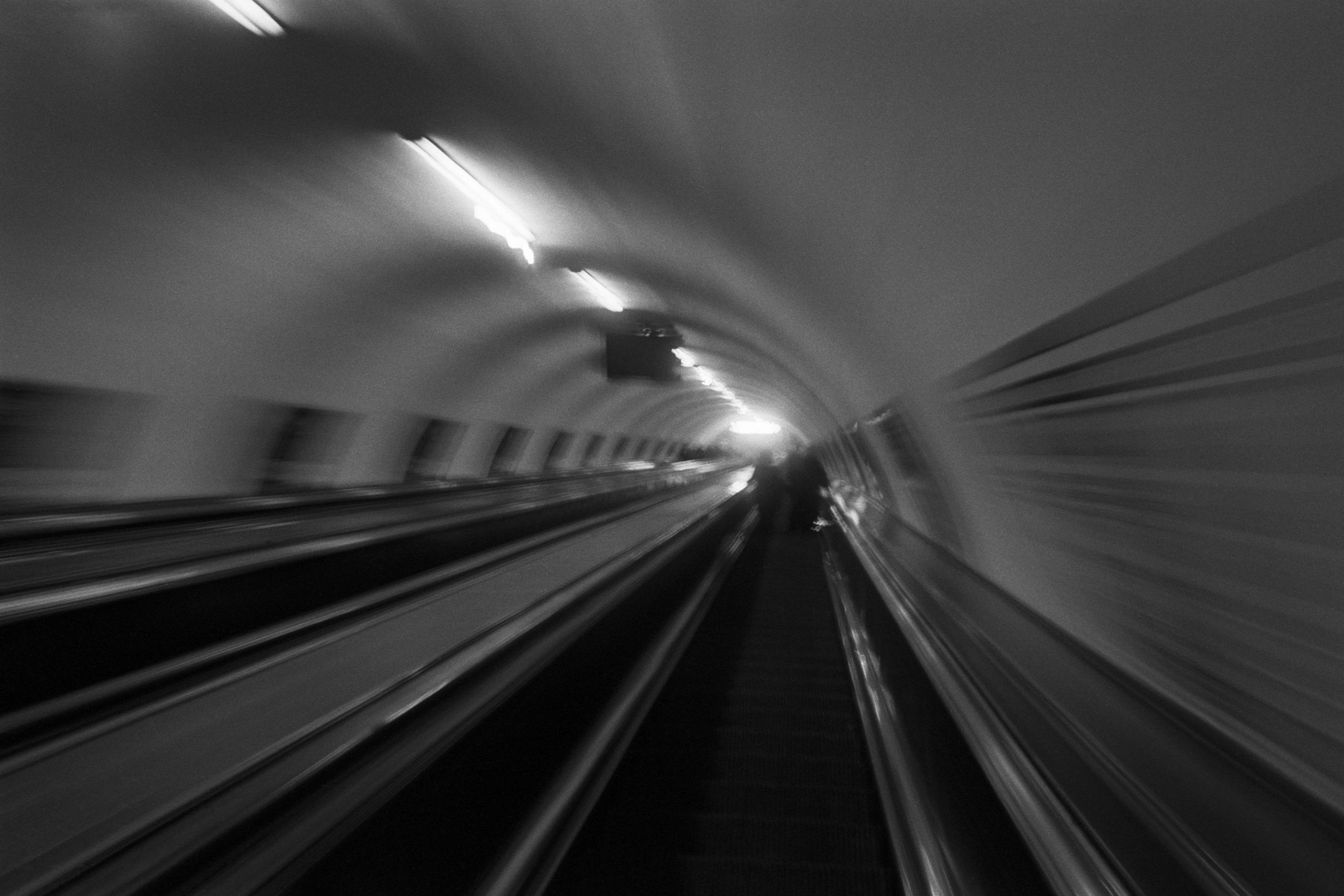
The Wall
2015Winner of the 1st prize & Golden Glass Award at the 11th Photographic Open Championship Olsztyn, and 1st place with the Special Prize of FORMAT magazine at the 3rd Biennial of Art in Piotrków Trybunalski.
View Series →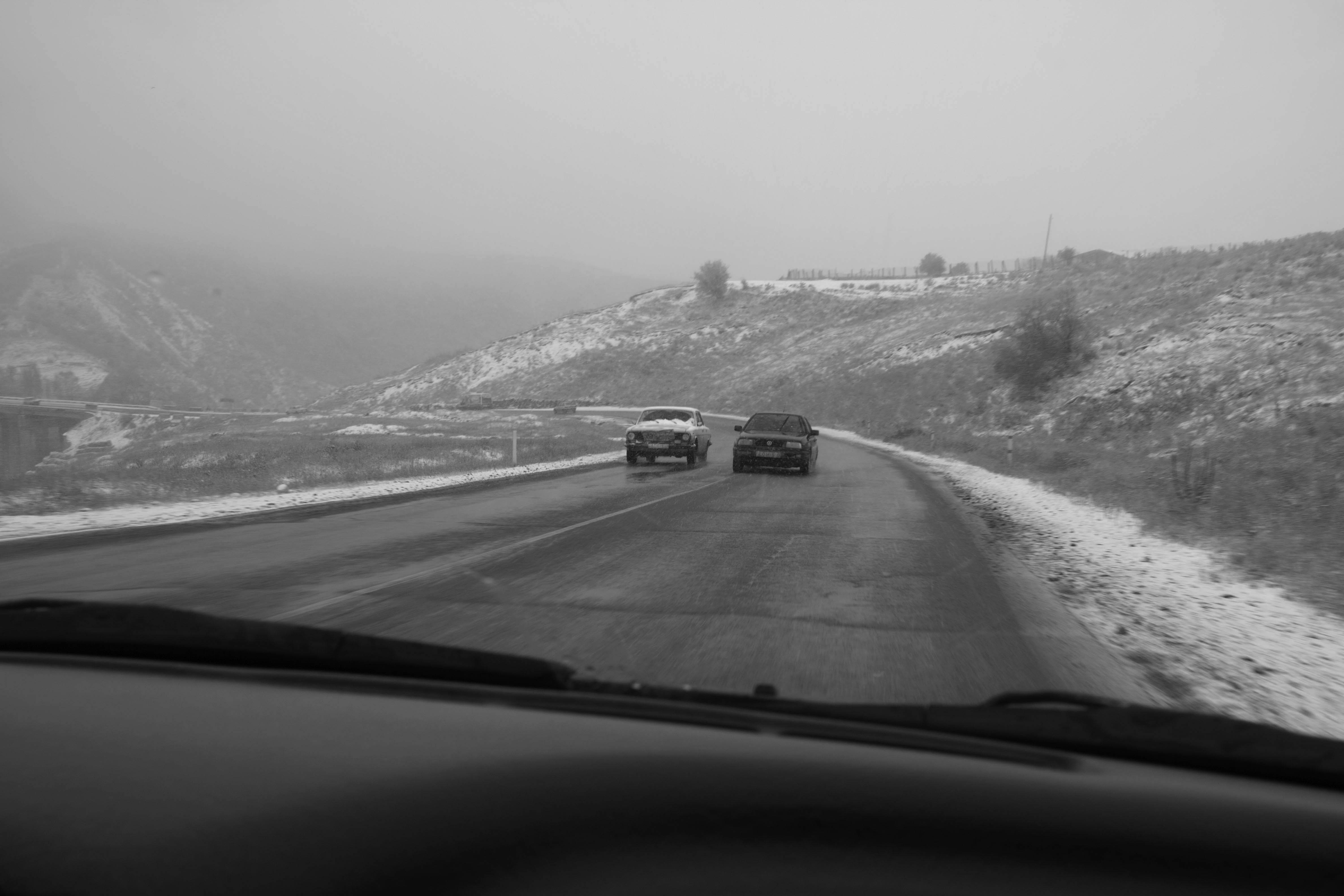
An Engagement Ring
2011A narrative series set in Wrocław in August 2011. Awarded 2nd prize & Silver Glass at the 10th Photographic Open Championship Olsztyn in 2014.
View Series →
Heat Wave
2014A documentary series recording spontaneous events across August and September 2014, capturing the raw energy of a city under the grip of summer.
View Series →