"Photography is not about the thing photographed. It is about how that thing looks photographed."
Posing Everyday People With Confidence Behind the Camera
Working with people who have never stepped in front of a professional lens is one of the most quietly demanding skills in a photographer's craft. The subjects in question might be founders pitching a campaign in Sydney, parents marking a milestone in Brisbane, or a creative team in Melbourne's inner north. None of them have trained for this. Their stiffness, their uncertainty, their tendency to lock up the moment a camera appears is normal human behaviour, and it can be softened with the right direction.
The good news is that posing non-professional models is less about choreography and more about communication. A photographer who understands body language, light, and a few reliable physical cues can guide almost anyone into a flattering, expressive position within minutes. What follows is a working approach drawn from commercial, fashion, and conceptual sessions, with notes tailored to the realities of working across Australian locations and clients.
Strong portraits rarely start with the shutter. They start with a conversation, a clear brief, and a sense of safety that lets the subject breathe. In Australian business culture especially, where a relaxed, plain-speaking tone is valued over formality, the photographer who can match that energy usually wins the room before any technical decisions are made.
Building Trust Before the Camera Clicks
The first task is removing the fear of the unknown. Most non-professional models are anxious because they cannot picture what the session will feel like, what will be asked of their bodies, or what they will look like in the final images. A short pre-shoot exchange solves most of that. Send a few reference images, describe the mood of the session, and explain roughly how long each setup will take. The more concrete the description, the less the imagination fills the gaps with worry.
On the day, spend the first ten minutes without lifting the camera. Talk about anything except the shoot. Coffee order, weekend plans, the local café you are meeting near, the tram ride from Fitzroy to the studio. By the time you raise the lens, the subject has already forgotten they are supposed to be nervous. This warm-up is particularly effective with Australian clients, who tend to respond to directness and a bit of humour far better than to stiff formality.
Trust also comes from showing your process. Let the subject see the back of the camera after the first few frames. Avoid the urge to critique. Instead, point out what is working: a relaxed hand, a natural smile, the way the light catches the cheek. Once a person sees a flattering image of themselves, the rest of the session almost runs itself.
Directing With Clear, Simple Language
Jargon kills momentum. Terms borrowed from figure drawing or anatomy mean little to someone who is already self-conscious. Speak in the language of action and sensation instead. Rather than asking for a rotation, ask the subject to turn their front shoulder toward the window. Rather than asking for an extended arm, ask them to reach toward the camera as if they were offering something.
Demonstration helps more than description. Step into the pose yourself first, even briefly, so the subject has a visual reference. Mirror the energy you want to see. If you want a calm, grounded portrait, stand calmly and breathe visibly. If the brief calls for energy, move with bigger, looser gestures and the subject will follow.
Keep directions short. One idea per cue. Long lists of adjustments overwhelm a beginner, and the moment someone is trying to remember five things at once, the face goes blank. A simple pattern of one instruction, a small pause, a single frame, then the next instruction keeps the rhythm manageable.
Reading Body Mechanics and Making Small Adjustments
A handful of physical adjustments fixes most of the common problems non-professional models present. Shoulders usually creep toward the ears; a quiet prompt to let the shoulders slide down toward the back pockets instantly lengthens the neck. Hands often ball into fists or hang limp; giving them a task, holding a jacket, resting on a surface, solves the problem without ever mentioning the word "fingers."
The jaw is another reliable lever. Asking the subject to push their tongue gently against the roof of the mouth, just behind the front teeth, softens the lower face and removes the appearance of clenching. The chin follows the eyes: if the eyes lead, the chin follows. Photographers working in the strong light of a Perth morning or a bright Brisbane day often find that a small lift of the chin, away from the dominant light, sculpts the face more than any amount of retouching later.
Weight distribution matters more than most people realise. A subject standing square to the camera looks stiff. Asking them to shift their weight to the back foot, turn the front toe slightly outward, and angle the hips breaks the symmetry and immediately introduces a more relaxed, sculptural line. None of these cues feel technical to the person hearing them; they feel like small, comfortable adjustments to standing in a room.
Using Movement to Find Natural Poses
Stillness is hard for untrained bodies. The longer someone has to hold a position, the more their muscles tremble and their expression hardens. The answer is to build movement into the session. Walk the subject from one mark to another. Ask them to sit down, then stand, then sit again. Have them shake out their hands between frames. Movement releases tension, and a still frame captured at the right beat inside that movement almost always looks more alive than a held pose.
Tasks help too. Ask the subject to pour a glass of water, to tie a lace, to read a page of a book, to look out a window and describe what they see. The action gives the body something to do, which gives the face something to express, which gives the photographer something to capture. In a Melbourne laneway shoot, this approach can transform a stiff subject into someone who looks as if they belong in the streetscape around them. In a corporate headshot session in a Sydney tower, the same principle applies: have the subject adjust a collar, hold a notebook, lean on a balcony rail.
The in-between moment is usually the keeper. The laugh after a direction is acknowledged, the pause between two steps, the small breath before someone speaks. Train the eye to find those seconds rather than the posed peak.
Letting Light Guide the Pose
Posing and lighting are the same conversation. The body should always be arranged in relation to the light, not the other way around. A flattering jawline, for example, comes from having the main light slightly higher than the subject and to one side, then asking the face to turn just enough to catch that light across the cheekbone. Once a photographer understands this geometry, posing becomes a matter of asking the head to follow the light rather than asking the body to follow a diagram.
Australian conditions teach this quickly. The country throws strong, directional sunlight at almost any outdoor shoot. Around Bondi in the late afternoon, or along the Yarra in the morning, the light is so specific that a pose has to be built around it. Side-lit portraits become about turning the chin away from the sun just enough to keep the eye in shadow yet still open. Backlit portraits become about keeping the shoulders square so the rim light traces a clean line. Harsh midday sun, often avoided, becomes a useful teacher: it punishes poor posture, closed shoulders, and tense necks, and rewards anyone who has learned to relax into the light.
Studio work follows the same logic, only the light is movable. Build a few reliable lighting setups and learn how the body changes when the subject turns toward or away from each one. The more fluent that relationship becomes, the less time is spent correcting it in post.
Adapting to Place, Climate, and Local Customs
Australia shapes the way a portrait session runs. Heat changes posture, wind changes hair, sand changes footing. Sunglasses are an everyday accessory, not a prop, and a non-professional model wearing them into a session is signalling a small but real piece of identity that is worth acknowledging. Asking the subject to remove them is sometimes appropriate; sometimes the better image is the one where they remain, lowered on the bridge of the nose, tilted toward the camera.
Outdoor shoots are part of the local rhythm. Beach portraits between Coogee and Maroubra, street portraits in Fremantle, garden sessions in the Adelaide Hills. Each of these settings has a cultural temperature, and posing the subject within that temperature is what makes the image feel honest. A formal, symmetrical pose at the beach looks borrowed from somewhere else. A loose, walking, half-turned pose feels like the person actually lives there.
Business portraits follow their own conventions. In Australian CBDs, the expectation is a relaxed but competent image suitable for a website, a press kit, or a board page. Posing for these sessions tends to be subtle, upright without being rigid, with the hands given a clear job and the eyes kept lively. Many freelancers arrive at a session having thought carefully about the business side of the work, and for those weighing up commercial rates, the question of pricing your photography services is a useful reference point for the wider context of a portrait practice.
Reviewing in Real Time Without Breaking the Mood
Tethered shooting is the single most useful tool for posing non-professional models. The moment a subject sees themselves on a laptop screen, looking better than they expected, the dynamic of the session shifts. They begin to trust the process, they start to offer small ideas of their own, and the photographer gains a fast feedback loop for what is working.
Keep the screen review positive. Comment on the light, on the line of the body, on a gesture that worked, before mentioning anything that could be adjusted. A subject who has been told three things they like is far more open to hearing one small change. The same principle applies in conversation: agreement first, adjustment second.
Real-time review also means recognising when to stop. A session that has run for ninety minutes with a non-professional model is usually past its peak. The strongest images are gathered in the first hour, when energy is fresh and the subject is still curious. Close while they are still engaged, deliver a few frames quickly as a thank-you, and let the rest of the work happen in the edit. A photographer who knows when to stop is one who will be asked back, and that habit, built across years of practice, is what quietly underwrites a sustainable portrait career.
Selected Series
A cross-section of commissioned and personal projects spanning fine art, commercial, and conceptual work.
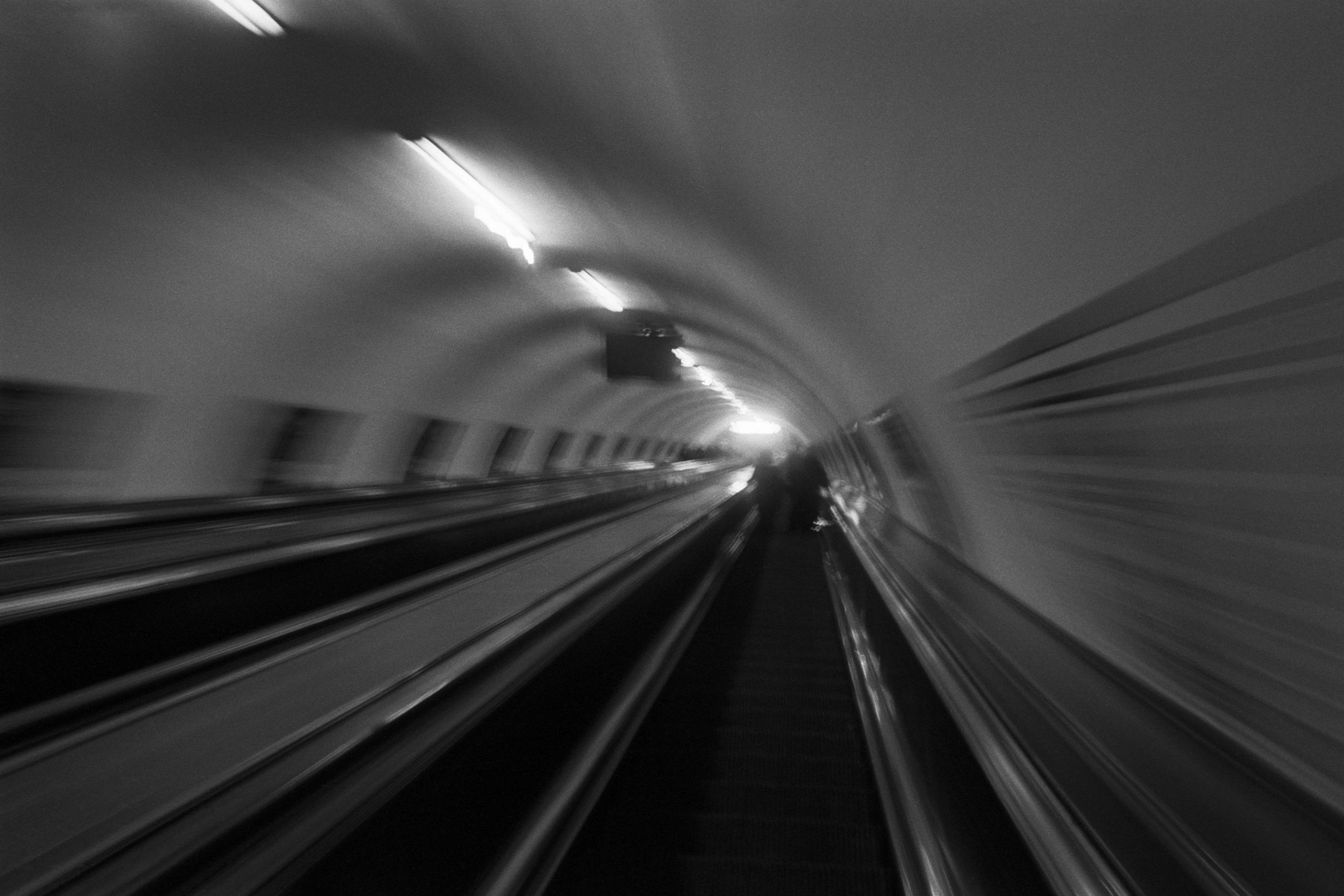
The Wall
2015Winner of the 1st prize & Golden Glass Award at the 11th Photographic Open Championship Olsztyn, and 1st place with the Special Prize of FORMAT magazine at the 3rd Biennial of Art in Piotrków Trybunalski.
View Series →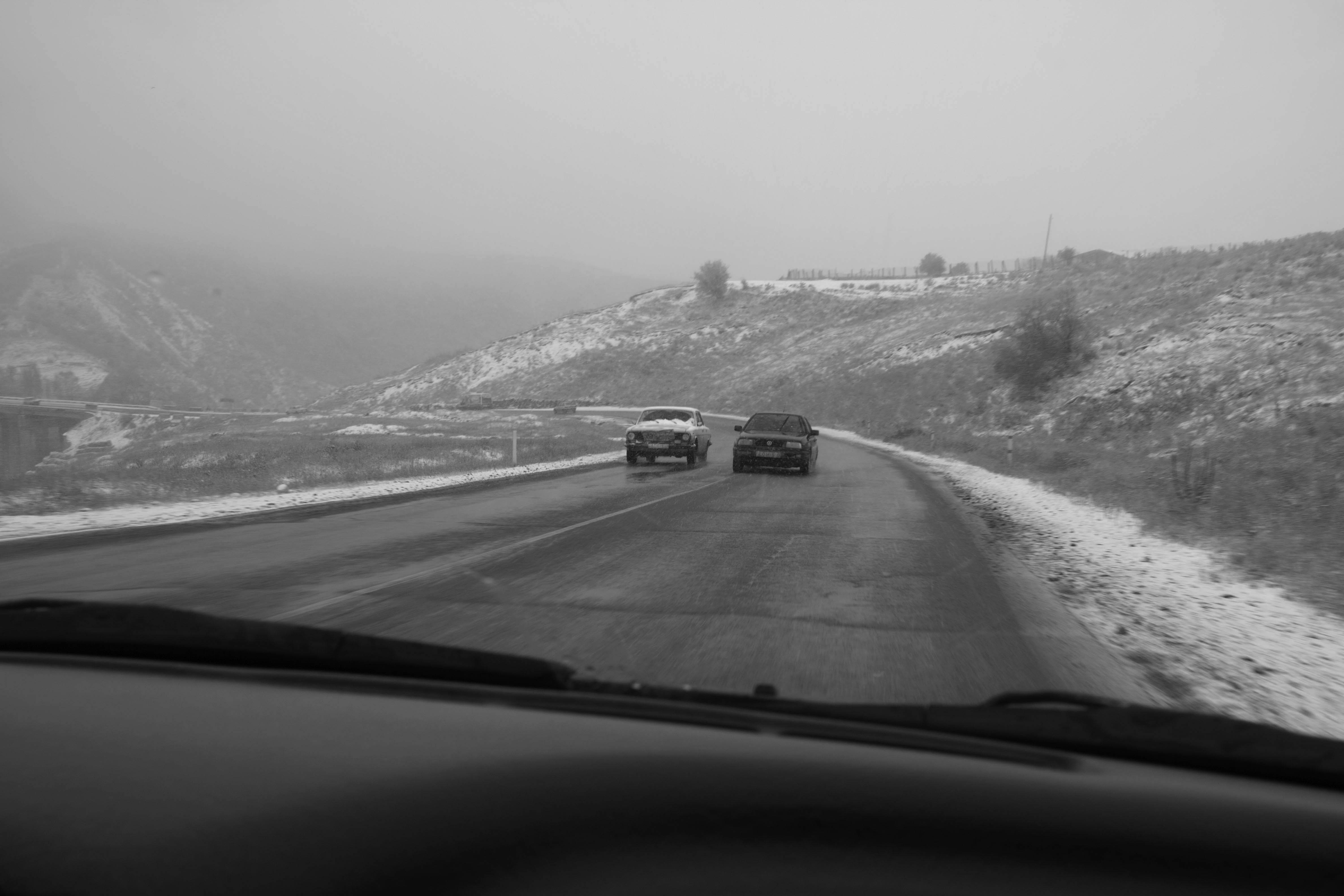
An Engagement Ring
2011A narrative series set in Wrocław in August 2011. Awarded 2nd prize & Silver Glass at the 10th Photographic Open Championship Olsztyn in 2014.
View Series →
Heat Wave
2014A documentary series recording spontaneous events across August and September 2014, capturing the raw energy of a city under the grip of summer.
View Series →