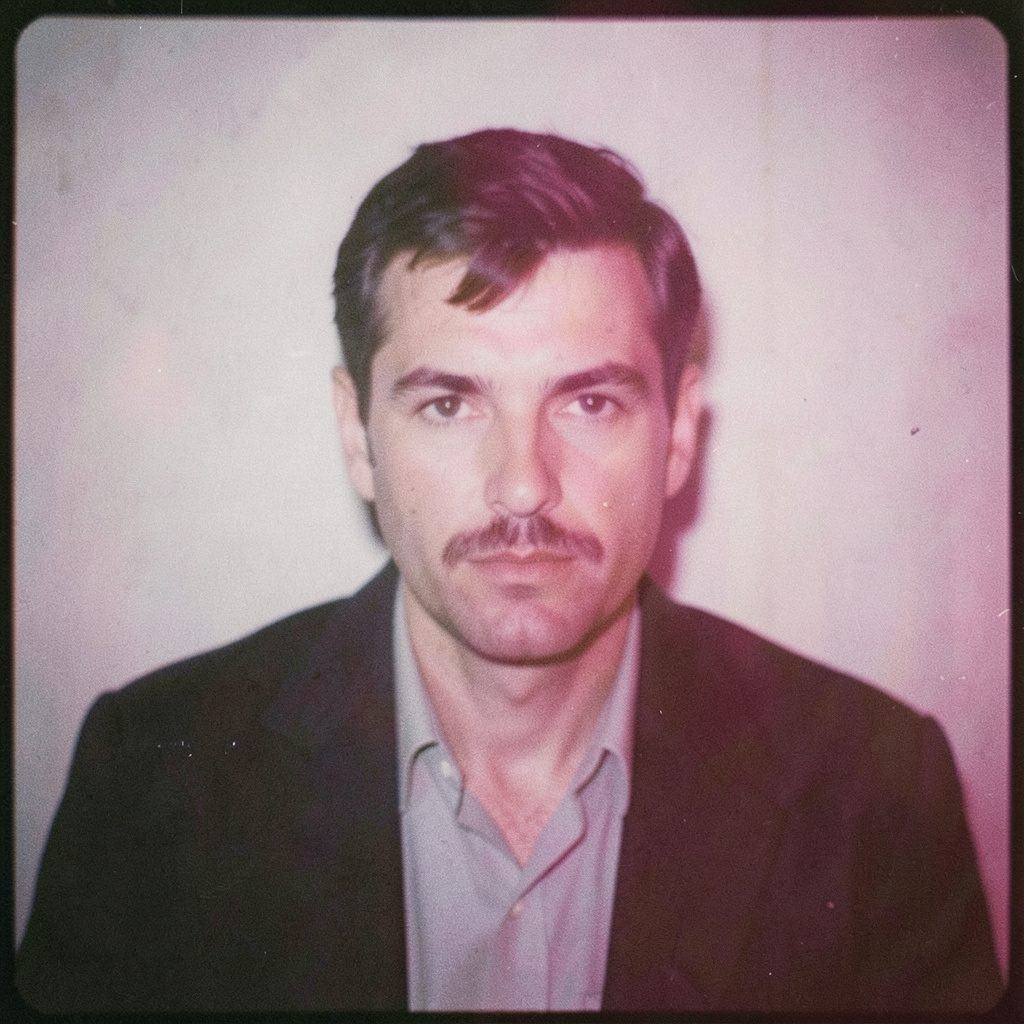
"Photography is not about the thing photographed. It is about how that thing looks photographed."
The art of double exposure: film and digital methods
Two photographs pressed into one frame. That single gesture — collapsing two moments, two places, or two ideas into a shared surface — has fascinated image-makers since the early twentieth century. The technique first emerged as a curiosity of the darkroom, then became a signature of surrealist experiment and countercultural zines, and now sits comfortably in the toolbox of contemporary photographers who work with both 35mm and medium-format film alongside mirrorless bodies. Across fashion editorials in Sydney, conceptual portrait studios in Melbourne, and independent gallery shows in Adelaide, layered imagery continues to appear on gallery walls and album covers, magazine spreads and book launches, because it answers a question that single frames cannot: what happens when two truths are forced to share the same space?
The current appeal of double exposure is not a nostalgic revival alone. It is a response to the saturation of single, perfectly sharp digital frames. Photographers want texture, ambiguity, accident and residue. Some reach for analogue film precisely because grain, light leaks and reciprocity failure give every overlay a slightly uncontrolled edge. Others build the look carefully in post-production, layering separate captures with intention and polish. Both routes can produce work that feels immediate and strangely dreamlike, and both reward photographers who think in terms of relationship rather than isolated subject.
For practitioners working across the Australian market, layered imagery offers commercial flexibility too. Fashion houses in Sydney's Paddington and Surry Hills often commission campaigns that require visual signatures more distinctive than the usual clean studio portrait. Wedding photographers around the Mornington Peninsula experiment with overlays of bridal portraiture and landscape. Editorial clients in Brisbane and Perth ask for conceptual series where two exposures carry narrative weight without resorting to heavy CGI. Knowing how to plan and execute a layered image, on film or digitally, expands the visual vocabulary a working photographer can bring to those briefs.
This article walks through the technique from origins to modern workflow. We will look at how double exposures were first assembled in-camera and in the darkroom, examine the chemistry of film-based layering, and explore how digital tools now allow far more precise control over the same effect. Along the way, considerations for conceptual portraiture, fashion imagery and commercial commissions are woven into the discussion, so the techniques sit firmly inside a working practice rather than existing as an academic curiosity.
Origins and the long shadow of surrealism
The double exposure predates its art-world adoption. Early experimenters in the late nineteenth century accidentally exposed plates twice and discovered that ghosted, overlapping images carried a strange emotional charge. Man Ray and Lee Miller in Paris turned the slip into a deliberate aesthetic during the 1920s and 1930s, using solarisation, rayographs and combined negatives to push photography toward dream logic. The technique carried through underground publications, punk album art, and the cover work of designers like Hipgnosis, before settling into the visual language of contemporary fine art and fashion photography.
Australian photographers have a quietly significant place in this lineage. The modernist painter Sidney Nolan used multiple exposure as a way of collapsing landscape and figure in his Burke and Wills series, an approach that visual storytellers on this side of the Tasman still reference. Contemporary practitioners working out of studios in Melbourne's inner north, Brisbane's Albion, and Hobart's Salamanca arts quarter continue to draw on that tradition, often with landscape imagery layered onto portraiture to evoke a sense of place pressed into a person. The current appetite for layered work in Australian galleries, particularly during events like the Head On Photo Festival in Sydney, suggests the technique has aged into something durable rather than merely fashionable.
What kept the method alive through the digital turn was a small band of photographers who refused to give up the tactile pleasure of film. Names like Hannah Maynard and modern fine-art printers kept analogue layering relevant, and many working portraitists still shoot a personal body of work on medium-format film specifically to preserve that slower, more deliberate mode of seeing. For those who grew up with digital tools, the renewed interest has also become a way of reclaiming a kind of photographic patience that a mirrorless body pointed at fast primes can quietly erode.
How two scenes share one frame
A double exposure is, in its simplest form, two distinct moments recorded on the same piece of light-sensitive material. The first exposure imprints a layer of latent information; the second adds another on top. Where the two layers coincide, light values compound; where one exposure falls on an unexposed area, that area is shaped only by the second scene. The resulting image is a kind of visual Venn diagram, governed by exposure value, contrast and the order in which the captures are made.
The grammar of the effect is learned through deliberate constraint. Photographers who work this way quickly understand that bright areas of the first exposure will dominate whatever sits beneath them, while dark areas allow the second exposure to read more clearly. A silhouette shot first, then overlaid with a landscape, produces a figure framed by terrain. A bright window in the second exposure burns through anything beneath it, creating windows into a second world inside the first. The technique rewards pre-visualisation: deciding in advance which elements must remain legible, and which can dissolve into suggestion.
Reciprocity and exposure compensation matter as well. Film stocks behave differently under multiple captures than under a single one, and underexposing each layer by roughly a stop is a common starting point for negative film. Black-and-white film, in particular, holds highlight detail beautifully across multiple exposures, which is why many conceptual portraitists continue to reach for Ilford HP5 or Tri-X when planning layered work. For those shooting digitally and replicating the effect later, similar logic applies — bright pixels stay bright, dark pixels stay malleable, and the photographer's job is to balance the two layers so the composition still feels intentional rather than accidental.
In-camera film techniques for multiple exposures
Most mechanical 35mm and medium-format cameras carry a multiple-exposure lever, allowing the shutter to be cocked and fired without advancing the film between frames. The procedure is straightforward: compose and meter the first exposure, release the shutter, leave the film in place, reset the mechanism, recompose, and fire again. Modern cameras with electronic shutters and automatic film advance tend to disable this function, so photographers seeking genuine in-camera layering usually choose older Nikon FM bodies, Pentax K1000s, Mamiya 645 systems, or Hasselblad 500-series cameras, all of which retain the mechanical control needed for the technique.
Medium-format cameras offer specific advantages for layered work. The larger negative records finer gradation, and the slower handling pace of a Hasselblad or a Pentax 67 encourages the photographer to plan each layer rather than rush. For conceptual portraits, a first exposure on black-and-white film against a plain backdrop can be paired with a second exposure of textures shot outdoors. For landscape-driven series, two locations captured within an hour of each other, perhaps along the Great Ocean Road or in the Flinders Ranges, can be combined to compress geography into a single, slightly disorienting vista. The slight inconsistency in light and weather between the two layers often becomes a strength, lending the image a temporal ambiguity that single-frame landscape cannot match.
When planning an in-camera overlay on colour negative film, exposure reduction is essential. Each additional exposure adds more light to the emulsion, and an uncorrected double exposure on Portra 400 will read as a milky, washed-out mess. Most experienced practitioners reduce the first exposure by one stop and the second by half a stop, then bracket by a third of a stop either way. Slide film is even less forgiving, and bracketing with a handheld light meter is the only reliable path. With black-and-white film, the latitude is more generous, and many photographers simply meter both scenes at box speed, accepting the happy accidents that arise when the layers interact unexpectedly. For those interested in a deeper, more personal account of how film and digital practice can coexist inside one career, My journey from film to digital and back again offers a candid look at exactly that transition.
Darkroom layering and the chemistry of analogue printing
In-camera exposure is only one route into the effect. Traditional darkroom practice allows the photographer to combine two separate negatives onto a single sheet of printing paper, dodging and burning as they go. Two negatives are placed in the enlarger carrier one after the other, each exposed for a calculated slice of the total time, with hands, tools and small pieces of card used to control which parts of each negative contribute to the final print. The result is a precise, controllable overlay, free from the in-camera compromise of having to commit to one scene before the other.
The darkroom method shines when the layered image demands selective opacity. A landscape negative can be exposed first, the photographer masking out the sky with an opaque card while a portrait negative is exposed into the negative space below. Dodging a small region during the second exposure brings up detail in the face, while burning around the figure during the first exposure deepens the surrounding landscape. Each print becomes a unique object, signed and editioned, and the artist retains control over variables that a digital layer mask can only approximate. Many printmakers still find that the silver gelatin process produces a tonal range and a grain structure unmatched by inkjet output, particularly when working on fibre-based papers.
For practitioners without access to a wet darkroom, hybrid analogue-digital workflows bridge the gap. Negatives can be scanned at high resolution, layered in software, and the resulting file printed onto silver gelatin paper using digital exposure systems such as the Lambda or LightJet. The hybrid route preserves the grain, tonal depth and physicality of traditional film while offering the precision of modern masking tools. Australian printmakers working at studios in Collingwood and Redfern have built sustainable businesses on exactly this hybrid approach, serving collectors who want the tangible depth of analogue without sacrificing the refinement of contemporary post-production.
Digital layering: blend modes, masks and modern craft
Digital double exposure begins with two separate captures, ideally shot on a tripod or hand-held with deliberate framing so the layers can be aligned in post. Most working photographers shoot RAW, since RAW files preserve the highlight and shadow data needed for clean compositing. Once inside editing software, the two files are stacked as layers, the upper layer's blend mode is set to Screen for a film-like additive effect, and the opacity is dialled back until the lower layer reads through. From there, layer masks, curves adjustments and selective dodging refine the relationship between the two scenes.
Blend modes behave differently and the right choice depends on intent. Screen brightens, mimicking the additive behaviour of film. Multiply darkens, useful for combining two negative-style captures into a single, dense composite. Lighten preserves only the brighter pixels from each layer, while Darken preserves only the darker ones. Overlay produces a high-contrast result that resembles a printed darkroom print. For conceptual portraiture, Screen remains the most popular choice because it preserves the luminosity of skin tones while allowing secondary imagery to weave through the figure. For fashion work, where a more graphic punch is often desired, Multiply and Overlay produce striking, almost silkscreen-style results.
Modern digital tools also allow effects that analogue methods cannot easily produce. A third or fourth exposure can be layered in, each one bringing a different scene, palette or texture. Soft-light and hard-light blend modes can be used to bring a colour cast or a vignette into the composite. Liquify, frequency separation, and neural filters give the photographer scope to reshape anatomy, soften skin, or add grain that mimics a particular film stock. The honest digital composite is built from genuinely separate exposures, and the photographer who uses these capabilities with restraint produces work that feels rooted in photographic practice rather than illustration. Pure emulation of film in software is a separate aesthetic choice, often used for weddings or events, and it is worth distinguishing that look from a genuine, layered photographic composite.
Layered imagery as conceptual storytelling
The double exposure becomes more than a technical curiosity when it carries narrative weight. A portrait overlaid with the texture of a textile speaks of craft and identity. A face partially replaced by a landscape implies memory or exile. Two unrelated scenes, joined on one surface, become an argument about relationship. Conceptual photographers from Duane Michals to contemporary Australian portraitists have used this device to imply interior states, time, absence and presence, often within a single frame that rewards longer looking than a conventional portrait.
Fashion and editorial work use the technique to suggest brand values through atmosphere. A campaign for a coastal label could pair the model and the ocean, allowing the water's pattern to wrap the figure in motion. A jewellery commission might place a delicate silhouette against a richly textured backdrop of crushed velvet or scratched metal. In each case the layered image invites the viewer to read the photograph metaphorically, treating it as a visual sentence with subject, verb and object rather than as a single descriptive noun. Australian brand campaigns frequently use layered imagery to evoke the country's particular relationship between built environment and wilderness, which gives local photographers a distinctive edge in this kind of work.
The conceptual choices matter as much as the technical ones. Deciding which two scenes belong together is the artistic decision that determines whether the final image feels profound or arbitrary. Many photographers keep a folder of orphan captures — textures, skies, hands, fabrics, distant landscapes — that can be combined later with a primary portrait when the right conceptual match emerges. The exercise of curating that library trains an eye for layering, and over time the photographer develops an instinct for which combinations will read as intentional rather than as a Photoshop accident.
Practical guidance for working photographers
For photographers who want to bring double exposure into client work, preparation matters more than gear. Begin by planning the layers: decide which scene will sit beneath, which will sit above, and which elements must remain readable. Meter both scenes, bracket exposures, and either shoot the second exposure on the same frame or capture it as a separate file for digital layering. For film-based overlays, reduce exposure per layer and bring a notebook to record each frame's metering. For digital composites, shoot RAW, leave space around the subject for clean masking, and consider the colour palette of both layers so the composite reads cohesively.
Consent and privacy deserve attention in Australia, where the Privacy Act 1988 governs how identifiable individuals are recorded and shared. A layered portrait that incorporates textures, recognisable locations, or imagery of other people may require additional consent, particularly if the composite is used commercially or published online. Many Australian studios build explicit consent clauses for layered work into their standard agreements, and photographers shooting in galleries, retail spaces, or private venues should also be aware of location-specific restrictions. The Australian Commercial and Media Photographers Association publishes guidance on this kind of contractual best practice, and adherence to it protects both the photographer and the subject.
Finally, develop a personal point of view on what the layered image means in your own work. Two exposures are not automatically more interesting than one. The best layered photographs have a clear reason to combine, and they reveal that reason slowly enough that the viewer feels they have earned the insight. Whether you reach for a Hasselblad loaded with Tri-X, a mirrorless body with a fast prime, or a combination of both, the technique rewards photographers who treat every frame as a deliberate choice rather than a happy accident.
Selected Series
A cross-section of commissioned and personal projects spanning fine art, commercial, and conceptual work.
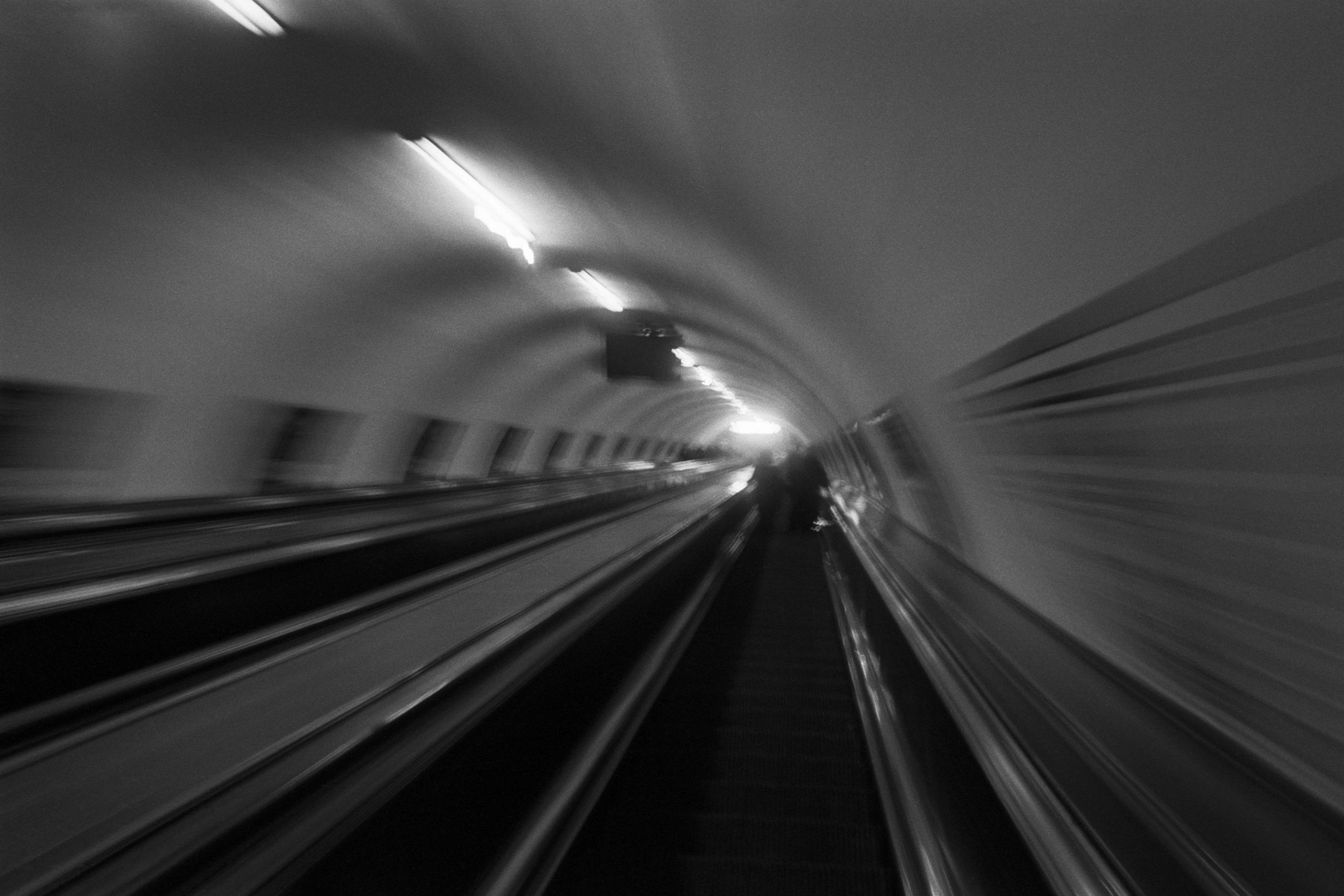
The Wall
2015Winner of the 1st prize & Golden Glass Award at the 11th Photographic Open Championship Olsztyn, and 1st place with the Special Prize of FORMAT magazine at the 3rd Biennial of Art in Piotrków Trybunalski.
View Series →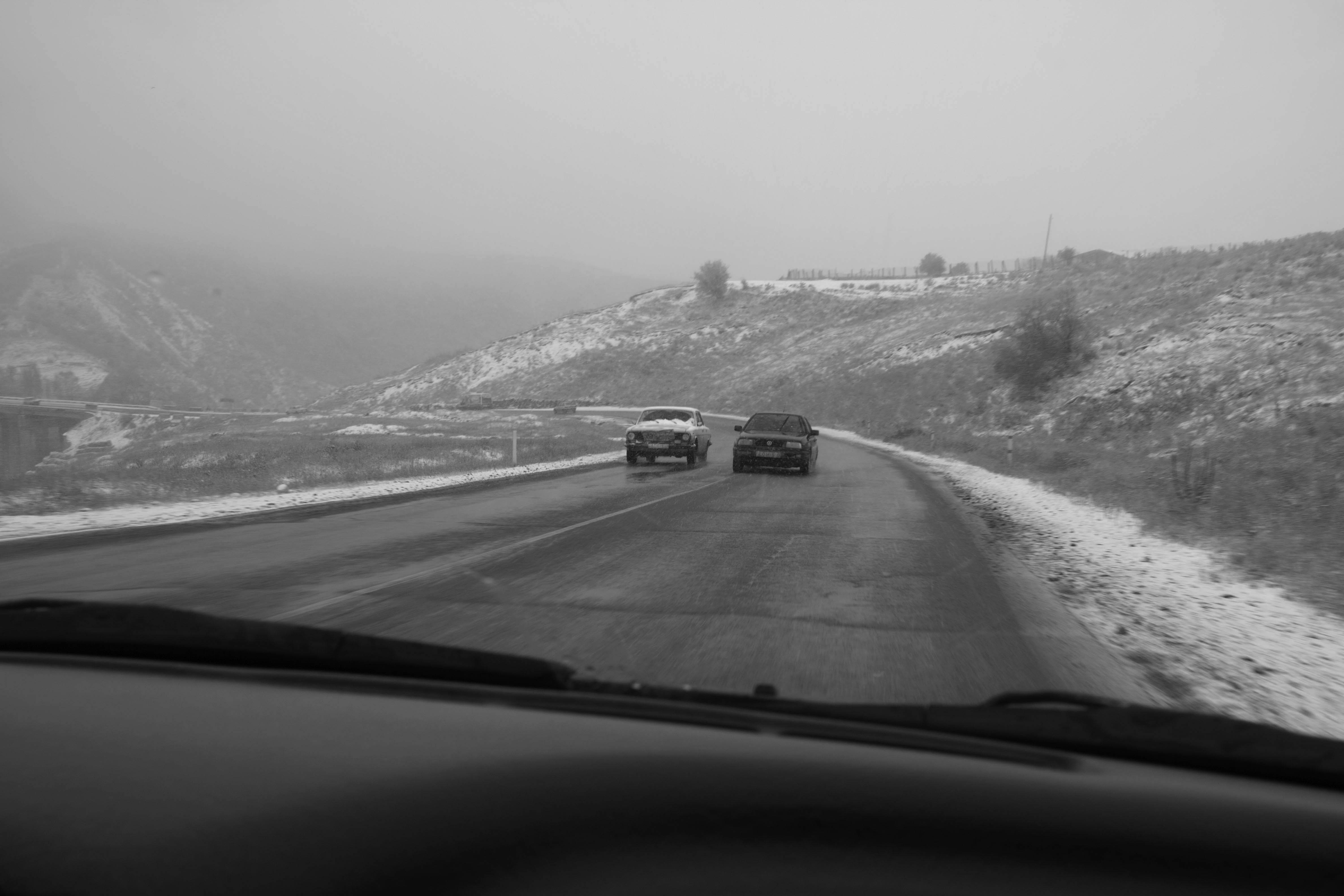
An Engagement Ring
2011A narrative series set in Wrocław in August 2011. Awarded 2nd prize & Silver Glass at the 10th Photographic Open Championship Olsztyn in 2014.
View Series →
Heat Wave
2014A documentary series recording spontaneous events across August and September 2014, capturing the raw energy of a city under the grip of summer.
View Series →