
"Photography is not about the thing photographed. It is about how that thing looks photographed."
The quiet power of black and white film
The challenges and rewards of shooting black and white film begin with a change in attention. Colour can describe a scene through hue, saturation and contrast, while monochrome asks the photographer to look more closely at structure, light, gesture and atmosphere. A pale wall, a polished shoe, a weathered face or a stretch of empty sky can become central visual elements when colour is removed.
For a photographer working between fine art and commissioned imagery, black and white film offers a deliberate pace. Medium-format negatives, traditional darkroom principles and carefully considered digital workflows create images with presence rather than instant spectacle. The process suits portraits, fashion, events and conceptual series because it leaves room for ambiguity, texture and emotional interpretation.
Seeing in tones rather than colours
The first difficulty is learning to pre-visualise a scene as a range of tones. A vivid red dress may appear close in value to a green background on a black and white negative, producing little separation. A blue sky can become a flat grey if the light is soft, while a white shirt may lose its shape when photographed against a pale wall. The subject must be judged through brightness, shadow and tonal relationships.
This way of seeing becomes especially important in Australian light. The hard midday sun in Sydney can create deep eye sockets and abrupt shadows, whereas overcast conditions in Melbourne often produce a broad, gentle range of greys. In Brisbane, humid weather can soften distant detail, while the bright coastal atmosphere around Perth may make highlights feel almost metallic. Each situation requires a different approach to exposure and development.
Filters can help, though they are not a substitute for observation. A yellow or orange filter may deepen a blue sky and separate clouds, while a red filter can create a dramatic, graphic effect. Skin tones, foliage and painted surfaces all respond differently. The most rewarding images often come from recognising these changes before pressing the shutter.
Film slows the act of making
Analogue photography imposes physical limits. A roll may contain twelve frames in medium format or thirty-six in 35mm, and every exposure has a financial cost. Loading film, setting the meter, checking the light and deciding whether a frame deserves to be made all encourage a more thoughtful rhythm. The pause can feel restrictive during a fast-moving event, but it often leads to more purposeful photographs.
At a corporate portrait session in Sydney or Melbourne, a digital camera can provide instant reassurance to a client who wants to review every image. Film asks for a different form of trust. The photographer must direct posture, expression and composition with confidence, while the subject must remain engaged without constant screen feedback. This can make the session feel calmer and more human.
Film also introduces practical concerns: expired stock, limited availability, airport security, storage temperature and processing times. Travelling long distances between Australian cities can make a carefully planned supply of film essential, particularly when a shoot involves regional locations or remote production crews. Heat inside a vehicle is another risk, so rolls should be protected from prolonged exposure to high temperatures.
The reward is a stronger relationship with each frame. When the photographer cannot rely on volume, attention becomes part of the visual language. A single successful negative can carry the concentration of an entire sitting.
Exposure, grain and the character of a negative
Black and white film is often described as forgiving, but that depends on the film stock, developer and desired result. Underexposure may bury shadow detail, while excessive exposure can flatten a face or erase the texture of pale fabrics. Spot metering, incident metering and careful evaluation of the brightest important area can all produce different interpretations of the same subject.
Grain is another creative decision rather than a simple defect. Fine-grain film can suit an elegant business portrait or a fashion commission where skin, fabric and tailoring need delicate definition. A faster stock may bring visible grain, stronger atmosphere and a rawer quality to a concert, street scene or conceptual project. The texture of the emulsion can become part of the subject’s emotional character.
Development affects contrast, acutance and the separation between adjacent tones. Push processing may help in low light, though it can increase contrast and grain. Pulling film can preserve highlights in bright conditions. These choices connect the camera to the darkroom, where agitation, timing and chemistry influence what the negative can ultimately express.
For photographers who later scan their negatives, the hybrid process brings another layer of control. A well-made negative gives room to adjust contrast and local density without losing its analogue identity. Dust removal, sharpening and file preparation should support the image rather than turn film into a decorative effect.
Texture gives a photograph its physical voice
In monochrome work, texture often carries the information that colour would otherwise provide. Rough concrete, glossy skin, wool, paper, timber and oxidised metal can become distinct visual materials. Light moving across a surface reveals whether it is porous, reflective, soft or damaged. This is why side light and low-angle light can be so effective in portraits and still-life compositions.
The relationship between surface and mood is explored in the role of texture, where texture becomes more than a visual detail. It can suggest age, resilience, intimacy or distance. A close portrait with visible pores and hair may feel direct, while a smoother treatment may create a more remote, idealised presence.
Texture also matters in commercial photography. A Melbourne designer may need a campaign that shows the weave of a garment, while a restaurant in Adelaide may want the crisp surface of handmade ceramics to remain legible in a monochrome menu image. The challenge is to preserve tactility without allowing every surface to compete for attention.
A useful exercise is to photograph one object under several types of illumination: frontal, side, overhead and diffused. Comparing the negatives or scans reveals how much of the image’s meaning comes from the object itself and how much is created by light. This practice strengthens visual control without requiring elaborate equipment.
The darkroom teaches patience and interpretation
Printing a negative in the darkroom is an act of translation. The photographer chooses paper grade, enlarger height, exposure time, dodging and burning, then assesses how the image behaves under different conditions. The final print may differ substantially from the first contact sheet. A shadow can be opened, a distracting highlight reduced or a face guided towards the centre of attention.
This slower process can be valuable for artists developing a conceptual series. Repeated handling of prints reveals visual connections that are difficult to see on a camera screen. Similar gestures, recurring empty spaces or related tonal structures may suggest a sequence. The work gains coherence through editing as much as through exposure.
Digital tools can extend these principles. A scanned negative can be refined with curves, local adjustments and controlled grain, while a digital capture can be processed with an understanding of filmic tonal structure. The goal is not to imitate a chemical process perfectly. It is to retain the qualities that matter: measured contrast, believable texture and a sense of material depth.
Australian photographers also work within a practical network of specialist labs, independent studios and archival printers, particularly in larger creative centres such as Melbourne and Sydney. Planning turnaround times matters when a campaign, exhibition or editorial deadline is fixed. Commercial clients may need high-resolution files quickly, while fine art projects benefit from slower proofing and considered print selection.
Working with people, places and professional demands
Black and white portraiture can simplify a person’s visual environment, but it does not make communication less important. Direction, trust and timing remain central. A subject may relax when the session feels unhurried, allowing a more natural expression to emerge. This is useful for executive portraits, where a polished result still needs to retain individuality rather than resemble a generic corporate profile.
Events introduce a different set of pressures. Receptions, gallery openings and live performances often combine poor light, quick movement and changing backgrounds. Fast film, a wide aperture and anticipation are useful, yet the photographer must protect highlights from stage lighting and avoid allowing grain to overwhelm the image. At an Australian winter event, changing daylight and artificial interior light can create particularly varied exposures.
Fashion and conceptual photography offer greater control, although they demand strong collaboration. Styling, makeup, set design and lighting must be considered for their monochrome effect. A colour combination that looks balanced in person may collapse into similar grey values, while a simple tonal contrast can make a silhouette powerful. Painted props, handwritten surfaces and handmade objects can also support a visual story; techniques such as ceramic lettering techniques may be useful when preparing tactile set pieces for a still-life or editorial frame.
The local market rewards photographers who can move between artistic judgement and dependable service. Australian businesses often commission updated headshots for LinkedIn, annual reports and company websites, while hospitality, fashion and cultural organisations need distinctive imagery for campaigns. Clear delivery terms, location planning and professional file management matter as much as the choice of film stock.
Habits that make monochrome sessions stronger
A reliable process reduces technical surprises while preserving space for intuition. Before a shoot, it helps to study the location in the same light in which the photographs will be made. Note reflective surfaces, likely shadow areas and the direction of natural light. In Australia, this may mean accounting for intense northern light, seasonal daylight changes or a long drive between locations.
The following working habits are useful across portraits, editorial assignments and personal projects:
- Pre-visualise the scene in terms of highlights, mid-tones, shadows and background separation.
- Carry a handheld meter, spare batteries, a notebook and enough film for deliberate variations rather than uncontrolled repetition.
- Protect film from heat, moisture and unnecessary airport scanning, using suitable storage during travel between cities.
- Record film stock, exposure choices and development details so successful tonal results can be repeated.
- Make contact sheets or proof scans before selecting final images, then judge the sequence as a body of work.
The rewards become clearest during editing. A strong monochrome photograph does not depend on colour to create interest; it uses light, form and timing to hold attention. It can feel intimate without being sentimental, formal without becoming distant and contemporary while remaining connected to photographic history.
That balance is why black and white film continues to matter in a digital market. It creates a visible relationship between decision and result, from the first meter reading to the final print or carefully prepared scan. For an image-maker, the process is demanding because every stage remains present. It is rewarding for the same reason: the finished photograph carries evidence of attention.
Selected Series
A cross-section of commissioned and personal projects spanning fine art, commercial, and conceptual work.
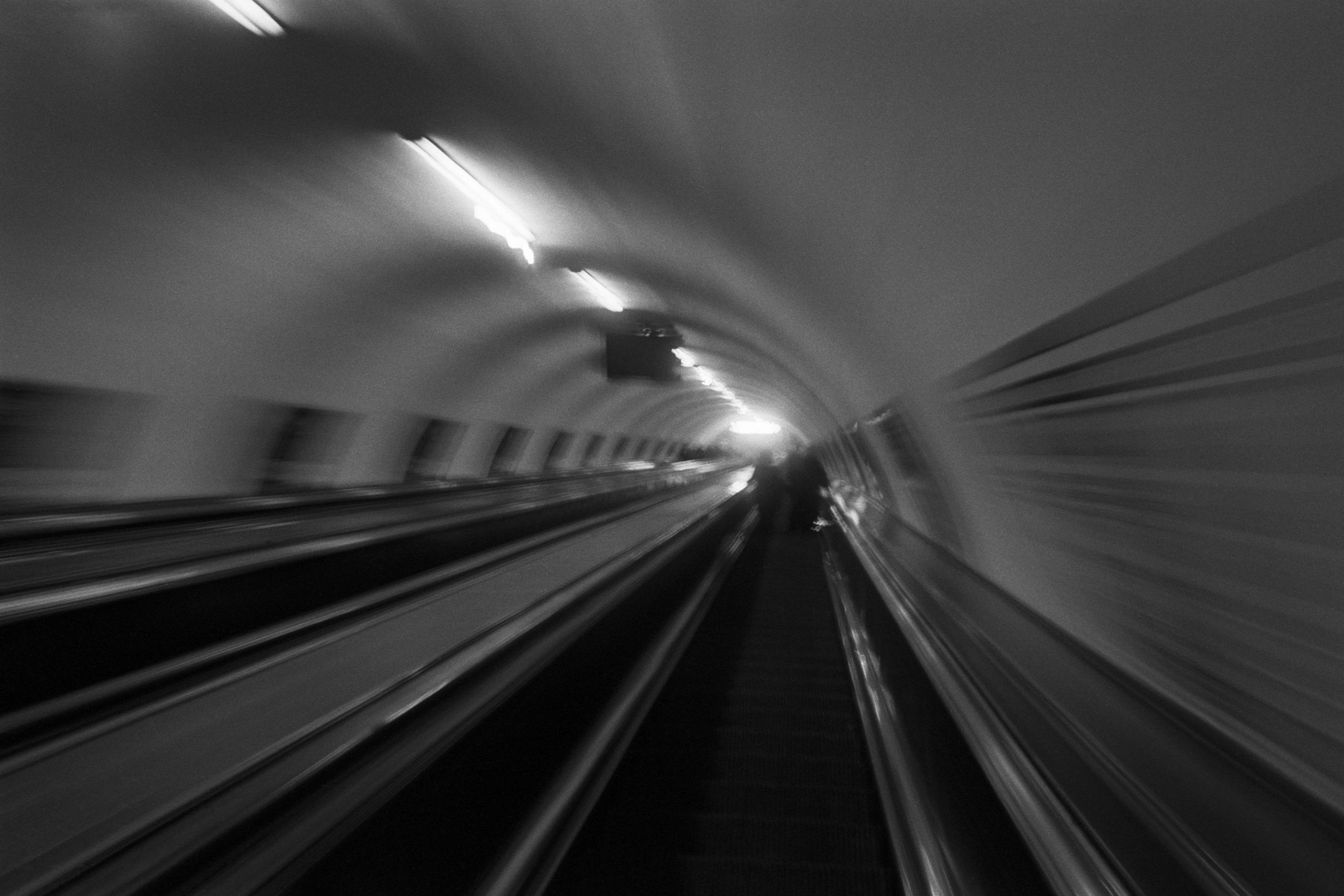
The Wall
2015Winner of the 1st prize & Golden Glass Award at the 11th Photographic Open Championship Olsztyn, and 1st place with the Special Prize of FORMAT magazine at the 3rd Biennial of Art in Piotrków Trybunalski.
View Series →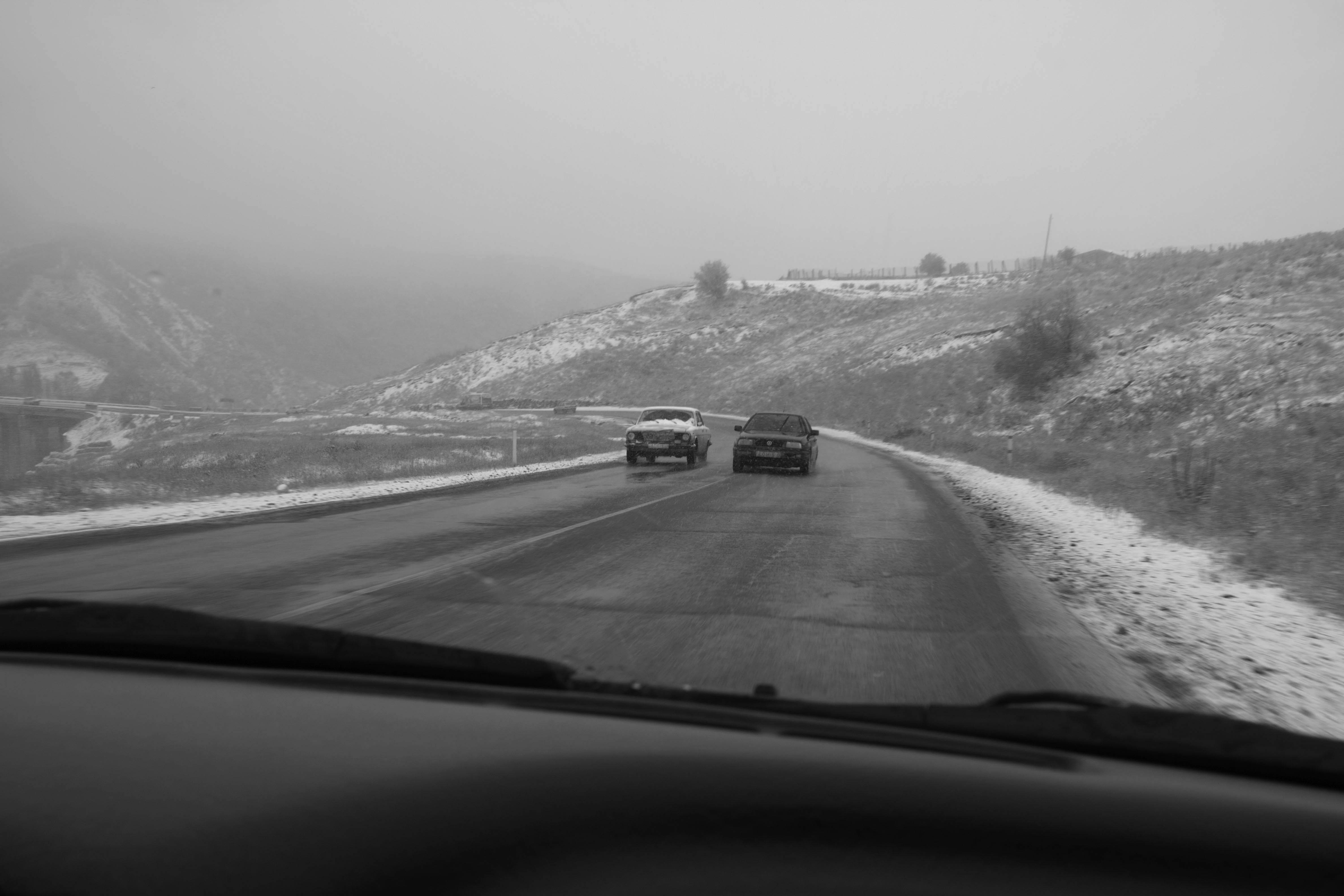
An Engagement Ring
2011A narrative series set in Wrocław in August 2011. Awarded 2nd prize & Silver Glass at the 10th Photographic Open Championship Olsztyn in 2014.
View Series →
Heat Wave
2014A documentary series recording spontaneous events across August and September 2014, capturing the raw energy of a city under the grip of summer.
View Series →