"Photography is not about the thing photographed. It is about how that thing looks photographed."
The emotional weight of photographing abandoned spaces
The emotional weight of photographing abandoned spaces begins with a contradiction: the subject is physically still, yet each frame carries the pressure of interrupted lives. An abandoned factory holds both monumental silence and small evidence of occupation—a calendar left on a wall, a faded line where furniture stood, dust around a shoe print. Light enters reluctantly, catching edges and stains while leaving large areas unreadable. The camera records what is there, but the photograph also collects what viewers imagine has just ended.
As an award-winning photographer based in Wrocław, I approach this work at the meeting point of observation and construction. My practice spans fine art and commissions for business portraits, fashion, events, and conceptual photographic series. Medium-format and black-and-white film, darkroom printing, and digital workflows can support different stages of the same inquiry. A series needs consistency, yet each site should retain its material identity. Even without a visible person, a doorway can imply a body and a chair can preserve the posture of someone absent. Absence becomes a kind of portraiture, made from traces rather than likeness.
The subject raises another contradiction. An empty building may appear to have left social history behind, but photographing it is never a neutral act. Access, safety, local law, and redevelopment shape what can be shown. Australian cities offer a revealing context because rapid change sits beside long habits of reuse and roadside commerce. Sydney and Melbourne contain warehouses, laneways, hotels, and shopping strips caught between commercial eras; similar cycles appear in Brisbane, Adelaide, and regional towns. The camera can record this change, yet it can also romanticise it. The aim is to hold decay, memory, and material fact in the same frame.
Silence as a working material
Silence is the first working material, and it cannot be treated like a neutral backdrop. In a vacant office, the hum of ventilation may be gone, yet partitions still divide the room into compressed cells. In a disused house, floorboards expand and doors drift shut, turning domestic space slightly uncanny. Such places do not lack information; they contain signs that have lost their ordinary context. A receipt, bolt hole, painted numeral, or patch of carpet can become a tiny narrative without becoming a definite story. The photograph gains force when these signs remain open, resisting the urge to explain every mark.
Abandonment carries different emotional registers. A place can suggest economic loss, institutional failure, personal departure, deliberate preservation, or simple change in use, and none is exclusive. A faded hotel sign in a regional Australian town may evoke unemployment and the persistence of an older identity. An empty warehouse in Melbourne’s inner north may read as industrial neglect, while its volume attracts artists and designers. Photographing the site honestly means allowing that contradiction to remain visible. The frame can register damage without turning hardship into theatre, and recognise adaptation without pretending every change was benign.
Working with silence changes how a series is paced. A run of nearly identical facades can become monotonous unless variation appears in light, shape, and occupation. A sequence that includes every kind of ruin can feel like a catalogue. The useful tension lies between repetition and interruption: similar windows and rooflines establish rhythm, while one room with signs of recent life breaks the pattern. Seen on a wall, that pause carries force. It shows that absence is unevenly distributed and that some spaces have been left alone while others still negotiate with the people around them.
Light, texture and material evidence
Light does much of the work of making absence palpable. Hard morning sun can expose every fracture in plaster, while flat overcast light turns a room into a measured field of grey. In colour, stained walls and faded paint reveal different periods, but black and white often clarifies relationships that colour would compete with. A dark doorway can anchor a pale wall, and a thin strip of sky can separate one volume from another. The image then operates less as a record of colour than as a study of visibility. What is illuminated seems close enough to touch, while what recedes into shade carries uncertain emotional weight.
Texture gives the photograph its physical credibility. Dust, rust, water marks, peeled paper, and flaking paint should not be automatically cleaned away. Their irregularity proves that the camera encountered a real surface, not a styled reconstruction. Medium-format film can reveal that information without making the frame look clinical. Detail becomes an ethics of attention: the photographer is asked to look slowly enough to see how a place has been affected. Analogue and digital methods work best as partners here. A measured negative or digital capture can preserve tonal range, while a darkroom print adds subtle edge, grain, and density.
Restraint, however, is the same as untouched realism only if it serves the image. Dust may be genuinely present, but it can become picturesque if selected without context. Digital cleanup can remove distractions that affect meaning, including signage, safety notices, graffiti, or evidence of use. The decision must be made for each image. A conceptual series benefits from a coherent visual language without neutralising every imperfection. The strongest photographs keep enough grit to resist perfection while removing only what obscures the structure of the scene. Their beauty comes from the site’s complexity rather than from disguising it.
Method, equipment and patient attention
Preparation is part of the photograph’s meaning. Before raising a camera, I need to understand the building’s history, ownership, access conditions, and physical state. This includes checking council records, heritage registers, and any restrictions attached to the site. A building may look open, yet entry can create problems under trespass, occupier, or workplace-safety laws. Roofs, stairwells, glazing, and old floors may be unsafe even when the ground level appears calm. In an Australian summer, heat inside a metal structure can become dangerous quickly; after rain, unstable surfaces and concealed holes require caution. Permission establishes that the image will not be made at the expense of people, property, or safety.
Equipment should support close attention rather than substitute for it. For portrait work, my preference for fixed focal-length lenses is partly about clarity of perspective and partly about continuity: one lens encourages movement, changing the relationship between subject and background instead of cropping indiscriminately. The same principle suits architectural interiors. A chosen focal length can hold verticals, compress layers, or isolate a doorway with deliberate consistency. The important point is awareness of how the lens shapes emotional distance. A broad view may make a room feel exposed and legible; a tighter frame can make a patch of decay feel intimate, even severe.
The workflow should remain deliberate. Exposure can be varied to protect shadow detail, then selected for tonal structure rather than maximum information. Notes should record changing light, access routes, and incidents between frames. A contact sheet reveals repetitions across visits, while a print test shows whether a detail from the negative survives enlargement. Sometimes that result argues for a simpler crop; sometimes it argues for the entire field of view. A digital screen can organise the work, but the darkroom offers slower decisions, where a black area may swallow the frame or become the space around a faint sign. Control must eventually give way to what the building reveals.
Industry, redevelopment and the Australian frame
In Australia, the market around these photographs is shaped by a familiar cycle of occupation, vacancy, and reinvention. Sydney’s waterfront and inner-city warehouses, Melbourne’s former manufacturing districts, and Brisbane’s riverside industrial pockets are repeatedly adapted for apartments, studios, hospitality, and offices. The visual appeal of aged brick, steel trusses, and patched concrete often survives the change in use. These sites become desirable partly because their histories are legible. Yet redevelopment can erase the conditions that made them powerful photographs. If the picture arrives after a building has been polished and marketed as a lifestyle venue, the earlier vacancy survives only as styling. Timing is critical.
Everyday habits sharpen the context. Australians regularly pass roadside service stations, shut-down motels, vacant lots, and former retail sites on commutes through regional towns and outer suburbs. Community op shops, demolition salvage yards, and second-hand marketplaces sustain a practical relationship with discarded material. Builders reuse doors, timber, fittings, and signage, while households redirect objects rather than treating every vacancy as waste. Abandonment is one stage in a culture of adaptation. A photograph can join that exchange, but it must avoid presenting the building as a free reservoir for design trends. The site belonged to workers, residents, businesses, and neighbours before it became an aesthetic object.
Local commercial expectations create another productive tension. Australian property, architecture, tourism, and editorial clients often need images that communicate usability, atmosphere, or investment potential. A commission may be expected to make a venue look active and ready, even when the brief concerns a neglected building. Fine-art work can preserve unresolved detail and social consequence, but it may reach fewer buyers and can be misread as an invitation to develop the very site it documents. Its market value often lies in a limited edition, a distinctive series, or the prestige attached to the photographer’s broader practice. The distinction between commissioned clarity and authored ambiguity must be acknowledged, not hidden.
Heritage law adds a practical boundary to this creative freedom. The NSW Heritage Act 1977 and the Victorian Heritage Act 2017 operate within different statutory systems, and local heritage overlays can impose further controls; comparable protections exist elsewhere. Those rules vary, so a site that appears permissible in one jurisdiction cannot be assumed lawful in another. Even where a building is not formally listed, owners, occupiers, insurers, and councils may have legitimate interests. The ethical choice is not to avoid every difficult building, but to seek permission where required and avoid publishing information that could facilitate trespass. Respecting the law keeps the practice from becoming extractive.
Preserving ambiguity in the finished frame
The finished frame needs a different kind of courage from the site itself. Ruin photographs can easily become grand: broken rooflines, peeling walls, and dramatic shafts of light are powerful motifs, but familiarity can narrow perception. A quieter image may hold a single chair, a row of hooks, or the clean rectangle where a machine once stood. Such details avoid turning abandonment into generic spectacle. They also resist the urge to invent who left or why. The viewer receives no victim, villain, or happy resolution. Human presence remains in the grammar of the space through scale, wear, alignment, and the small accommodations that make a place inhabitable.
Dignity is especially important where the photographed place is connected to housing, work, or community life. An empty school or factory can imply more than aesthetic loss; it may carry the consequences of policy, business closures, or demographic change. The camera should not confuse social significance with emotional simplification. Showing deterioration without explaining its causes can be compelling, but it can also harden neglect into scenery. Context may need to live in the series through captions, location history, or sequence, without turning the image into an argument poster. The aim is to keep the photograph open enough for responsible interpretation while refusing the idea that decay is beautiful by itself.
This is where fine-art and commercial experience meet most productively. A commissioned image must communicate a brief clearly; a conceptual practice tests whether clarity can coexist with uncertainty. Abandoned spaces demand both. They require control of exposure, framing, and sequence, then a final decision about when the image has become too controlled. The strongest results feel neither like documents of decay nor polished fiction. They retain the contradiction that made the subject compelling: the building is materially specific, yet full of unresolved human echoes. When that contradiction survives into print, the photograph does more than record a vacant place. It gives stillness a visible weight and leaves that weight in the viewer’s field of vision.
Selected Series
A cross-section of commissioned and personal projects spanning fine art, commercial, and conceptual work.
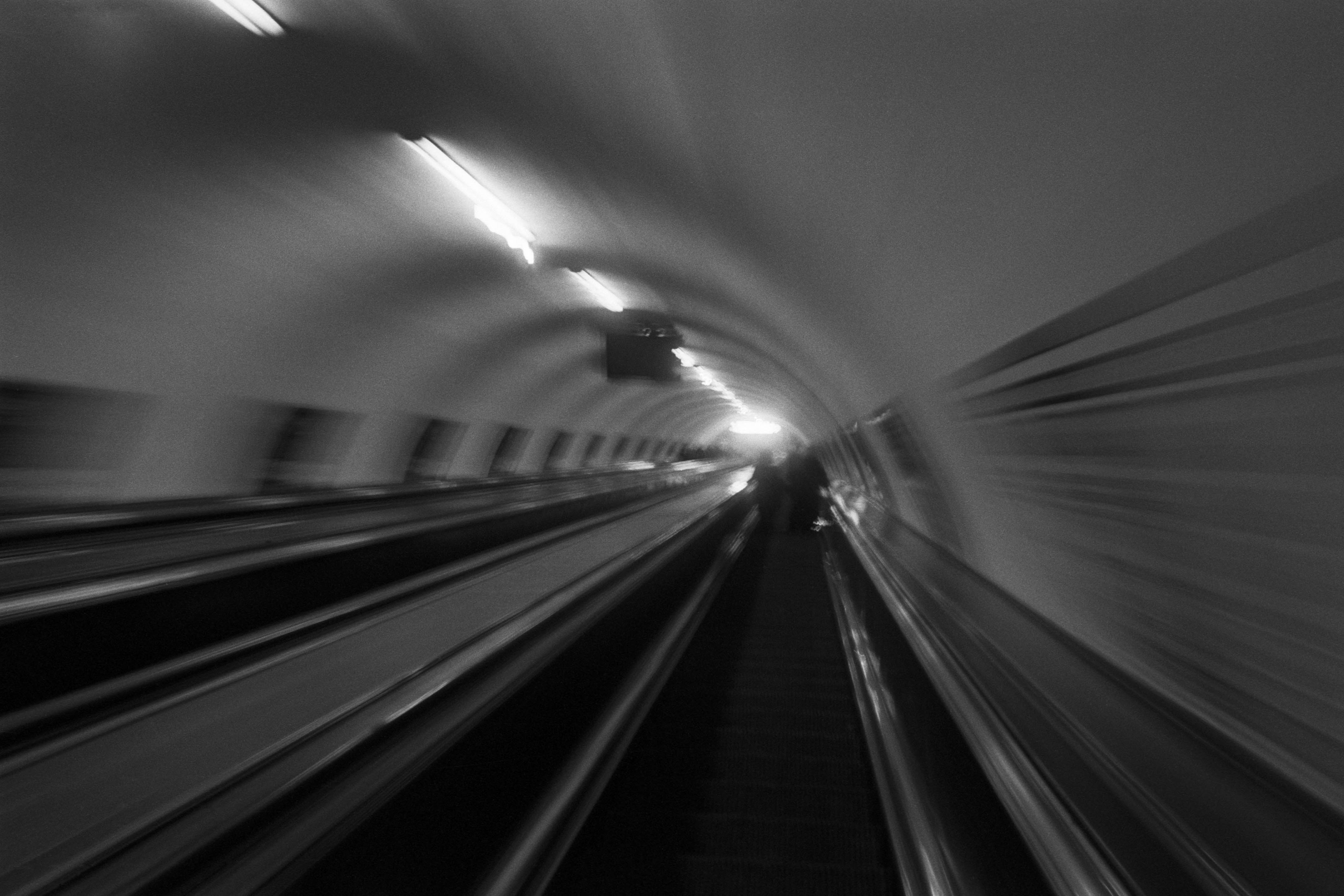
The Wall
2015Winner of the 1st prize & Golden Glass Award at the 11th Photographic Open Championship Olsztyn, and 1st place with the Special Prize of FORMAT magazine at the 3rd Biennial of Art in Piotrków Trybunalski.
View Series →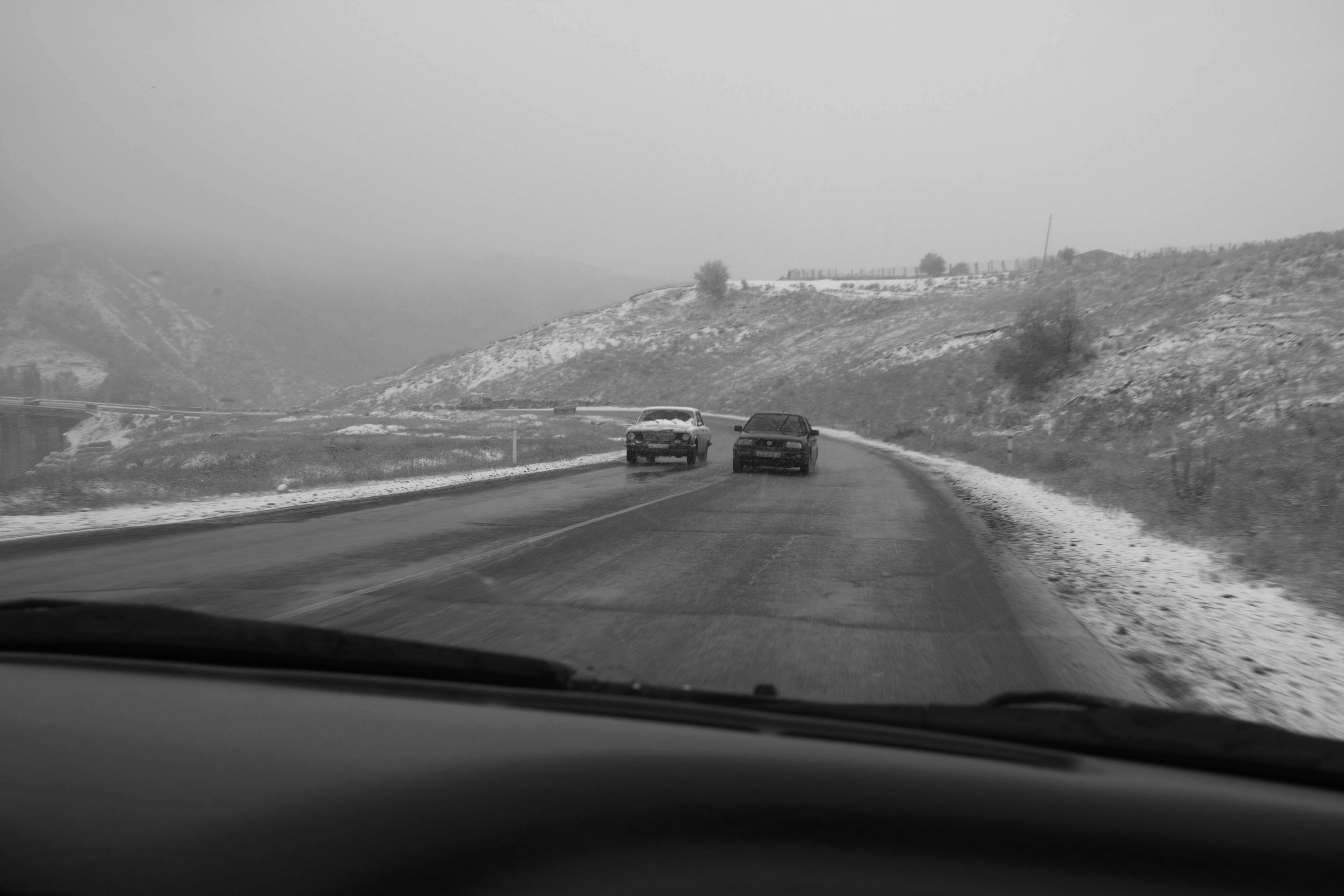
An Engagement Ring
2011A narrative series set in Wrocław in August 2011. Awarded 2nd prize & Silver Glass at the 10th Photographic Open Championship Olsztyn in 2014.
View Series →
Heat Wave
2014A documentary series recording spontaneous events across August and September 2014, capturing the raw energy of a city under the grip of summer.
View Series →