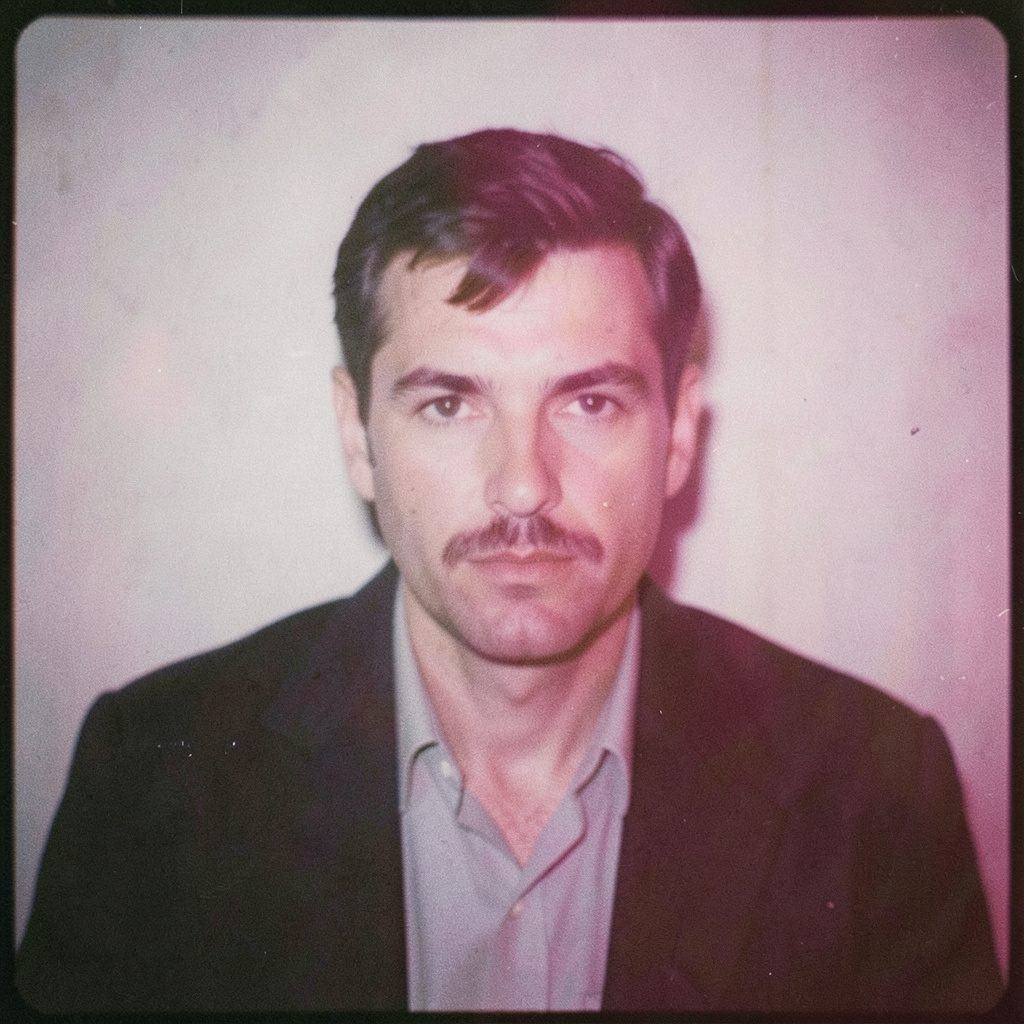
"Photography is not about the thing photographed. It is about how that thing looks photographed."
Chasing the Decisive Beat: Jazz and the Photographic Eye
Walking into a low-lit basement venue in Melbourne's CBD, where a quartet is laying down a loose blues, the parallels to a photographer working through a contact sheet become startlingly obvious. Both crafts demand presence, patience, and an instinct for the fleeting instant where everything aligns. Jazz and photography share a vocabulary of rhythm, timing, and improvisation that goes deeper than surface aesthetics, and exploring that conversation reveals how each art form sharpens the other.
For photographers working in fine art and commercial spaces, the lessons hidden inside a Coltrane solo or a smoky ballad at a Sydney jazz bar are surprisingly practical. The same mental muscles that allow a saxophonist to anticipate a chord change allow a photographer working a wedding or editorial shoot to anticipate a gesture, a glance, a shift in posture. Understanding jazz, in other words, can quietly rewire the way someone approaches the shutter.
Rhythm and Timing: The Common Pulse
Every jazz musician knows that the engine of the music is the rhythm section, that steady conversational pulse established by the drums, the bass, and sometimes the piano. A photograph without rhythm feels static, no matter how technically perfect the exposure. Composition has a tempo, a beat, a moment where the eye lands and then travels. When a photographer arranges a subject within a frame, they are essentially laying down a groove, inviting the viewer's gaze to move through the image the way a listener moves through a verse.
In the analogue darkroom, where negatives are rocked in trays of developer, this pulse becomes literal. The darkroom timer is the metronome, and the print emerging in the chemical bath is the phrase being shaped. Practitioners who grew up working with film often describe the process in musical terms, talking about the swing of a well-timed print, the laid-back quality of a softer grade of paper, the percussive pop of a well-resolved highlight. There is a strong kinship between musicians who describe a beat as "behind the bar" and photographers who describe a print as "behind the grey card," and recognising that shared language opens a doorway between the two crafts.
The Decisive Moment: Cartier-Bresson and Bebop
Henri Cartier-Bresson's notion of the decisive moment has become a kind of scripture in photography, but it was essentially a bebop idea translated into visual form. The French photographer was sketching in a Paris gallery when he heard a Matisse retrospective speak of the geometry of forms; he was also absorbing the improvisational spirit pouring out of clubs along the Rue de Rivoli in the late 1940s. To catch a fleeting geometry, a gesture that exists for a fraction of a second, requires the same split-second decision-making that a saxophonist exercises when choosing which note to play over a II-V-I progression.
Practically, this means learning to hear the silence before the action. A jazz drummer spends years practising brushwork precisely so they can respond without thinking. A photographer working in natural light in portraiture develops a similar unconscious responsiveness, reading the way a curtain of afternoon sun falls across a sitter's face and recognising exactly when the light, the pose, and the mood will coexist for a single breath. Both disciplines are built on a foundation of countless hours of practice that quietly vanish, leaving behind the appearance of effortless intuition.
Light and Shadow: Visual Counterpoint
A solo by Miles Davis is essentially a conversation between sound and silence, where what is not played matters as much as what is played. Photography operates in the same key. The shadows in a portrait are the rests, the negative space around a figure is the breath between phrases. Treating light as counterpoint, rather than mere illumination, changes the way a photograph is built from the ground up, encouraging the maker to think in relationships rather than isolated tones.
Working with medium-format black-and-white film deepens this connection. A 6x6 negative demands deliberate framing, and the resulting prints, with their rich tonal range from deep velvet blacks to luminous whites, resemble a single sustained chord. There is a meditative quality to this kind of work that mirrors the trance-like state of an audience at a late-night set at Bennetts Lane in Melbourne, where the bar light catches the brass of a horn and the smoke hangs in the air. Photographers who embrace this slower, more contemplative process find that their images start to carry that same unhurried weight, the visual equivalent of a ballad stretched out across several choruses.
Improvisation in the Studio and on the Bandstand
Every commercial shoot has a moment when the carefully prepared shot list gets thrown out. A client laughs unexpectedly, a piece of fabric falls into a shape no one planned, the available light suddenly shifts. The photographers who thrive in these situations are the ones who have learned, often unconsciously, the jazz skill of making any chord change work. They know how to roll with the unexpected, to make the mistake into the melody and then build a new arrangement around it.
This improvisational muscle is trained, not born. The same way a jazz musician practises scales until they become reflex, a photographer shoots hundreds of frames in low-stakes situations so the muscle memory is there when the real moment arrives. The Australian photojournalist Trent Parke, whose work carries a distinctly musical quality, has spoken about the importance of staying loose on the street, of allowing accidents to lead. The same philosophy holds backstage at a wedding or in the middle of a high-pressure editorial shoot when a model is moving faster than the lighting brief can keep up.
The Black and White Aesthetic
There is a reason so many jazz club posters from the 1950s were printed in black and white, and the same reason explains the enduring appeal of monochrome photography. Stripping away colour forces the viewer, or the listener, to attend to form, contrast, texture, and rhythm. In a smoky club with a single spotlight on the bassist, colour is largely irrelevant; the drama is happening in the tonal relationships between figure and shadow, instrument and floor.
For photographers working in fine art portraiture, the decision to render a face in greyscale is often a decision to emphasise the subject's character and the architecture of light rather than the colour of their jumper or the green of the trees behind them. There is an austerity to this approach that resonates with the spartan elegance of a lone trumpet over a single microphone, the kind of presentation you might catch at a Sunday session at Brisbane Jazz Club. The image, like the music, becomes a study in essentials rather than decoration.
Listening to Silence: Negative Space in Both Arts
Negative space is one of the most powerful tools a photographer can wield, and it is also one of the most underused. A wide, empty sky above a lone figure in a landscape, a stretch of unmarked paper around a printed portrait, a single chair in an otherwise bare room: all of these create breathing room that allows the subject to resonate. The same principle lives at the heart of jazz, where the rests between notes give the music its swing. A drummer who plays every beat suffocates the groove, and a photographer who fills every corner of the frame suffocates the image.
In practice, this means learning to crop tighter and then, paradoxically, looser, finding the exact amount of space that allows the eye to rest. Australian photographers working in the outback have an intuitive grasp of this; the wide horizons of the red centre, broken by a single tree or a weathered ute, teach the eye to expect emptiness. That sensibility translates directly into studio work, where the confident use of negative space separates a strong portrait from a merely competent one.
Jazz Photography in Australia: A Living Tradition
Australia has a quietly thriving jazz photography culture, supported by venues that take the visual life of the music seriously. In Sydney, the Foundry616 in Surry Hills and The Basement have long histories of photographers documenting the local scene, and similar stories play out at The Ellington in Perth and The Paris Cat in Melbourne. These spaces have become unofficial classrooms, places where aspiring photographers can study the way performers move under low light, the way a horn catches a stage light, the way an audience's posture shifts during a particularly tender ballad.
Beyond the clubs, Australian festivals such as the Wangaratta Jazz and Blues Festival in regional Victoria and the Melbourne International Jazz Festival provide rich opportunities for photographers to develop their visual language. The street scenes around these events, the festival-goers sprawled on grass, the impromptu jam sessions on laneway doorsteps, mirror the everyday texture of Australian life, where mates catch up over flat whites, where the word "arvo" slips into a conversation as easily as a chord change slips into a turnaround, where someone is always quick to say "she'll be right" when the schedule wobbles. For a photographer, the festival is also a study in collective attention, a reminder that art happens in the meeting place between performer and audience, between maker and subject.
Working between these two worlds, analogue and digital, darkroom and laptop, jazz club and studio, there is a quiet revelation to be found. The same instinct that tells a musician when to leave space tells a photographer when to leave it out of the frame. The same discipline that turns a melody into a memorable night turns a contact sheet into a meaningful portfolio. Jazz, in the end, offers photographers a language for talking about what they already know, and a reminder that the best images, like the best solos, arrive fully formed and then, a beat later, are already gone.
Selected Series
A cross-section of commissioned and personal projects spanning fine art, commercial, and conceptual work.
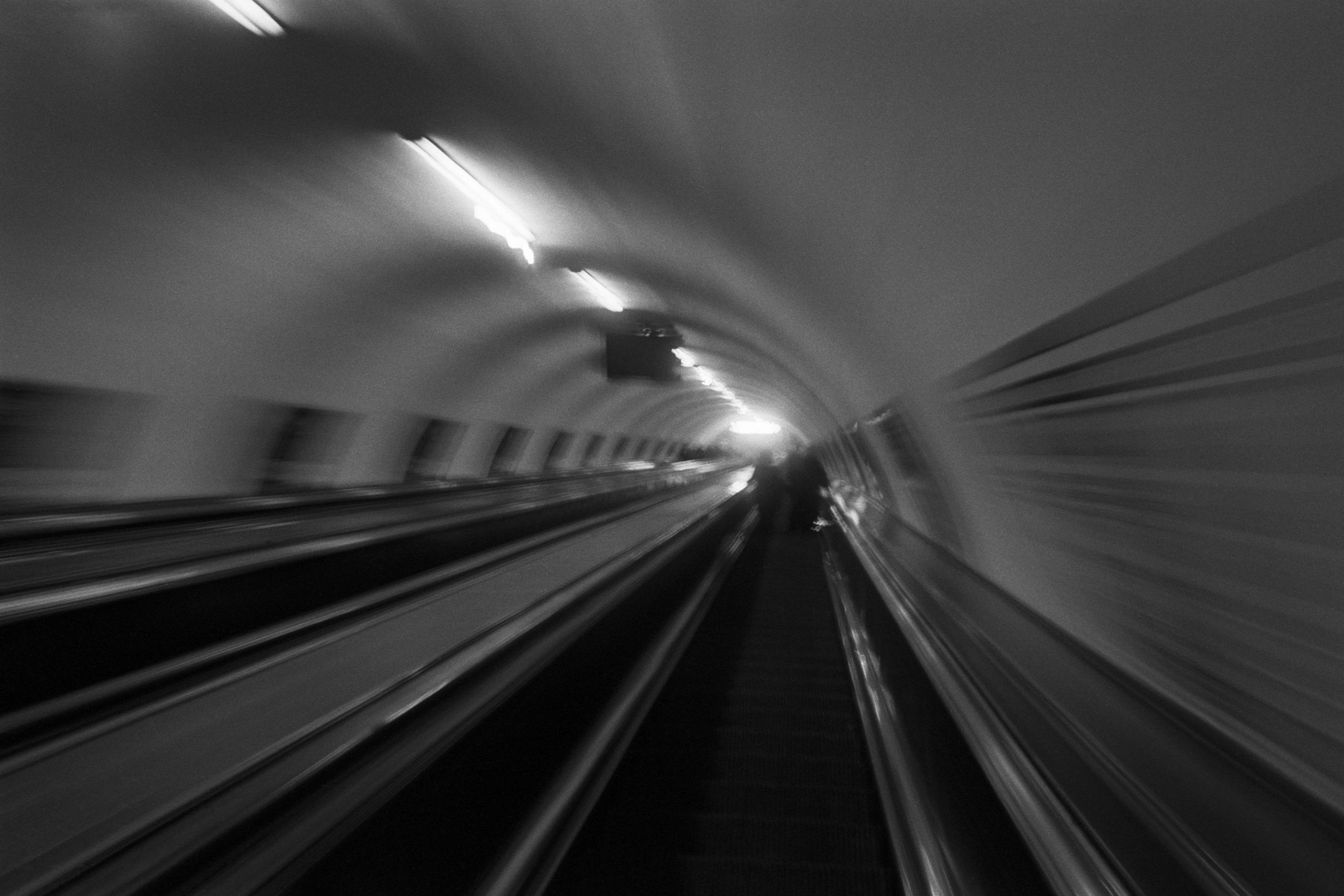
The Wall
2015Winner of the 1st prize & Golden Glass Award at the 11th Photographic Open Championship Olsztyn, and 1st place with the Special Prize of FORMAT magazine at the 3rd Biennial of Art in Piotrków Trybunalski.
View Series →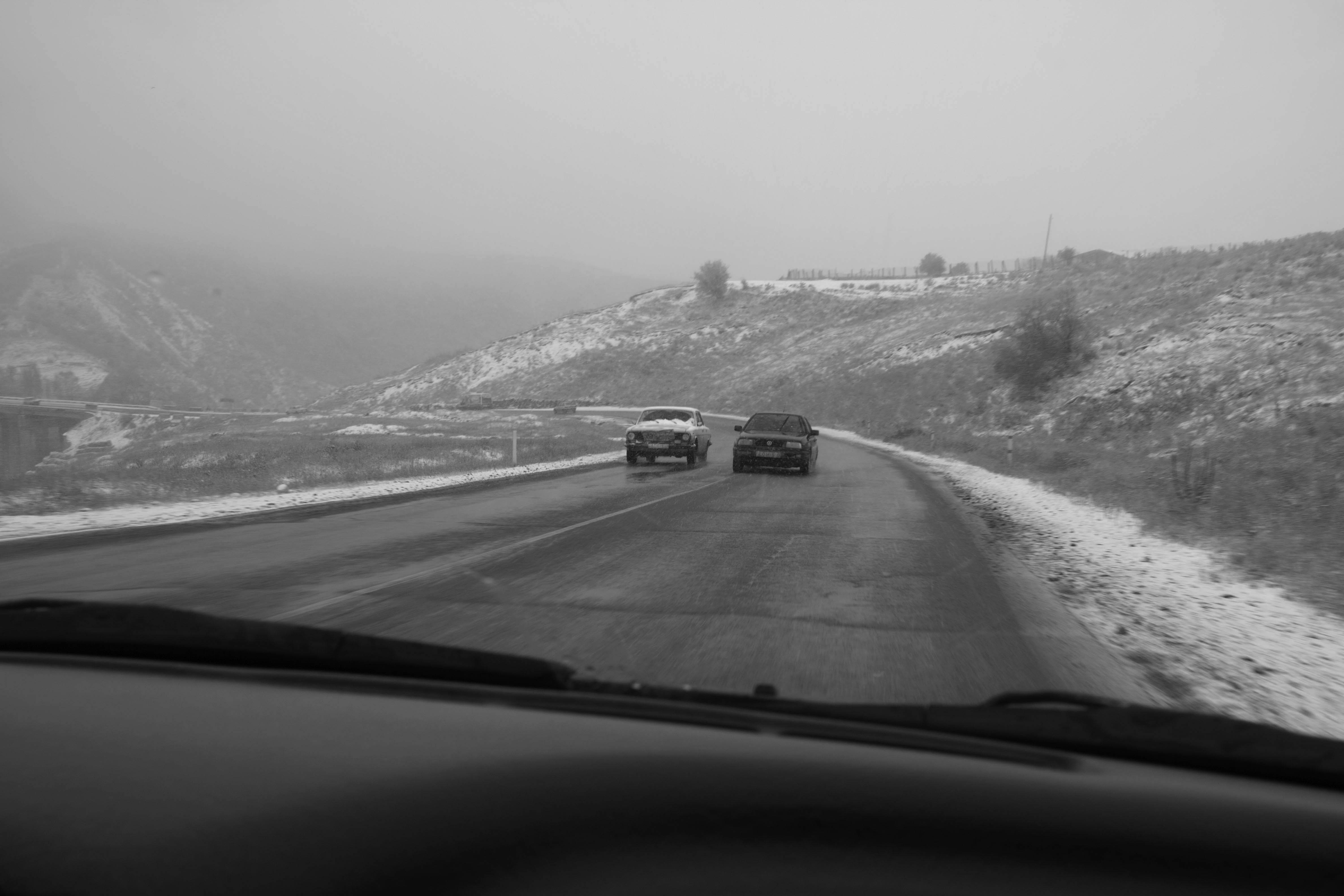
An Engagement Ring
2011A narrative series set in Wrocław in August 2011. Awarded 2nd prize & Silver Glass at the 10th Photographic Open Championship Olsztyn in 2014.
View Series →
Heat Wave
2014A documentary series recording spontaneous events across August and September 2014, capturing the raw energy of a city under the grip of summer.
View Series →